
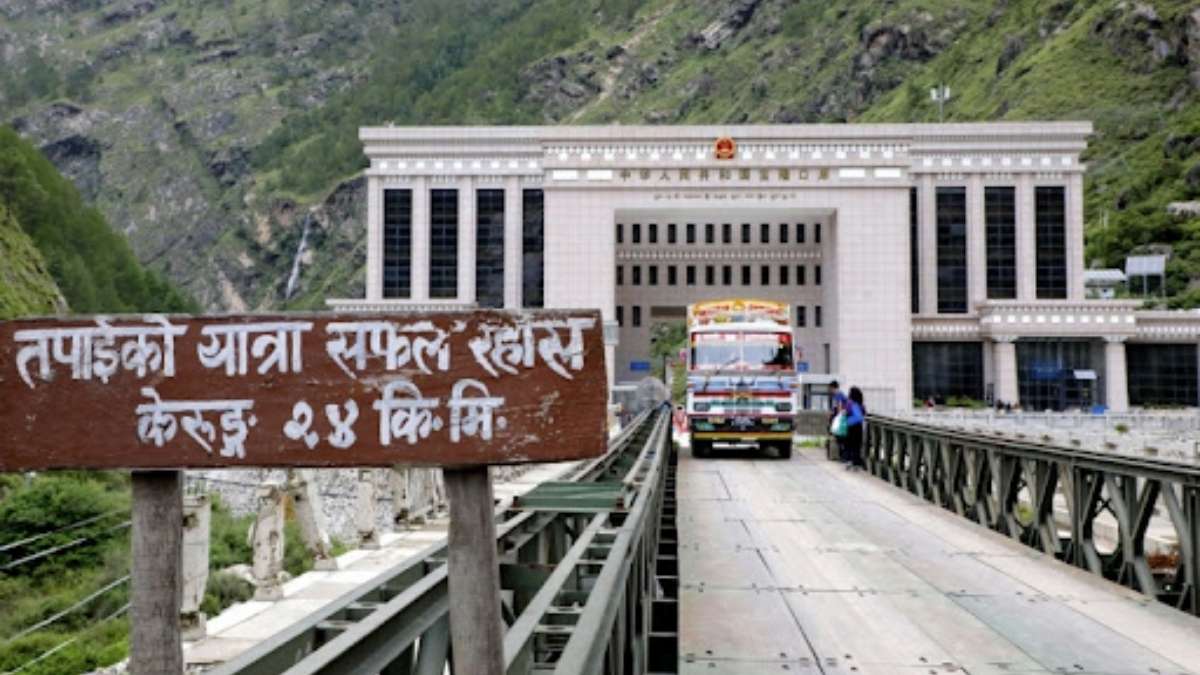
Image via China Focus
To read the list of projects, one might think Nepal is on the cusp of a transformation. A cross-border railway, a network of roads and tunnels, power lines, a science museum, a sports complex, even a city hall: all are part of a new “Framework for Belt and Road Cooperation” signed with China in December last year. The agreement, the product of years of negotiation, was sealed with fanfare during a visit by Nepal’s then prime minister K.P. Sharma Oli. Yet behind the diplomatic smiles stands a more complicated reality. The framework is less a construction schedule and more a menu of possibilities, each contingent on answering a difficult question: who will pay?
Nepal’s political leaders are determined to avoid debt distress. The country’s two main parties, the Nepali Congress and the UML, may bicker, but they share a wariness of commercial loans from China. The final text of the agreement reflects this, referring vaguely to “aid financing modalities” rather than the “grant financing” one side wanted or the commercial loans the other initially floated. This fudge leaves the funding model for each project to be haggled over individually. The framework itself is binding for only three years, though it will automatically extend. For a government in Kathmandu, that is long enough; for Beijing it is merely an opening gambit.
The list of potential ventures shows both ambition and incongruity. The most formidable is a railway connecting Kathmandu to the Chinese border, a line that would traverse some of the world’s most challenging topography. Technical teams have completed about 60% of the ground surveys, with a full feasibility study expected by late 2026. China could begin construction on its side as early as next year. But on the Nepali side, the project faces immense financial and environmental hurdles. In January Nepal’s Supreme Court delivered a landmark ruling banning development in protected areas, a decision that could affect the railway’s route and cost.
Other projects are at various stages of limbo. Feasibility studies are planned for the Tokha-Chhahare tunnel and the Hilsa-Simikot road. A cross-border power line is to be built with Chinese grants, though Beijing has requested a repeat study to ensure the plans meet its standards. The proposed Damak Industrial Park, intended to give Chinese companies access to the Indian market, is stalled over a request for extensive tax exemptions, which Nepal’s finance ministry strongly opposes. The park would require 22,000 bighas of land, which local authorities have so far failed to acquire.
This sluggish progress is not for lack of Chinese interest. China is Nepal’s largest source of pledged foreign direct investment, accounting for 40% of the total approved in the fiscal year 2023-24. But the actual stock of Chinese investment is far smaller, suggesting a gap between promise and delivery. Chinese firms, particularly in energy, tend to rely heavily on debt financing, leading to negative reserves that hint at financial strain. A proposed $190m solar plant by Risen Energy, once poised for agreement, is now on hold.
Nepal’s balancing act is complicated by its giant neighbour, India. Delhi has made its displeasure known about the Damak park, seeing it as a backdoor for Chinese goods. Such projects, from India’s perspective, cross a “red line”. If these instances build, India could respond with countermeasures affecting trade and market access. For Nepal, every agreement with China must be weighed against its relationship with India.
The bigger picture is one of caution. Nepal’s total aid commitments from China stand at $1.4bn, with just over a third of that sum actually disbursed. The country wants infrastructure, but on its own terms: with grants or very soft loans, transparent bidding, local involvement and no unsustainable debt. It is a sensible approach, but one that asks for patience that Beijing may not indefinitely afford. The framework agreement is a starting pistol, yet the runners are still tying their laces. How long China will wait at the finish line is unclear. ■





