IMAGE: SOURCE UNKNOWN
LAST SEPTEMBER the digital lights went out across the Himalayas. K.P. Sharma Oli, a man who styled himself as the ultimate guardian of Nepali sovereignty, decided that the greatest threat to the nation was a teenager with a smartphone. By banning 26 social-media platforms, he signed the death warrant of his own political career. For a leader who promised “Prosperous Nepal, Happy Nepali”, smoke over the Bagmati River was a harsh reminder of his decade of hubris. The ensuing youth-led protest was an existential cry from a generation whose livelihoods depended on the digital economy Mr Oli seemed so eager to dismantle. By the next day government buildings were scorched and the prime minister was forced to resign.
To judge whether Mr Oli was truly the worst prime minister in the turbulent history of modern Nepal is a crowded competition. The country has burned through 14 prime ministers since the monarchy was dumped in 2008. Most have been forgettable. Some were merely incompetent. But Mr Oli was different, in that he was consequential in the way a forest fire is consequential. He sought to bend the office he occupied until it snapped. Now as the country prepares for snap elections on March 5th, the wreckage of his tenure provides the backdrop for a confrontation that has captured the national imagination: a battle between the veteran leader and a technocratic outsider who represents everything Mr Oli tried to kill.
The scale of the rot under Mr Oli’s various tenures is difficult to grasp without looking at the ledger. Analysts in Kathmandu reckon that the corruption under his watch reached Rs1.5–2.5trn, roughly equivalent to a year’s budget. From the Nepal Airlines widebody aircraft scandal to the procurement of medical supplies during the pandemic, the stench of kickbacks followed his cabinet like a persistent shadow. While the youth fled the country in record numbers—with over 800,000 labour permits issued in the last fiscal year alone—the inner circle grew fat on the spoils of office.
Mr Oli’s rise was built on prickly nationalism. During the 2015-16 Indian blockade, he stood firm while the country ran out of fuel and medicine. He became a hero to those who felt Nepal was too often bullied by its giant southern neighbour. He parlayed this into a massive mandate in 2018, leading a unified communist bloc that promised rare stability.
Yet he spent that political capital on showmanship rather than substance. By amending the constitution to include disputed territories like Kalapani and Lipulekh, he won a domestic public-relations victory but fractured relations with Delhi for years. It was a classic Oli move: a flashy win that left the national cupboard bare.
The institutional damage was perhaps more severe. Mr Oli treated the 2015 constitution as a mere suggestion. When his own party began to chafe under his authoritarian style, he simply tried to dissolve parliament twice. He bypassed the legislature with a flurry of ordinances, ruling by decree while the supreme court worked overtime to pull him back from the brink. Rather than behaving democratically, he treated his survival as the nation’s interest. Naturally that sense of entitlement produced the chaos of last September.
The contrast with the Koirala dynasty is illuminating. Girija Prasad Koirala, the chain-smoking patriarch of the Nepali Congress, was far from perfect. He was accused of nepotism and a high-handed style; yet he possessed a sense of history that Mr Oli lacked. In 2006 Koirala did the unthinkable: he brought the Maoist rebels out of the jungle and into the ballot box; signed the Comprehensive Peace Accord ending a decade of civil war; and presided over the peaceful transition from a 240-year-old Hindu monarchy to a secular republic. Koirala built institutions, whereas Mr Oli hollowed them out.
Even the Maoist leader, Pushpa Kamal Dahal—known as Prachanda—understood the necessity of the peace process. Mr Oli on the other hand seemed to view the state as a personal fiefdom.
The fallout from his final days continues to haunt the nation. During the upheaval that followed the social-media ban, over 14,000 prisoners escaped from various facilities. While the interim administration under former chief justice Sushila Karki has sought to restore order, more than 5,000 escapees remain at large, many implicated in violent crimes. That security vacuum piles a big burden to the upcoming polls. A nation that should be debating economic policy is rather worrying about the thousand-plus firearms that disappeared from police stations during the riots.
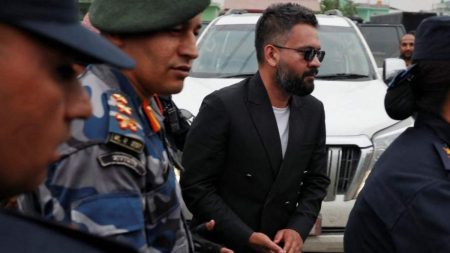
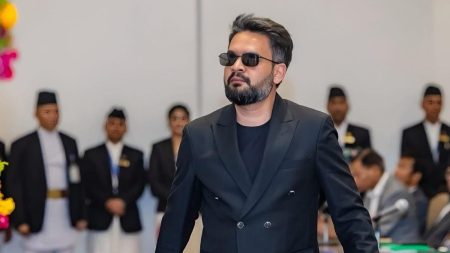
Yet the March elections confer a stark pivot. In the plains of Jhapa, along the fertile edges of Koshi Province, Mr Oli faces his best shot at being toppled in 35 years, although the odds are slim. His challenger in the Jhapa-5 constituency is Balendra Shah, known as Balen, a rapper and structural engineer who has become the projected prime ministerial candidate for the Rastriya Swatantra Party. Mr Shah, who first shocked the establishment by winning the Kathmandu mayoralty as an independent in 2022, embodies the demographic upheaval that Mr Oli’s old guard has failed to grasp.
Demographics are upending the stakes. The Election Commission confirms 18.9m registered voters, up almost one million since 2022. The increase is overwhelmingly youthful: 56% of Nepal’s population is under 30 and more than half of registered voters fall into the 18–35 bracket. Historically young voters were marginalised. In the dissolved House of Representatives, the 51–60 cohort held a third of the seats, whereas those under 40 were only 11%. Today the electorate tilts towards the very group that demonstrated its power to upend authority in the streets of Kathmandu. For these voters political identity is not inherited from family loyalty or party networks. It is cultivated through global connectivity and a demand for competence.
Jhapa-5 has been Mr Oli’s bastion since 1991. He has traditionally relied on disciplined party machinery and strategic alliances to maintain his grip. His campaign points to local infrastructure projects like the Damak Commercial Complex or the Nepal-China Friendship Industrial Park. But many of these projects have lingered incomplete for years, turning intended signs of progress into reminders of incompetence. Against that Mr Shah offers a different kind of disruption. His tenure as mayor was defined by a confrontational, technocratic approach: demolishing illegal structures and challenging the federal government on basic services like waste management.
If Mr Oli is defeated, it would mark the first major break from the post-2006 political cycle. It would signal that a technocratic, non-ideological generation is taking root in Nepali soil. Such an outcome would force international partners, particularly India and China, to recalibrate their engagement. They would have to learn to deal with a populist technocrat who is more predictable in his goals but less conventional in his methods. Domestically it would test whether the country’s democratic imagination can move past the “musical chairs” of the old elite.
Was he the worst? If the yardstick is the gap between potential and performance, the answer is likely yes. He had the largest mandate in decades. He had a clear path to modernise the economy. He had the backing of a public desperate for a break from the chaos of the post-war years. He squandered all of it. He chose to fight with his allies, his neighbours and eventually his own children. The 2025 uprising was a rejection of a man who had treated the country as a personal fiefdom.
The March elections will be the final verdict. The youth who are now flocking to Mr Shah’s rallies are the same ones who were tear-gassed in September. They are looking for a government that works not a leader who sneezes and suggests hot water as a cure for a global pandemic. Mr Oli’s greatest contribution to Nepal may, ironically, be the realisation that the country can no longer afford leaders like him. He has shown the nation exactly what it does not want to be. The digital lights are back on, the youth are talking and for the first time in 35 years they are talking about a future without him. ■