IMAGE: SIMON ELBECK/FORSVARET/AFP/GETTY IMAGES
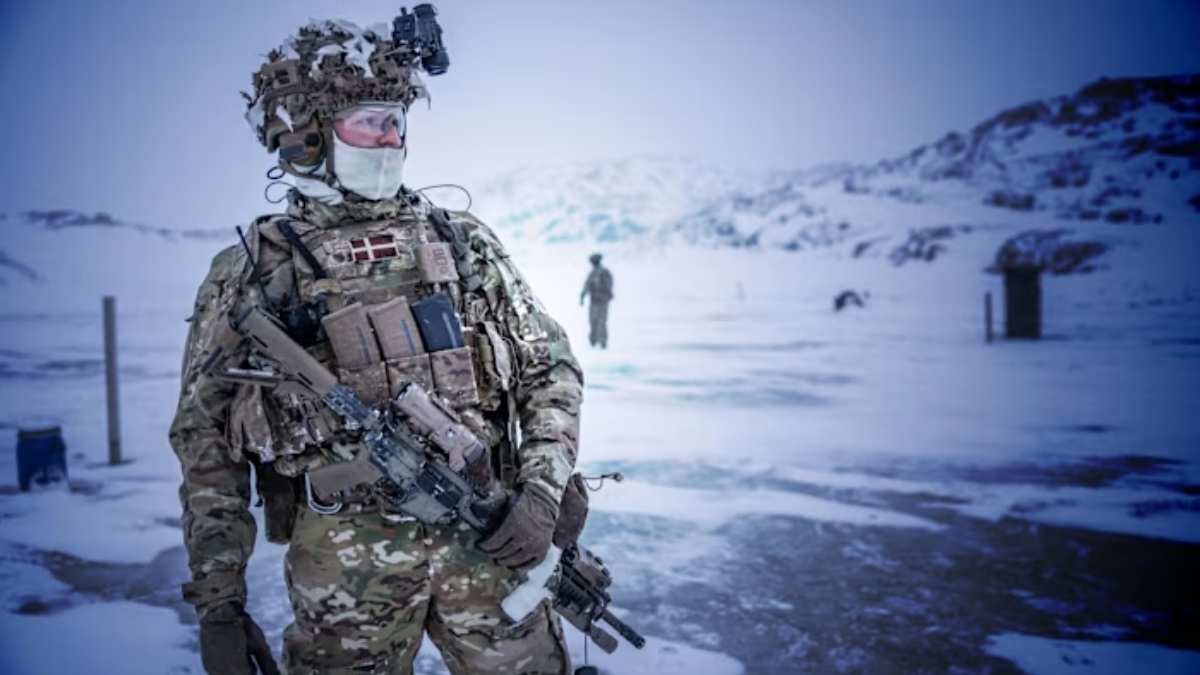
IN THE frozen outskirts of Nuuk, Greenland’s capital, the arrival of Danish and other European troops on January 15th felt almost unreal. For the first time in nearly a century, a NATO member sent troops to protect itself from its closest ally. The trigger was a series of statements from Washington insisting it would acquire the island, an autnomous territory of Denmark, “one way or another”. Global stability relied for decades on the assumption that the United States could be counted on. That assumption has now been shattered. The “Greenland affair” sparked a diplomatic crisis and led America’s partners to question the security of their alliances.
The international system is now facing a period in which the nation meant to uphold the rules-based order has become unpredictable. Across Europe and the middle powers of the Commonwealth, the practice of “de-risking”—once intended to lessen dependence on China—has been turned towards the United States. As Washington pursues territorial expansion and transactional diplomacy, its allies are rushing to build buffers to protect their economies, militaries and institutions from a superpower that has ceased to respect borders or treaty obligations.
The Danish Ministry of Defence reinforced troops in Nuuk and Pituffik with support from France, Germany, the United Kingdom and the Netherlands, which sent small, symbolic contingents. By placing their soldiers in the potential path of American annexation, these nations raised the political cost of any intervention. Any attempt by the United States to seize territory would risk the lives of troops from its closest European partners, threatening NATO. That presence signalled resistance without provoking an immediate clash and made clear that the Arctic is not for sale.
The economic consequences came without delay, though the threat of escalation has been withdrawn. The Trump administration threatened 10% duties on eight countries including Denmark and Finland, for what it called “blocking a legitimate land purchase”. Using trade as a weapon to push territorial ambitions shows a new approach in which market access is tied to political compliance. In this climate the notion of an “ally” has lost much of its meaning.
Canadian Prime Minister Mark Carney has been at the forefront of the intellectual response. Since taking office early last year, Mr Carney—a former central banker in both Ottawa and London—has promoted what analysts call “Blue Grit” realism. In Davos he argued that the era of “naive multilateralism” is over. When a major power weaponises economic ties, middle powers must act together to protect themselves. His approach, known as “variable geometry”, focuses on issue-specific coalitions that do not include volatile superpowers.
Canada has already acted on that philosophy. This month Mr Carney signed a strategic trade deal with China, pointing to a need for predictability that Washington can no longer provide. Domestically he passed the “One Canadian Economy Act” to remove interprovincial trade barriers, strengthening the internal market against outside shocks. Canada joined SAFE, a European defence procurement initiative, signalling a shift towards European rather than American military standards.
The breakdown of institutions is also reflected in the creation of the “Board of Peace”. Unveiled this month, originally to aid reconstruction in Gaza, its structure is far more radical. It operates like a global board of directors under the permanent chairmanship of Donald Trump. Membership is granted only for a fee with permanent status tied to a $1bn contribution. This “pay-to-play” model replaces democratic oversight with private-equity logic. Current members include autocracies and regional powers seeking direct access to the American president.
The erosion of institutions extends to finance. Early this month the US Justice Department issued grand jury subpoenas to the Federal Reserve chairman. Though described as administrative, the move was widely seen as an attempt to bring interest rate policy under direct political control. The market response was fast: the dollar’s political risk premium surged, and gold reached a record $4,600 per ounce. Investors increasingly view American policy as a volatile mix of geopolitical aggression and domestic instability.
Countries elsewhere have also taken defensive measures. In Latin America, the US intervention in Venezuela on January 3rd effectively ran the country’s transition after removing dictator president Nicolás Maduro. Last year the US demanded that Panama return control of the Panama Canal to curb Chinese influence. These actions prompted Brazil to pass an “Economic Reciprocity Law” and strengthen ties within BRICS, particularly intended at de-dollarisation as a shield against economic coercion. Mexico, too, watches renewed Trumpian rhetoric about hemispheric dominance with unease.
The logic is spreading. India, having already decoupled aggressively from Chinese technology, now finds its parallel bet on America looking less secure, unsettled by tariff threats and a diplomatic chill. After facing 25% tariffs for continuing to buy Russian oil, India responded by accelerating negotiations on a free-trade agreement with the European Union, showing that future trade may depend on regional blocs and “buyers’ clubs” rather than universal rules.
In the meantime the European Union, stung by the Greenland episode, is giving renewed weight to an old French concept: strategic autonomy. The ambition now is to apply it to America. The bloc focused on technological sovereignty. Europe imports 80% of its digital services from the United States, raising fears that American companies could disrupt European industry at will. Brussels is investing heavily in homegrown computing infrastructure and AI models. The process is slow and costly, but total dependence on a state that uses tariffs as a political weapon is not acceptable anymore.
Military planning remains the hardest area to secure. Much allied defence is coordinated through NATO, an American-led body. What happens when the team captain is the potential threat? Canada reportedly has contingency plans assuming the United States could pose a kinetic threat to its northern border, including strategies for partisan warfare and “northern fortresses” to preserve government functions. The modelling of such scenarios shows the depth of mistrust.
De-risking from the United States reverses decades of conventional thinking. Integration, once seen as security, has become a source of vulnerability. The Greenland crisis has been defused for now: on January 21st Donald Trump ruled out using force to acquire the territory. The underlying tension, however, remains. One day a misstep by Washington could have systemic consequences. The scramble to shield against such shocks is underway, but no amount of planning can entirely avoid the impact of a superpower abandoning its own rules. ■