IMAGE: KIN CHEUNG
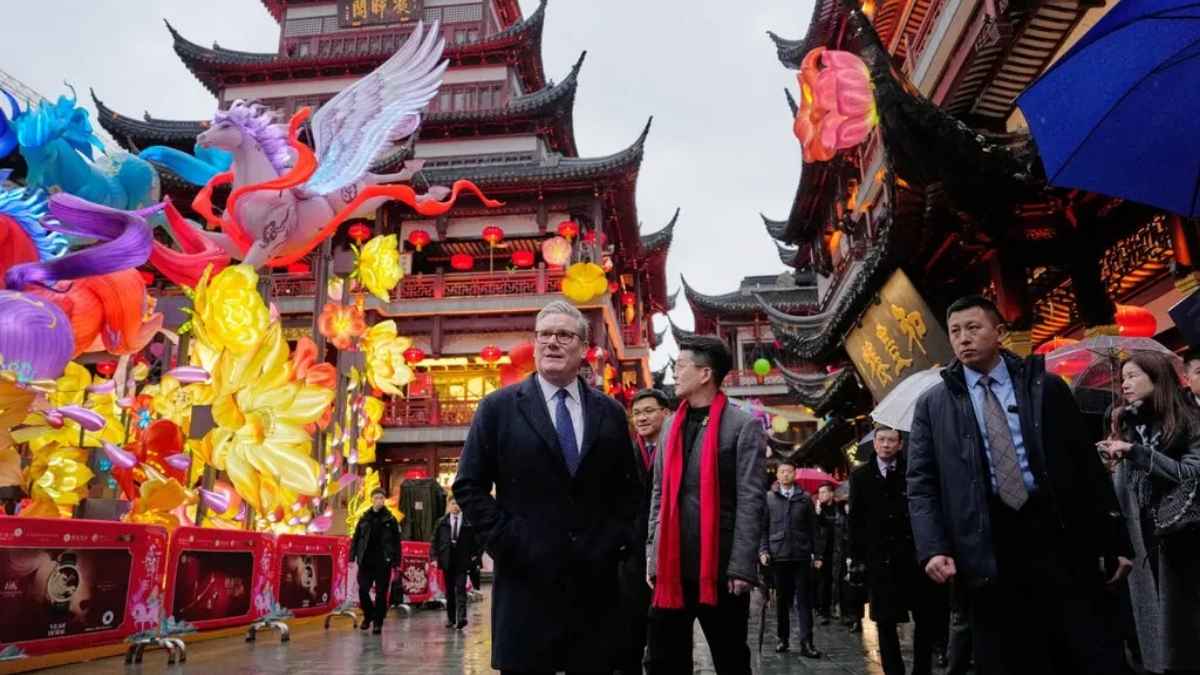
A CASE OF single malt whisky will now enter China at a much lower tariff. That small concession, agreed during Keir Starmer’s recent visit to Beijing, is a sign of something larger. In the past few months, the British prime minister, Canada’s Mark Carney and leaders from Finland, Ireland and France have all made the journey to China. Germany’s chancellor is expected soon.
Each trip produces its own incremental announcements on trade, investment or visas. Collectively they mark the most concerted wave of Western engagement with Beijing in nearly a decade. The pilgrimages are not born of a sudden fondness for China’s system. They are a response to the volatility emanating from Washington.
Since returning to office last year, America’s president Donald Trump has pursued trade policy as economic bombardment. He has threatened or imposed sweeping tariffs on friends and rivals alike, from the European Union to Greenland. The uncertainty is corrosive. For allied leaders, the calculation is grimly pragmatic. When one major pillar of the global economy acts with such capricious force, looking to diversify economic ties is simple risk management. “We cannot have all our eggs in one basket,” notes a senior European trade official. The basket in question is America’s.
China has been waiting for this moment. Its strategy is defined by a pointed contrast. Where America is abrupt and unilateral, China presents itself as patient and willing to deal. It is not demanding ideological fealty or security realignments from these visitors. Instead it offers what they desperately seek: predictability. Tariffs on canola are cut for Canada. Visa-free travel is eased for Britain. Supply-chain dialogues are opened with European counterparts. The political asks on human rights or Ukraine are kept muted, for now. Beijing understands that in a storm, appearing as a stable port is advantage enough.
This is economic hedging rather than political realignment. None of these leaders is preparing to abandon America’s security umbrella. The trips to Beijing are exercises in damage limitation, seeking to cushion their economies from American policy swings and securing access to critical minerals and China’s vast consumer market. AstraZeneca’s new investment pledge in China is a commercial decision by a firm seeking growth, not an endorsement of Beijing’s policies. The paradox is that by taking these steps to insure against American unpredictability, allies are actively undercutting the united front America has long tried to maintain towards China.
The fragility of this new accommodation is obvious. Co-operation remains stubbornly transactional. European officials privately stress that their overtures are issue-specific and come with silent red lines on technology transfer or security. Public opinion in many democracies is strongly sceptical of China. A future crisis over Taiwan or in the South China Sea would rupture these careful dialogues instantly. For Beijing the risk is that its success is shallow. It is winning grudging business, instead of real trust. The relationships are brittle, built on shared anxiety about America rather than shared values with China.
The lasting consequence may be a gradual fragmentation. The Western alliance is not breaking. But its economic interests are slowly diverging from its strategic rhetoric. Every tariff cut agreed in Beijing, every supply-chain pact signed, creates a local constituency with a stake in stable relations with China. This complicates future efforts to coordinate policy, whether on containing Chinese technology or responding to aggression. America’s attempt to rally allies against China relied on a common perception of threat. By making itself a source of economic threat, America has inadvertently given its allies a reason to sit down with its rival. They raise a glass of tariff-cheaper whisky to that. ■