ILLUSTRATION: SHUTTERSTOCK
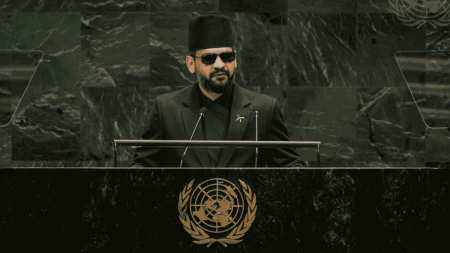
WHEN BALENDRA SHAH was sworn in as Nepal’s prime minister on March 27th, he came bearing a gift for the country’s beleaguered investors: a 100-point reform plan, complete with deadlines. A one-door approval system for foreign investors, up and running within 30 days. Business registration cut to two days. Every major infrastructure project sorted into funding categories within 90 days. It reads like the work of a man in a hurry.
Nepal has needed someone in a hurry for a long time. The country has sat near the bottom of South Asian business rankings for years, squeezed by red tape and a political culture in which delay is, for many officials, a source of income. The Investment Board, the Industry Department, the Trade Promotion Centre and a handful of other bodies all claim some role in helping investors, and spend much of their energy getting in each other’s way.
A single window, in practice, has usually meant a window behind which several more windows are waiting. Mr Shah, a former mayor of Kathmandu with a taste for bold gestures and a cult-like following among younger Nepalis, has diagnosed this clearly. His plan attacks it head-on: merge, digitise, set deadlines and publish dashboards.
That is the right answer. Whether Nepal can deliver it is another headache entirely.
The civil service has learned, through long experience, that the safest response to a new government’s ambitions is to wait. Dashboards get built; the projects they are meant to track do not always follow. The plan calls on the finance ministry and the central bank to co-ordinate relief packages for businesses hit by last year’s protests, while also asking the home ministry to fast-track prosecutions of those who caused the damage.
Sensible goals both but they require three institutions that have historically communicated mainly through press releases to suddenly start working together. The plan’s answer to this is a “PM Delivery Unit” with a central dashboard and ministry-level targets. Nepal has had project-tracking systems before.
There is real good sense buried in the document. The proposal to turn the country’s listless Employment Service Centres into proper hubs—from combining skills training and entrepreneurship support to help for returning migrant workers—reflects a candid recognition of Nepal’s underlying labour-market problem. Over 2,000 Nepalis leave for work abroad every day. The money they send home makes up over a quarter of GDP. No growth strategy is serious unless it grapples with that fact.
Getting CTEVT (Council for Technical Education and Vocational Training), the Labour Ministry’s training centres and business development bodies into the same building and pointed in the same direction would be a real achievement. Whether three agencies that have long ignored each other can be persuaded to share a canteen is less certain.
The tourism section has the flavour of a wish list. Making Nepal a hub for wellness tourism—from yoga, meditation and pilgrimage to natural medicine—is not a foolish idea for a country wedged between the Himalayas and the Ganges plain that has been selling its geography to seekers of one sort or another for centuries. “Nepal Wellness Year 2027” may prove to be a clever piece of national branding. It may also prove to be a committee. The same paragraph notes, with evident pride, that Nepal persuaded the United Nations to designate April 15th as International Wellness Day. It is not entirely clear what this has to do with hotel occupancy rates but the drafters seemed pleased.
What the plan lays bare, in the end, is the oldest problem in Nepali politics: the gap between what the government says it will do and what the state is actually capable of doing. Mr Shah is sharper than most of his predecessors about where the blockages are. He is right that business registration takes too long, that agencies overlap, that investors are fed up, that the country is poorer than it should be. If even a third of the plan lands on schedule, private confidence will improve and investment will follow.
But Nepal’s investors have learned to read reform plans the way farmers read long-range weather forecasts: with interest and without much faith. Mr Shah has a mandate and a deadline. He is running out of reasons not to. ■