IMAGE VIA NEPAL VIEWS
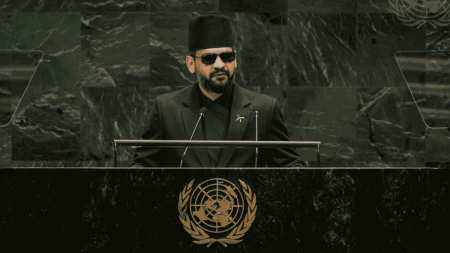
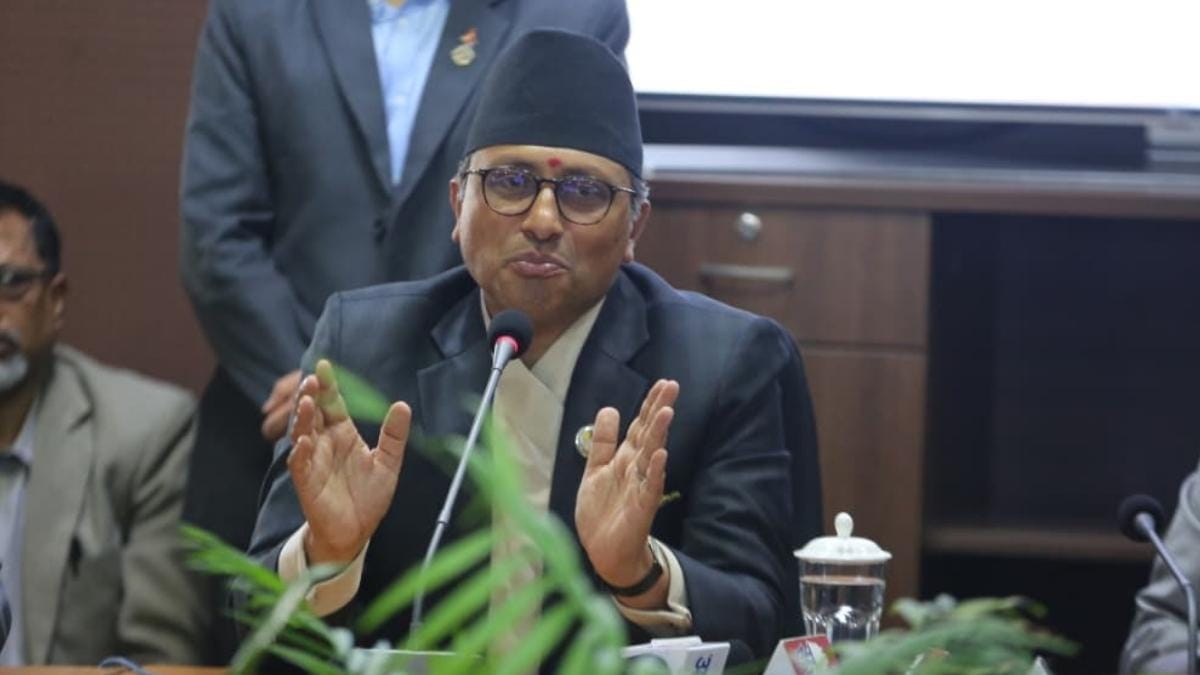
WHEN SWARNIM Wagle stood before Nepal’s parliament last month to present his first budget, he did something his predecessors rarely managed. He told the truth about the mess he inherited. His pre-budget white paper laid out the diagnosis with clinical precision: weak revenue mobilisation, chronically low capital spending, a financial sector stuffed with bad loans and an economy growing far too slowly to absorb the young people pouring out of schools and, increasingly, out of the country. The finance minister, a Harvard-trained economist who had spent years studying these very problems at the UN Development Programme and the World Bank, could not have been clearer about what was broken. Then he ignored his own diagnosis.
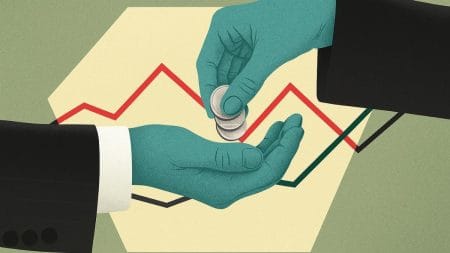
The budget he unveiled was the largest in Nepal’s history: Rs2.12trn, targeting 7% growth. Nearly 60% that sum went to recurrent administrative expenditure. Capital spending, the stuff that builds roads, power plants and actual productive capacity, received barely a fifth. To please the middle-class voters who swept prime minister Balendra Shah’s reformist party into office, Wagle doubled the income tax exemption threshold to Rs1m and slashed the top marginal rate by ten percentage points. The arithmetic required mobilising Rs1.4trn in domestic revenue and borrowing Rs410bn from domestic lenders. Revenue collection had already missed its half-year target by Rs130bn. The Asian Development Bank, which knows a thing or two about South Asian budgets, projected growth at 2.7% for the year.
This is the rhythm of Nepali economic policy: extraordinary clarity about what is wrong, followed by decisions that test the limits of fiscal sanity. The diagnosis is sound. The prescription is political.
That fiasco recurs across every corner of the economy. Nepal’s central bank has cut its policy rate to spur investment while warning that the largest commercial banks systematically mask bad debt. The country sits on the Financial Action Task Force’s grey list, a regulatory black eye that restricts international financial transactions; a recent review found meaningful progress on only nine of fifteen action items. The Competition Promotion Board has existed for years without once breaking the localized cartels that dictate industrial pricing. Capital markets remain vulnerable to manipulation; corporate oversight bodies move too slowly to correct the imbalances. Each failure has been documented by technocrats. None has been comprehensively corrected by the politicians whose job is to execute those findings.
The reason is not mysterious. Nepal’s politics runs on patronage, and patronage requires exactly the opacity that good economics tries to eliminate. Business families that built fortunes on political access have leveraged deep relationships inside a banking system that carries billions in exposure to vulnerable corporate sectors. The new government, elected on a wave of Gen-Z fury against corruption and nepotism, promised to break this nexus. Its governance reforms (from removing political appointees and restricting partisan trade unions to digitising services) are real and welcome. But governance reform without economic reform is like repainting a sinking ship. The budget suggests that although the political audience has changed, the economic thinking is still stubbornly the same.
None of this is a failure of analysis. Nepal has more highly credentialed economists per capita in its bureaucracy than at any point in its history. Wagle himself is proof that pedigree without enforcement power changes nothing. He sits at the cabinet table; the multilateral institutions’ structural diagnoses sit in every ministry’s inbox. What Nepal lacks is a process that forces political decisions to answer to that analysis rather than circumvent it.
The fix is institutional and not personal. An independent fiscal council that publishes credible forecasts before budgets are written, not after they fail. A central bank with statutory authority to act on its asset-quality findings without ministerial pushback. A competition body with the legal power to break up domestic cartels rather than mediate their periodic price increases. A tax system that does not extract nearly 45% of its revenue from imported goods, leaving the budget hostage to global oil prices.
Critics will say this asks too much of institutions in a country where institutions are what is missing. They have a point: an independent fiscal council means little if the same interest groups fund political campaigns.
Yet the alternative—ie: waiting for politicians to discipline themselves once they hold power—has been tried for three decades. It has produced a debt-to-GDP ratio climbing towards unsustainable levels and a young generation leaving the country faster than at any point in its history. Nepal lacks rules that survive contact with the people who benefit from ignoring them.
The technocrats are already in the room. Wagle’s own white paper proved that. What Nepal has never tried is giving them the power to act before the next election cycle, or the next budget speech overrides what they already know. The country’s economists have written the same chapter for a decade. It is time someone let them finish it. ■