IMAGE VIA GOOGLE
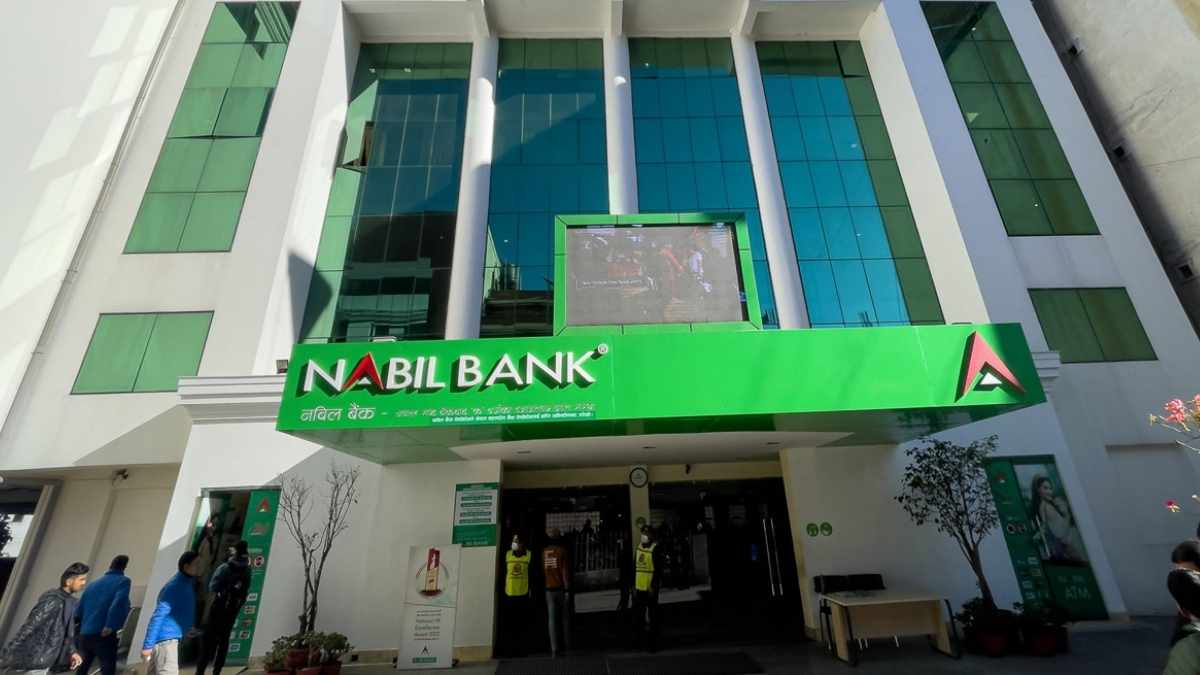
ASK MOST Nepalis who runs Nabil Bank and they’ll probably say Manoj Kumar Gyawali, who took over as CEO in June 2025. Ask who runs Global IME, and the answer is Surendra Raj Regmi, appointed CEO in 2024. Both men are hired the way you’d hire a CEO anywhere: for retail banking chops, for risk management experience, for the ability to run a complicated institution day to day. That’s the visible layer of Nepali banking leadership, and across the sector right now it’s almost entirely turned over: NMB Bank got a new chief, Govinda Ghimire, in April 2025; Standard Chartered Nepal has seen its own transitions; and state-owned Rastriya Banijya Bank changed leadership a year before that. Reasonable people rotating through four-year terms like bank executives everywhere. None of them is who actually controls the bank.
That power sits a floor above, with the promoters: the individuals and business houses who founded the institution and hold the initial promoter shares, which typically comprise 51% of the bank’s equity.
Under Nepal’s Bank and Financial Institutions Act (BAFIA), promoter shares are strictly regulated and locked for a mandatory lock-in period after inception, after which any transaction or conversion to ordinary shares requires the explicit prior approval of the Nepal Rastra Bank (NRB). Directors and chief executives, meanwhile, face stringent regulatory cooling-off periods and insider trading restrictions during and immediately after their tenures. The law clearly assumes the promoter layer is where the real, durable control lives: which is why it locks that layer under heavy oversight, while letting the executive CEO layer churn on fixed contracts.
And in Nepal that promoter layer overlaps, again and again, with the same handful of family business empires that show up everywhere else in the economy. This isn’t a theoretical concern dreamed up by regulators with too much free time. In April a massive multi-agency financial crime investigation cracked open the affairs of the Shanker Group and Infinity Holdings. Investigators handling the money laundering and banking offense probes found that Rs450m had been unnaturally funneled from Jagdamba Steel, a major Shanker Group company, into the personal accounts of political fixer and businessman Deepak Bhatta back in late 2022.
The transactions, initially flagged by the central bank’s Financial Intelligence Unit (FIU), bypassed public audits and corporate governance layers. In April Shanker Group Vice Chairman Sulav Agrawal and Deepak Bhatta were arrested. By June government attorneys filed historic indictments in the Special Court and District Courts against dozens of high-profile defendants, seeking tens of billions of rupees in damages for coordinated securities fraud, insurance embezzlement and money laundering.
Here’s the part that matters for banking specifically: a corporate group with immense borrowing relationships across the financial system isn’t just a customer. Promoter families like this commonly sit on bank boards, or wield immense influence over them, placing the very networks deciding who gets credit in the same rooms as the conglomerates receiving the largest volumes of it. Nepal’s banking regulations technically restrict direct self-lending, explicitly banning banks from extending credit on the personal guarantee of their own directors or to heavily exposed related parties. The Jagdamba Steel and Himalayan Reinsurance cross-holdings case, however, serves as an ugly demonstration of how easily those insider networks manipulate the boundaries between corporate borrowing and regulatory capture.
The central bank’s own numbers back this up. Independent asset quality reviews and loan portfolio audits commissioned by the NRB have consistently showed that major commercial banks carry hidden non-performing loan (NPL) stress significantly higher than the artificial bad-loan ratios reported to the public in standard quarterly filings. The gap is maintained through “evergreening”: the widespread, prohibited practice of rolling over distressed credit or issuing fresh loans to service old debts just to keep them looking sound on paper. It’s hard to imagine that gap persisting at scale without someone, somewhere close to the lending decision, having a powerful reason not to look too closely.
So when people ask who actually runs Nepal’s biggest banks, the answer is: not the person whose photo is on the annual report’s front page. The CEOs are real and they do real work, but they operate on a ticking clock. The deep-pocketed promoters are not so easily moved. If you want to understand why a bank’s bad debts stay hidden multi-quarter running, you don’t start with the management organogram. You start with the share registry—and with whichever corporate dynasty has been anchoring it, mostly undisturbed, since the day the bank opened its doors. ■