IMAGE: GETTY IMAGES
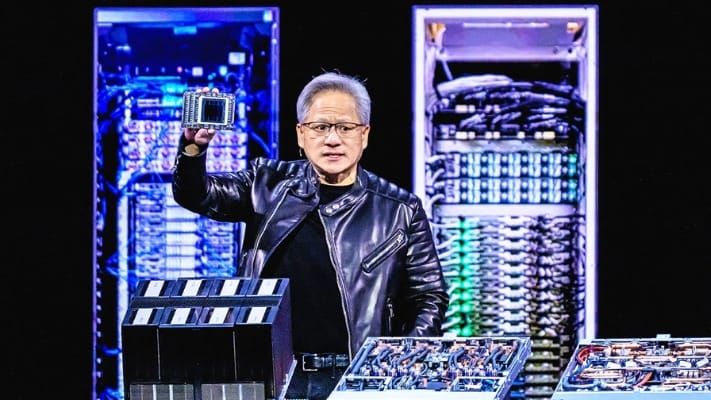
BEGIN WITH A number that ought to cause some discomfort in Kathmandu’s economic ministries. Between January 2023 and the end of 2025, NVIDIA delivered a total return of some 870%: 239% in 2023, 171% in 2024 and 39% more in 2025. The S&P 500, without any particular AI exposure, returned around 24, 23 and 18% in the same three years, compounding to a total return of approximately 80%. Anyone in the world who had the legal right to buy an index fund and a brokerage account turned $10,000 into roughly $18,000 over those 36 months from pure market exposure alone, before doing anything clever. A Nepali schoolteacher or bank officer, who had neither the legal right nor the practical mechanism to make that purchase, turned the same $10,000 into roughly $12,300 in a fixed deposit earning Nepal’s 7% bank deposit rate, before inflation of around 3% cuts that real return to almost nothing.
That return-gap is compounding: wealth building on wealth, each year’s gains becoming the base for the next. The people who participated in the global equity rally between 2023 and 2025 are not merely richer than they were: they are on a permanently higher trajectory than those who didn’t, because capital compounds over time and the years they missed cannot be recovered.
A middle-class household in India, which has had access to US equity markets through the Liberalized Remittance Scheme since 2004, built a different base than its Nepali counterpart.
Nepal’s capital controls are, by the standards of South Asia, exceptionally restrictive. The Act Restricting Investment Abroad, passed in 1964 and for six decades essentially unchanged, prohibited outbound investment for almost all purposes. A landmark reform, the IEBEEI Act passed in March 2025, finally allowed IT companies to invest abroad using income earned from technology exports, and expanded the rights of non-resident Nepalis to invest their foreign-earned income internationally.
For a software company in Lalitpur with a US client base, or for a Nepali engineer working in Silicon Valley, the new law matters. For a salaried accountant in Butwal with Rs50,000 a month and a desire to buy a global index fund, nothing has changed. The default legal position, confirmed by the Nepal Rastra Bank, remains prohibition unless case-by-case approval is granted—an approval process so cumbersome that, as one detailed analysis by the economist Sushil Parajuli documented, commercial banks themselves hold barely 0.05% of their portfolios in foreign securities.
It gets worse when you trace where Nepal’s middle class actually fits into the AI economy. An estimated 100,000 Nepali IT workers are now employed in the sector, earning $1bn or so a year in foreign currency, much of it from US-based clients who use the very AI tools that have driven technology stocks skyward.
Freelance developers building on GPT or Claude, data annotators processing the training sets that power large language models, remote engineers working on products distributed through cloud platforms: these are workers whose daily labour feeds the earnings of the companies that NVIDIA’s chips power and that the S&P 500’s tech sector reflects. They contributed, in some small measure, to the bull market. They were structurally barred from participating in it.
Meanwhile Nepal’s stock market offers no substitute exposure. The NEPSE is valued at around 75% of GDP, a respectable ratio on paper. Strip out the banks, insurance companies and state-owned enterprises that dominate the listing, and you are left with a market that contains essentially zero technology or AI-adjacent exposure.
The exchange peaked above 3,200 in 2021, fell to below 2,000 in 2022 as interest rates rose and has spent the subsequent years whipsawing below 3,000. A Nepali investor who put their savings into the NEPSE in 2021 is still recovering their nominal losses. There is no Nepali version of the Nasdaq such as sector fund, thematic ETF or accessible path into the global technology trade.
Finance Minister Swarnim Wagle’s latest budget acknowledges this, at least obliquely. It proposes a Sovereign AI Computing Centre; fellowships to bring Nepali AI researchers back from abroad; as well as a plan to use part of Nepal’s foreign exchange reserves to seed an AI infrastructure fund. These are instruments for building a technology sector, which is a different project from allowing individuals to participate in the global one. Wagle’s budget contains no proposal to allow retail investors to buy foreign equities, nor timeline for capital account liberalisation.
The reserves argument, often deployed against liberalisation, carries less weight every year. Nepal holds $24bn in foreign exchange, covering months of imports. This is a country sitting on a large external cushion while its middle class is locked out of the investment markets that have generated more wealth, more quickly, than any asset class in a generation.
The reserves are managed entirely by the NRB, which invests them conservatively in foreign government bonds: a policy that earned Nepal roughly 2-3% on its $24bn while the US technology sector compounded at multiples of that. The opportunity cost of running the reserves this way is big. The opportunity cost of denying individuals access to the same markets is bigger, and falls entirely on households rather than on a central bank’s balance sheet.
A Nepali who sent $10,000 to an S&P 500 index fund in January 2023 and a Nepali who put Rs1.3m in a fixed deposit at the same time are not equally wealthy today. They were never going to be. The law made sure of it. ■