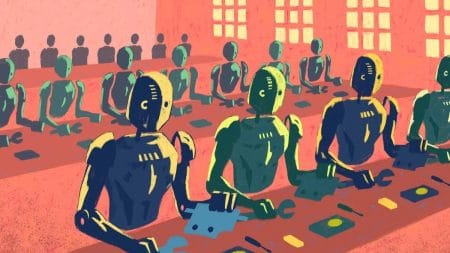
For a species supposedly in charge of its destiny, humans are curiously prone to autopilot. They pick careers because they are good at them, not because they care. They pursue relationships because they feel timely, not right. They move cities, choose degrees and accept promotions as if life were a conveyor belt rather than a series of decisions. The fallout is not always failure. Often it is something worse: success that feels hollow.
Consider Vardan, a fictional everyman with a very real predicament. First in his class, straight into a lucrative finance job and outwardly a model of ambition realised. But a year in, he was exhausted. “I do not even like finance,” he confessed. “I just thought I was supposed to do this because I was good at it.” Being competent, it turns out, is no substitute for being convinced.
This is not the usual millennial angst or Gen Z flakiness. It is something older and deeper: a structural misalignment between aptitude and aspiration. From Confucius to careers counsellors, societies have long assumed talent naturally falls in line with desire—that if one is good at something, one must also want to do it. But the modern economy, with its buffet of options and performative success metrics, has decoupled the two. You can now be brilliant at building spreadsheets but dream of gardening. And no one may notice, least of all yourself.
The trouble is that “what do you want?” is a far harder question than “what are you good at?” The latter has grades, rankings, salaries. The former has only feelings, usually inconvenient ones. It may ask you to disappoint your parents, walk away from sunk costs or admit you climbed the wrong ladder. It is easier, and socially safer, to just keep climbing.
Yet the cost of evasion accumulates. It shows up in sleepless nights, social media envy and that curiously modern malaise: success without satisfaction. The American Psychological Association finds nearly 60 percent of adults report feeling “detached” from their work. A 2023 McKinsey study found only one in three workers globally felt “engaged”. These are not complaints about workload. They are indictments of misdirected lives.
The mythology of modern capitalism compounds the confusion. “Work hard and you will succeed,” it promises, omitting the caveat: provided you are working towards something that matters to you. “Network well,” it adds, “and doors will open”—but not all doors lead somewhere worth going. The hustle culture promoted on TikTok and LinkedIn confers abundant how-to guides, but precious little why-to reflection.
Some try to solve the problem with sabbaticals or self-help books. Others opt for more dramatic reversals. Vardan, for example, left his finance job and started a travel business. He earns less but smiles more. This kind of pivot is often mistaken for recklessness. In truth, it is a belated course correction. The real risk was never quitting: it was continuing on a path that was not his.
There is a broader economic irony at play. Market societies thrive on choice, yet provide little education in choosing. Schools teach algebra, not introspection. Careers are plotted with Excel sheets, not existential inquiry. The fallout is a population adept at optimising but untrained in desiring. In a hyper-efficient economy, inefficiency begins in the soul.
That is not to say that every yearning deserves to be followed. Many passions prove mercurial; many dreams collide with rent payments. But ignoring them entirely is equally impractical. Even capitalism, for all its rationalist pretensions, functions best when people are aligned with their pursuits. A motivated worker is a productive one. A founder chasing vision is more resilient than one chasing clout. Clarity of desire, in short, has economic utility.
So how does one find it? Not by waiting for thunderclaps of insight. More often, it arises in the “hundred tiny moments of discomfort” that the original essay references: the morning dread before a Zoom call, the pang of jealousy at a friend’s unorthodox career, the strange relief when a meeting is cancelled. These are not breakdowns. They are breadcrumbs.
To follow them requires discipline—not the kind preached by productivity gurus, but the quieter kind: the discipline to reflect, to resist social scripts, to ask “Is this mine?” before saying “Yes”. That, not raw intellect or dogged labour, is the true competitive advantage in an economy drowning in talent but starved of intentionality.
The ancient Greeks had a word for it: telos—an end, a purpose. Knowing one’s telos was the essence of a good life. Today it might just be the essence of a coherent one.
In the meantime, the conveyor belt keeps moving. Promotions will be offered. Houses bought. Partners proposed to. Cities relocated. The world will applaud, algorithmically and otherwise. But sometimes the most radical thing one can do is stop, look around and ask: whose life am I living?
If the answer feels unclear, that is not a crisis. It is a clue. And in a world where most people follow the script, choosing your own story is the subtlest form of rebellion. ■