It has never been easier to build a world-changing company, in theory. A teenager in Lagos can sell handmade jewellery in Berlin. A data scientist in Bangalore can write code that runs a New York hedge fund. A biologist in Singapore can edit genes with tools more powerful than anything found in Cold War arsenals. And yet for all this technological promise, many chief executives would be forgiven for gazing out the window and wondering what on earth they’ve signed up for. Running a company in the 21st century is as exhilarating as it is exhausting.
The modern firm is buffeted by contradictory forces. Globalisation continues apace but so does economic nationalism. The world is wealthier than ever but trust in institutions, corporate ones included, is near historic lows. Profits are up but so are expectations. Consumers demand convenience and conscience. Investors want both quarterly returns and long-term sustainability. Regulators are either asleep at the wheel or breathing down your neck.
The old playbook no longer works. In its place is a hazier set of principles requiring executives to act as diplomats, ethicists, technologists and community stewards, all while turning a profit. The new normal is a permanently shifting one.
Once upon a time the CEO’s job was clear: maximise shareholder value, minimise distraction. Milton Friedman’s mantra ruled boardrooms from Chicago to Seoul. But stakeholder capitalism, a dusty concept revived in glossy brochures and UN summits, is back with a vengeance. In 2019 America’s Business Roundtable declared firms exist not just only shareholders but for everyone: employees, suppliers, customers, society. Critics dismissed it as “purpose-washing”. Yet the pressure to live up to it is real.
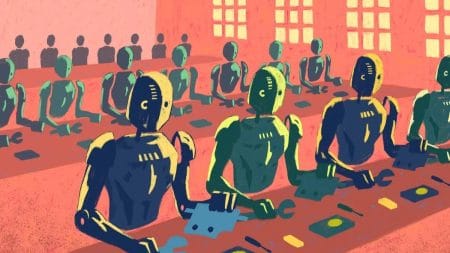
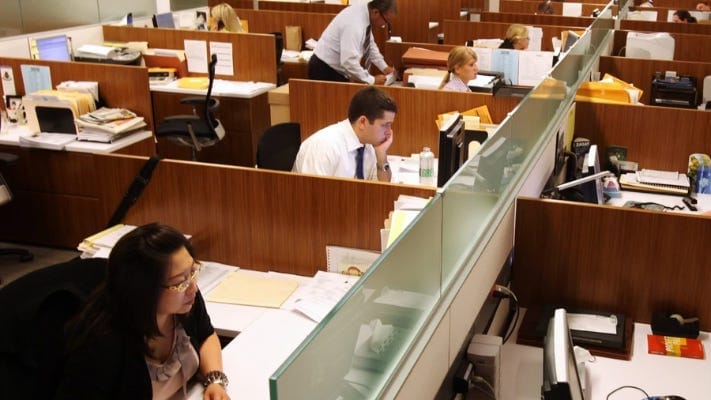
The balancing act is increasingly complex. Take the workforce. The classic model—lifelong employment, pensions, upward mobility—has given way to fissured workplaces and a gig economy that delivers flexibility for some, precarity for many. Technology has enabled this fragmentation while also threatening to displace workers altogether. Up to 375m people could be forced to switch jobs by 2030 as artificial intelligence and automation gain ground. A handful of forward-looking firms like AT&T and Walmart are investing in retraining. But in low-wage sectors it is commonly cheaper to replace workers than to reskill them. In a world where labour markets are fluid and responsibilities diffuse, where precisely does the employer’s duty begin—and end?
Then comes climate change, capitalism’s largest and slowest reckoning. It is no longer only an ESG checkbox but also a boardroom risk. Floods shutter factories. Fires sever supply chains. Droughts boost commodity prices. Insurance markets are blinking red. Yet corporate efforts remain piecemeal. Only a quarter of American firms have committed to net-zero targets. Even fewer have clear roadmaps. The tough decisions—cutting profitable but polluting products; pressing suppliers in poor countries to decarbonise; pricing carbon into strategic planning—remain optional and politically perilous. Here too leadership comes with liabilities.
Technology giveth…
The digital revolution, which was heralded as a productivity miracle, has proved more ambivalent. True it has empowered micro-multinationals and levelled entry barriers and spawned entire industries. The rise of cross-border data flows—up 148-fold since 2005—has redefined globalisation, decoupling trade from the shipping container. But it has also birthed new dilemmas.
Data, the new oil, is less about scarcity and more about extraction. Users hand over personal information in exchange for convenience. Few realise what they have surrendered. The asymmetry of power between platform and participant grows. Privacy, ownership and consent (once legal fine print) are now central battlegrounds. Facial recognition, algorithmic hiring, predictive policing: what began as tools for efficiency now flirt with authoritarian misuse. Some firms like IBM and Mastercard have called for regulation. Others are content to move fast and break things—until, inevitably, the backlash arrives.
Artificial intelligence is especially fraught. Apart from the hype is genuine risk. Biased datasets produce biased decisions, but especially in credit, hiring, law enforcement. Algorithms amplify, rather than neutralise, human prejudice. The same machine that predicts customer churn can also entrench inequality. Worse still, the consequences are opaque. Accountability like the code is buried deep. For now ethical safeguards remain voluntary and insufficient.
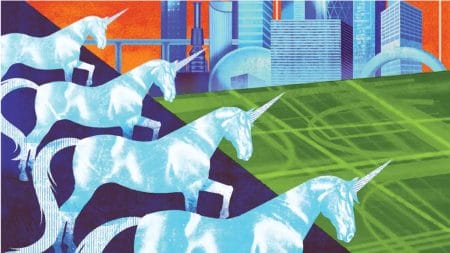
In this new environment fortune favours the fast, the flexible and the favoured few. A small number of superstar firms now capture the lion’s share of global profits: some 80% in many sectors. They are more global, more intangible, more data-rich than their 20th-century counterparts. They invest heavily in R&D and dominate markets with network effects that border on monopolistic. But their dominance is also precarious. Nearly half of top-performing firms fall from grace each business cycle. For every Amazon, there is a MySpace. Below the surface lurk zombie companies: kept alive by cheap capital but structurally unsound.
Yet the bar for success has never been higher. Emerging markets now account for the bulk of global consumption growth. By the end of this year north of half the world’s population will have disposable income. These consumers are younger and more connected as well as more discerning. Brand loyalty is fleeting; reputational damage, viral. Building trust is no longer a marketing function: it is a strategic imperative.
Meanwhile geopolitics has returned with a vengeance. Supply chains, which used to be designed for cost-efficiency, must now be retooled for resilience. Companies operating across jurisdictions face a patchwork of rules: on data, labour, antitrust and sustainability. Trade wars, sanctions and export controls have turned globalisation into a high-stakes game of chess. Circumnavigating it requires agility and nerve.
So how does one build a 21st-century company? With difficulty—and intention. First, define purpose: not as a slogan but as a framework for decision-making. Second, acknowledge all stakeholders: not to dilute accountability but to clarify trade-offs. Third, embrace uncertainty as the only certainty.
The best firms will be those that combine ambition with humility, speed with deliberation and innovation with ethics. They will treat data as a trust; workers as partners; and climate as material risk. They will expand not only output but also opportunity. Their goal will not be to escape scrutiny but to withstand it.
The 20th-century corporation conquered the world. The 21st-century one must figure out how to live in it. ■