IMAGE: AP
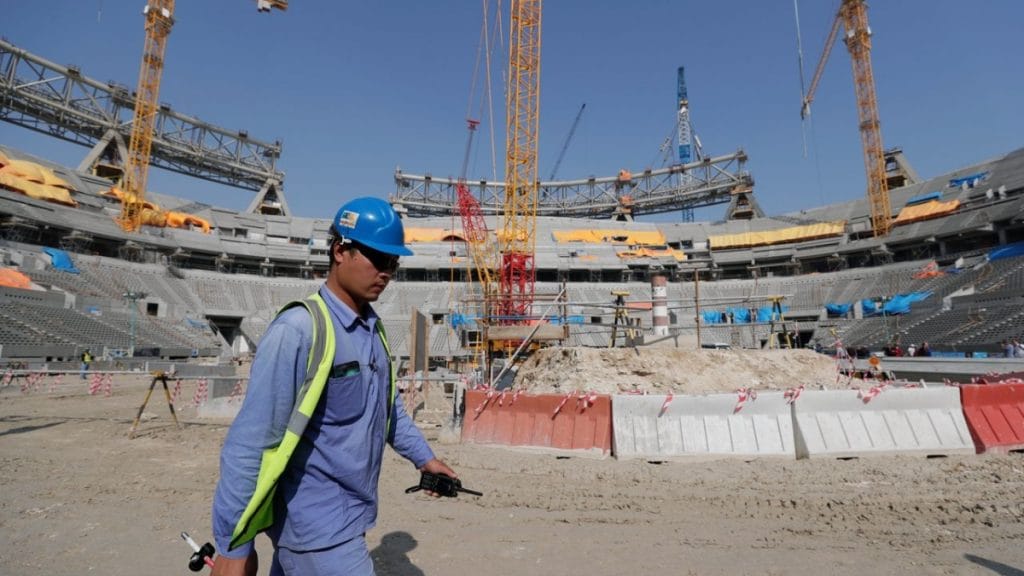
To understand Nepal’s economy, one must first understand its people’s determination to leave. Between 1996 and 2023, the government issued over 6.6m labour approvals for citizens to seek work abroad. This exodus, equivalent to more than 7% of the current population, is the central fact of the country’s modern economic life. It is both a symptom of profound domestic weaknesses and the primary reason for its surprising stability. Nepal is a nation sustained by its absent workers.
The country’s recent history can be divided into three arduous chapters. A decade-long civil war from 1996 to 2006 cost thousands of lives. A post-conflict period until 2014 was marked by political instability after the monarchy’s abolition. Since 2015, a series of shocks—devastating earthquakes, a border blockade by India, a landslide and a pandemic—have battered the country. Through it all, political turnover remained high, even after a new constitution in 2015 established a federal republic.
Given this backdrop, Nepal’s economic performance is, in one light, remarkable. From 1996 to 2023, real GDP grew by an average of 4.2% a year. The main engine was not manufacturing or technology, but money sent home by migrant labourers. Remittances have tripled as a share of GDP since the conflict years, reaching nearly 25% between 2015 and 2023. This cash deluge finances robust domestic consumption, insulating the economy from its many troubles.
Yet this resilience is relative. Benchmarked against similar lower-middle-income countries, such as Bangladesh and Kyrgyzstan, Nepal’s growth has been modest. For most of the past three decades, its expansion lagged behind these structural peers. Only during the period of repeated shocks, from 2015 to 2023, did its performance draw level, partly because one peer, Bolivia, suffered a deep recession. The consequence is a widening gap in real economic output. While Nepal’s economy tripled in size between 1996 and 2023, the economies of its peers grew 3.5 times, on average.
The story looks different, and more positive, through the lens of individual income. Nepal’s gross national income (GNI) per person has grown faster than that of its structural peers, fuelled by two things. The first is the same remittance inflow that props up GDP. The second is slow population growth. With fewer young and old dependants relative to its working-age population, Nepal stands to benefit from a demographic dividend, where a larger, more productive workforce turbocharges growth. This has helped the country make some progress in catching up. In 1996, its income per person was 39% of the average for its structural peers; by 2023, it had risen to 50%.
The most striking success has been in poverty reduction. Three decades ago, about 55% of Nepalis lived in extreme poverty, defined as surviving on less than $2.15 a day. By 2023, that share had plummeted to 0.4%—a lower rate than in peer countries. Higher poverty lines show similar progress. Evidence of improved living standards is visible in rising per-capita spending in both cities and villages. Remittances are directly responsible for more than 30% of this poverty reduction since 2011. They also act as a private safety net. During the covid-19 pandemic, households with a member working abroad were far less vulnerable to domestic income shocks.
This progress, however, rests on fragile foundations. Nepal is acutely vulnerable to climate change, ranking as the tenth most affected country globally. Its mountainous terrain, monsoon-dependent agriculture and unplanned settlements put an estimated 80% of its population at risk from natural disasters. The state has limited capacity to respond. Public spending on social assistance is just 1.6% of GDP, and programmes are rigid, typically targeting categories like the elderly rather than the dynamically needy. During the pandemic, this system proved incapable of scaling up. Direct fiscal support reached just 2% of households, compared with a regional average of nearly 20%.
The deeper problem is that the very system that provides stability also discourages necessary change. The outflow of labour is a rational response to a weak domestic job market. A typical migrant worker earns three times more abroad than at home. The resulting remittances have raised living standards and reduced pressure on the government to pursue difficult economic reforms. There is a risk of a future brain drain, should the highly educated begin to leave with their families. For now, the constant flow of foreign cash acts as a ballast for the economy, but also as a drag on its development.
If historical growth rates persist, Nepal would take two decades to reach upper-middle-income status, without ever closing the income gap with its peers. The industry of its people has granted the country a remarkable stability and lifted millions from poverty. Yet this has come at the cost of building a more diverse and resilient economy at home. Nepal’s challenge is to convert the lifeline of remittances into a foundation for self-sustaining growth. For that, its citizens’ ambitions will need to be met not just in foreign lands, but in their own. ■