Image via The Kathmandu Post
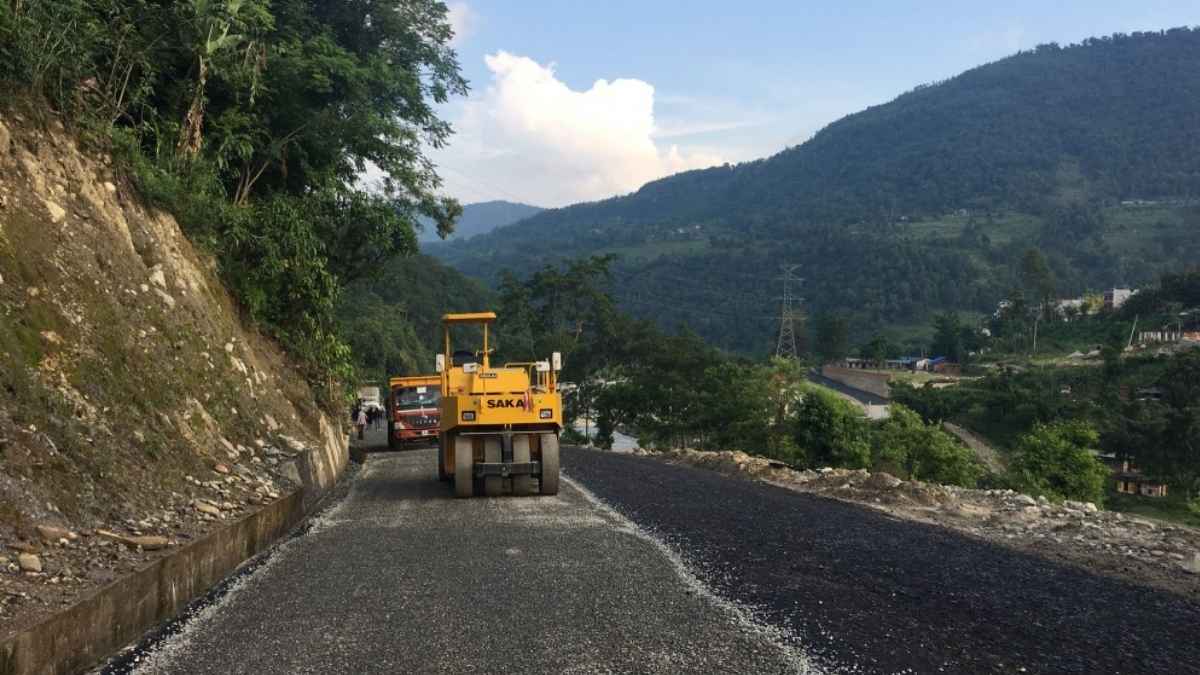
If you flew over Kathmandu, you’d think Nepal was in the midst of a construction boom. Its skyline is thick with cranes. The hills around it are scored with the white gashes of new roads. The budgets speak to the same ambitious impulse: the country now spends lavishly on public investment. Yet on the ground, progress is barely visible. Grand schemes stall for years. Half-built bridges rust. Critical roads remain ribbons of mud.
Nepal is pouring money into infrastructure, but the cup is broken. The problem isn’t a shortage of cash. It’s a catastrophic failure to spend it wisely.
For many decades Nepal underinvested. That neglect left it with a frail skeleton of public capital, which now constrains everything in a rugged, landlocked country where good roads and power are economic lifelines. The 2015 earthquake sparked a belated spending surge, with investment peaking at over 11% of GDP. But that splurge papered over the state’s rotten plumbing. Spending has since slipped back. The hangover has exposed an alarming truth: more money has not bought more bridges, faster growth or better lives.
Why not? Start with how projects are chosen. In 2020 Nepal set up a National Project Bank, designed to vet proposals for feasibility. In truth pet projects generally bypass it. They enter the budget with shaky cost estimates and improbable timelines. The result is a fantasy list of commitments. Take the 17 “National Pride” projects. At today’s funding rate they’d take 41 years to finish. Even if the entire federal capital budget were devoted to them, completion would take eight years. The state has promised a banquet but set the table for a snack.
This overcommitment means that every project is starved of cash from the start. But the rot goes deeper. Much of the money that is allocated never gets spent. The government’s ability to execute its own budgets has collapsed. At the federal level, only about 60% of capital funds are now used, down from 74% a decade ago. For foreign-funded projects, the figure is below 40%. Each year potential investment worth about 5% of GDP simply evaporates. Handing more powers to provincial and local governments, a worthy political goal, has just multiplied the number of overwhelmed agencies without fixing the core problem.
Where does all the time and money go? Two bottlenecks stand out, each a masterpiece of state incompetence. The first is tree-cutting approval. The process takes nearly two years. First, an environmental assessment counts the trees. Then after approval, forest officers manually count them again—a ten-month exercise that generally yields a different number. Discrepancies trigger demands for a new assessment, restarting the loop. The second quagmire is land acquisition, which takes two to three years. Nepal uses a 1977 law and official valuations that systematically underprice property. When the state lowballs owners, disputes and lawsuits follow. Projects are thus crippled before a single digger arrives.
Beneath it all sits a void of basic competence. Data systems are a sham. Project costs are rarely updated, hiding overruns. Financial tracking is disconnected from planning. Thousands of projects are lumped together in budgets, making it impossible to see which are failing. Officials are, as one puts it, “planning in the dark”. The annual budget becomes a work of fiction, where investment is treated as the leftovers after day-to-day spending, with no link to what projects actually need.
The cost of this failure is immense. Growth is strangled and public trust is eroded. The country stays dependent on remittances sent home from workers abroad. A vicious cycle sets in: poor planning causes delays; delays inflate costs and tie up cash; the backlog of unfinished schemes makes it even harder to start new ones. Pumping in more money, as the post-earthquake surge proved, just means more waste.
Nepal does not need a bigger infrastructure budget. It needs a revolution in the boring, technical art of public investment management. That means ruthlessly enforcing project appraisal, as well as integrating its broken data systems and overhauling the Kafkaesque rules for land and forests. It means building real administrative skill rather than just creating new layers of government. This is the unglamorous plumbing of development. Without it, the cranes over Kathmandu will rise as markers of a state that cannot deliver. ■