IMAGE VIA NEPAL VIEWS
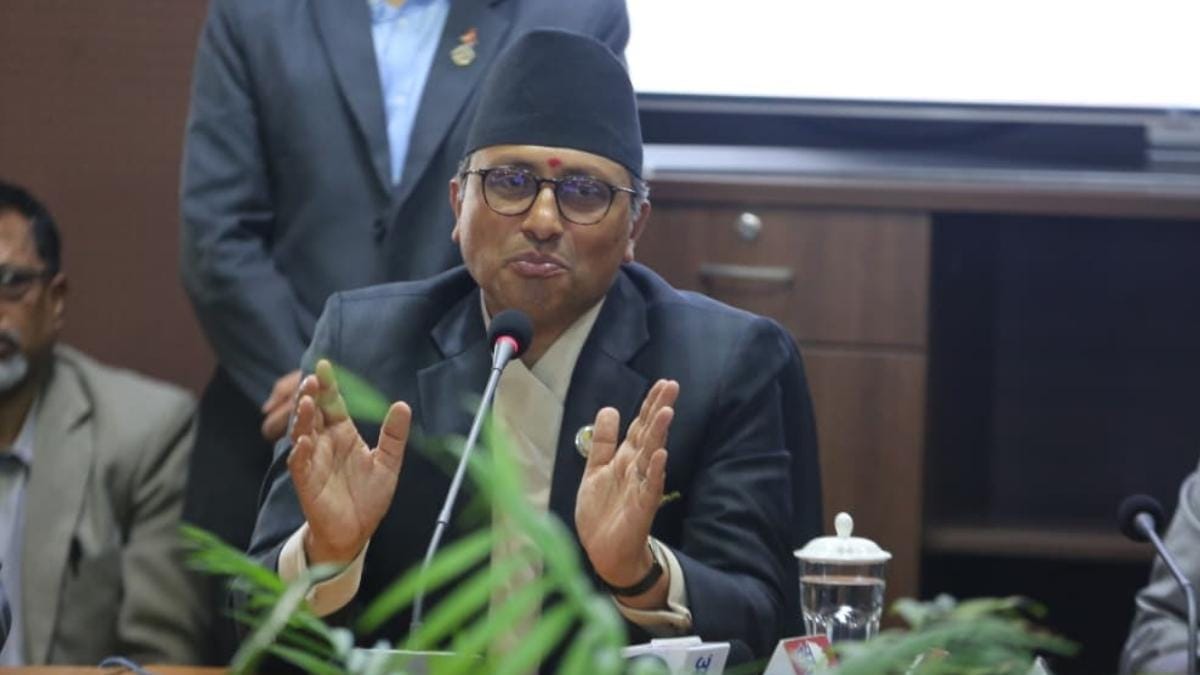
LAST MONTH Nepal acquired a finance minister who talks like a man with nothing to lose. Swarnim Wagle, an economist with a CV that includes the World Bank and the United Nations, walked into a ministry known more for its queues than its quills and announced that the old ways were finished. “I have not come to take bribes,” he told civil servants, “nor will I give them to anyone.” To industrialists accustomed to raids and revenue shakedowns, he offered a partnership. To the bureaucracy, he offered a warning: “If you are good, you are my friend. But if you are wrong, I cannot love.”
Three weeks is no time to judge a finance minister, especially in Nepal, where they change as quickly as Kathmandu’s weather. Yet Mr Wagle has moved with a speed that suggests either boldness or a man racing a clock. He has initiated the scrapping or amendment of 15 restrictive laws, including the dissolution of the Revenue Investigation Department, an agency whose name alone made business owners reach for their ledgers. He has pledged to end imprisonment for general financial irregularities, replacing jail time with monetary penalties. And he has declared that Nepal’s place on the FATF “grey list” (a designation for countries with weak anti-money-laundering regimes) is an international disgrace that must be erased.
The private sector, which has spent years dealing with a state that seemed content to hinder rather than help, has responded with something rare in Kathmandu: real enthusiasm. The Confederation of Nepalese Industries has offered public backing. Carlsberg Group, the Danish brewer, has committed a fresh Rs10bn (roughly $67m) to its Nepali operations. Local citizens in Mr Wagle’s home constituency of Tanahun have taken to describing him as “a person capable of improving the country’s economy”: a sentence not commonly uttered about Nepali finance ministers.
Yet the applause, however sincere, belies a systemic fragility. Mr Wagle’s diagnosis of Nepal’s sickness is acute. He speaks of “zero productivity growth” and argues that only a “Big Bang Reform” can jolt the economy from its slumber. His prescription includes moving towards paperless and cashless governance; ending discretionary powers within the bureaucracy; and repositioning the state as a partner to business rather than a predator. These are the words of a man who has read the literature on East Asian developmental states and wondered why Nepal cannot emulate them.
The trouble is that good governance cannot be decreed from a ministry desk. Nepal’s bureaucracy is deliberately obstructive. Bribes do not exist because civil servants are wicked but because low pay as well as weak oversight and a culture of delay have made extortion a rational supplement to salary. Mr Wagle’s warning—“Now there will be no need to pay bribes, stand in line, and people in the private sector will not be detained without reason”—is noble. But it assumes that a minister’s word travels down the chain of command unaltered. In Nepal that assumption has broken many predecessors.
His target of 7% average annual growth and per-capita income of $3,000 matches his party’s manifesto, but manifestos rarely survive contact with reality. Then there is politics. The coming budget, which Mr Wagle has promised will be “transformative and historic”, will also face scrutiny not only from economists but from parliamentarians too whose local supporters depend on the very discretionary spending he wants to cut.
Mr Wagle’s strongest card is the obviousness of Nepal’s predicament. The economy has underperformed for so long that almost any change feels like an improvement. Remittances, the traditional cushion for poor policy, have not solved structural weakness. The grey-list designation has raised the cost of cross-border transactions and chilled foreign investment. And the private sector, having endured years of what Mr Wagle calls “intimidation and raid”, is desperate enough to embrace almost any alternative.
That desperation gives him a window. But windows in Nepali politics slam shut quickly. The same citizens who now praise him will expect results before the next election. The same industrialists who applaud his rhetoric will watch whether the Revenue Investigation Department actually disappears or merely rebrands. And the same bureaucrats who heard his warning will test its limits, perhaps by slowing the very e-governance initiatives meant to bypass them.
Mr Wagle has described the coming period as a “golden time for Nepal’s economy”. That may yet prove true. But golden times, in finance as in alchemy, depend on the state’s institutions moving in step with the minister’s intent. For now Nepal has a man with a plan and a voice that carries. What it needs next is proof that the system can listen. ■