IMAGE: S. THAPA
NEPAL’S CENTRAL bank has done everything a textbook would prescribe. It cut its key rate to 4.25%, the lowest in memory. Inflation is barely above 2%. The banking system floats on Rs904bn ($6.1bn) of excess cash: perhaps enough to fund an entire year’s worth of private investment. Foreign reserves top $23bn, covering over 18 months of imports. Yet ask a furniture-maker in Butwal why his workshop stands idle and he will tell you that no bank will lend him Rs2m. He has orders, skills and a market. He lacks a land title. Multiply his story by the hundreds of thousands of business owners, farmers and would-be entrepreneurs across the country, and the paradox snaps into focus: Nepal is drowning in money, but the real economy is parched.
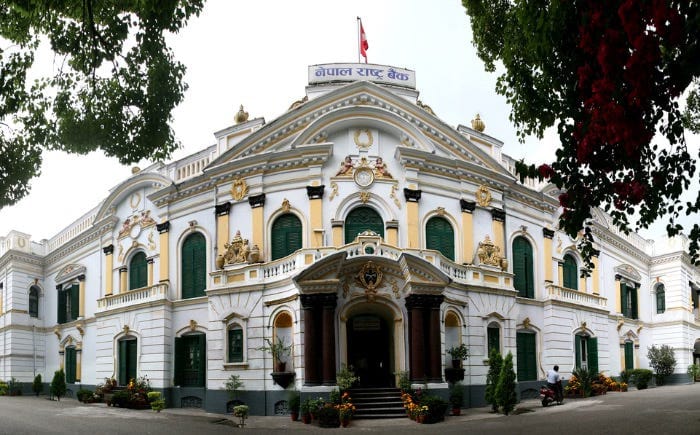
The reason is woven into the architecture of Nepali finance. The Nepal Rastra Bank (NRB) designs monetary policy through a management committee and a board of political appointees. There is no independent monetary-policy committee of the sort India, Britain or the euro zone rely on to balance growth and price stability. Before each policy review, the central bank invites suggestions. The bankers’ association holds pre-policy gatherings across provinces, drafts formal demands and negotiates technical tweaks—such as the removal of the cap on lending spreads—that would fatten lenders’ margins. An equivalent lobby for borrowers, depositors or small businesses does not exist. The conversation is a banker’s monologue.
The upshot is a market that looks competitive only in theory. Nepal’s 20 commercial banks have cut deposit rates to below 4% as policy loosened; yet their lending rates have drifted down to 7.06% only grudgingly. The spread between the two—the banks’ gross margin—has squeezed from 4.6 percentage points to 3.55 over five years, a glacial decline given the violent swing in rates. In a really competitive market, such loose money would have compressed spreads far more. Instead lending rates move almost in lockstep. As economists in Kathmandu whisper, it resembles a cartel.
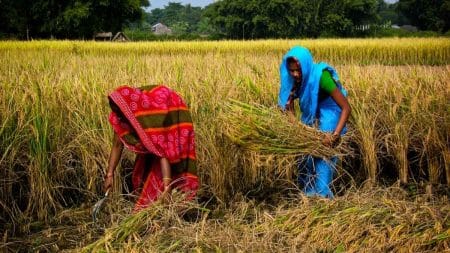
Just as revealing is the direction in which credit flows. Eighty-eight per cent of all bank loans are secured against land and buildings. Real estate and housing swallow new lending; agriculture, which employs three in five Nepalis, scrapes a sliver. Small and medium-sized firms receive roughly a tenth of the Rs5.8trn loan book, a share that has barely budged. Even that tiny flow is under threat. The NRB recently cut the priority-sector lending quota from 40% to 30%, and the IMF has urged it to phase out such directed lending entirely, arguing it worsens bank asset quality. The authorities are dismantling one of the few levers that pushed banks to lend to anyone without a marble lobby.
The governor himself personifies the blurred lines. Appointed in 2025 after months of haggling between coalition parties, he disclosed founder shares in a bank worth Rs24.4m. The NRB Act bars only directors with more than a 5% stake; it has little to say about a regulator owning a piece of the institutions he polices. Meanwhile Nepal’s big business houses—the Chaudhary, Golchha, Golyan and Khetan groups—control both banks and the industrial firms that borrow from them. Directors commonly sit on both sides of the credit table. This interlocking structure makes hard-nosed risk assessment a fiction. It also ensures that when the central bank pumps in liquidity, the largest conglomerates drink first.
The exchange-rate peg to India reinforces the conservative bias. For three decades the rupee has been fixed at 1.6 to the Indian rupee. The peg imports Indian inflation and shackles independent monetary action. The NRB can cut rates only so far before risking capital flight. True, the mountain of reserves now provides a cushion, but those reserves are built on remittances—$12.6bn sent home last year by the diaspora—not on a manufacturing boom. The peg protects the financial system’s stability; it does nothing for firms that need competitively priced credit to export.
The pattern’s beneficiaries are plain. Commercial banks enjoy a captive deposit base, stable spreads and a regulator satisfied as long as their vaults are intact. Big corporate borrowers tap cheap credit at the expense of new entrants. The government finds ready buyers for its bonds because banks have nowhere else to park their cash. Everyone else loses. Household depositors earn a negative real return as inflation nibbles away their savings. Small firms, young entrepreneurs and farmers are locked out by collateral rules that demand a city building as security. And the more than 580,000 young Nepalis who took overseas labour permits in the first nine months of this fiscal year are voting with their feet—because the domestic economy offers them a future of waiting.
There is a respectable defence of the status quo. Nepal’s banks are fragile. Non-performing loans have crept above 5%, and repossessed collateral that cannot be sold has ballooned by 63% in a year. Eight lenders are skirting capital buffers. A full-blown banking crisis would incinerate the savings of millions, and the stability-first instinct of the central bank is, up to a point, wise. The problem is that a decade of relentless prudence has yielded 4% growth and a steady hollowing-out of the workforce. Stability that suffocates opportunity is a slow-acting poison.
What might break the cycle? Start by creating a truly independent monetary-policy committee with external economists who can challenge the banking consensus. Develop bond and equity markets so that savers and businesses have alternatives to bank deposits and bank loans. Introduce partial credit guarantees and cash-flow-based lending, using the digital footprints that even small firms now generate, to outflank the collateral obsession. And deploy competition tools to dislodge the de facto deposit-rate cartel, rather than merely capping spreads.
These steps would loosen the banks’ grip without reckless abandon. Nepal’s greatest export should be goods and services, not its children. Its monetary policy will only serve that goal once it stops being a bankers’ club and starts being a tool for the economy. Until that shift happens, the country will remain awash in cash but starved of credit. The exodus will only gather pace. ■