IMAGE: EPARDAFAS
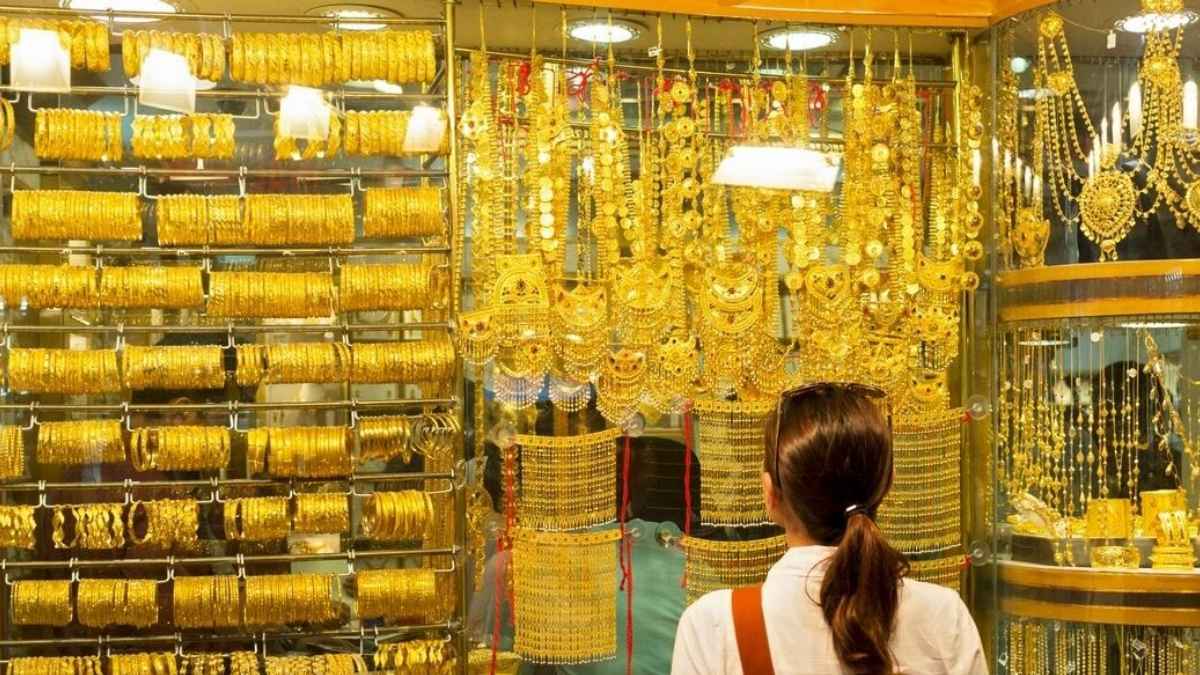
PICTURE A Nepali wedding. The groom’s family arrives at the bride’s home carrying gifts. Among them, almost certainly, is gold: necklaces, bangles, earrings, a nose ring, anklets. The amount varies by family wealth and social ambition, but the expectation that gold will change hands is close to universal. In the Terai, Nepal’s southern plains, the tradition of dowry means the bride’s family sends gold too. In Kathmandu’s middle class, the total gold exchanged at a single wedding can run to ten tolas or more—some 117 grams, worth around Rs3.11m at current prices, or more than several years’ income for the average Nepali household. Global gold prices have surged over 30% in a single year; Nepal’s retail gold prices have followed, with the metal trading at some Rs311,100 per tola in late May.
Nepal is, relative to its income, one of the world’s most gold-hungry countries. According to the London-based consultancy Metals Focus, jewellery demand in Nepal fell just 3% in 2024 even as the global average gold price surged 23%—a near-inelastic response that gold analysts found striking given how poor most Nepali households are. Metals Focus forecast an 8% drop in jewellery consumption in 2025, largely due to soaring prices. Market insiders estimate that Nepal’s annual gold demand is 15 to 18 tonnes, of which five to six tonnes are currently smuggled from India.
Additionally, about three tonnes of gold is recycled annually through consumers exchanging old jewellery for new pieces. Nepal is not buying gold because it can afford to. It is buying gold because it cannot afford not to: social pressure at weddings, festivals and family events makes gold a compulsory expenditure, with the refusal to give it interpreted as evidence of poverty, disrespect or broken social contracts.
The financing of this gold comes from multiple directions, many of them damaging. Remittances are the largest single source. According to the UN Development Programme, remittances account for nearly a third of Nepal’s GDP, with about 40% of inflows coming from Gulf countries. When a Nepali worker in Qatar sends Rs50,000 home, a portion of it goes into the gold savings that his family will deploy at a wedding or festival.
This is not irrational: gold has historically appreciated in Nepal, is liquid in emergencies and is culturally recognised in ways that a savings account is not. But it also means that a big fraction of the foreign currency that fuels Nepal’s economy flows not into productive investment but into metal that sits in a household safe or a temple offering.
The second source of gold financing is debt. An estimated 12,000 gold pawnshops operate across Nepal (though data for this figure is unverifiable). These informal pawnbrokers offer loans against existing jewellery at interest rates between 12-15% for licensed financial institutions, while informal money lenders charge up to 30% a annum—well above commercial bank rates.
The pattern this creates is circular and punishing: a family borrows against gold to finance more gold at a wedding, then repays the loan from remittances or farm income, then borrows again at the next ceremonial occasion. The interest payments, at 18-24% a year, are not a small number for a household earning Rs50,000 a month.
The formal banking system has absorbed some of this demand too. Commercial banks across Nepal offer gold loans—secured lending against jewellery deposited with the bank. For example, Nabil Bank offers loans of up to 70% of the gold’s market value, with a maximum loan amount of Rs5m, at interest rates of approximately 10% per annum. This is a legitimate product, but it reflects the same underlying dynamic: households that cannot liquidate their gold holdings without social cost are using those holdings as collateral to raise cash for other needs, then paying bank interest to reclaim assets they never intended to sell.
The cycle of gold-as-collateral locks up wealth in a form that earns no return, depreciates through making charges when purchased and again through resale discounts when sold, and requires ongoing interest payments to access.
The government has inadvertently made all of this more expensive through a series of erratic policy decisions on gold import duties. Between 2023 and 2025, the customs duty on imported gold moved from a fixed weight-based rate to 15% ad valorem, then to 20%—one of the highest rates in South Asia, compared to 6 percent in India—then back down to 10% in late 2024 after smuggling networks had already expanded to fill the gap created by the duty hike. The 362-kilogram gold smuggling case of 2023—gold hidden among brake pads from Hong Kong, seized at Tribhuvan International Airport and valued at some Rs3.5bn—was the most spectacular example of what high import duties produce when applied to a commodity with near-inelastic demand.
During the wedding season, demand runs at some 50 kilograms per day; the legal import quota allows only 25 kilograms. The remaining 25 kilograms comes from somewhere, and its provenance is not audited.
On May 29th finance minister Swarnim Wagle presented the budget for the fiscal year 2026-27, which raised the customs duty on gold from 10-20%, effective immediately. The government also removed the 2% luxury tax on gold to provide relief to stakeholders.
The move was intended to boost revenue and control the consumption of luxury goods. However, it also widened the price gap with India, where the customs duty stands at 15% as of mid-2026 (raised from 6% in early 2026), potentially encouraging smuggling through Nepal’s open border. Nepal’s gold price surged by Rs 20,500 per tola on May 31st, striking a record high of Rs 311,100 per tola: nearly tripling from Rs 124,055 per tola in June 2025.
The financial literacy problem that sits underneath all of this is real and largely unaddressed. In most Nepali households, gold jewellery is held primarily by women, often as their only individually controlled asset in a marriage. This has a logic to it: in a society where land and bank accounts are typically registered in men’s names and where women’s financial autonomy is limited, gold is the one form of wealth a woman can carry, display and claim as her own.
The problem is that it is a deeply inefficient store of value. When purchased new, gold jewellery costs 5-10% more than its metal value in making charges. When sold, those making charges are not recovered. The gold that a family buys for Rs1.6m at a wedding is worth perhaps Rs1.4m the moment it leaves the shop, before global prices have moved at all. A simple savings account, even at Nepal’s subdued deposit rates, would outperform this calculation in most years.
A few things would help at the margins. A stable, predictable gold import duty—not revised up and then back down in the same fiscal year—would reduce the smuggling incentive and the price uncertainty that makes planning a wedding budget nearly impossible. Financial products designed for women, specifically recurring savings schemes with maturity timed to anticipated wedding or festival expenditure, would let families accumulate the cash equivalent of gold without buying the metal.
And a national conversation about dowry that Nepal’s new generation is already beginning to have, not because tradition is wrong but because, at Rs1.6m per wedding, it is no longer affordable for the families trying to sustain it.
Nepal’s gold problem is, at its core, about the distance between what a society values and what it can pay for. The metal itself is not the issue. The issue is that the cultural weight placed on it has grown faster than the incomes of the people expected to carry it. ■