IMAGE: CHAUDHARY GROUP
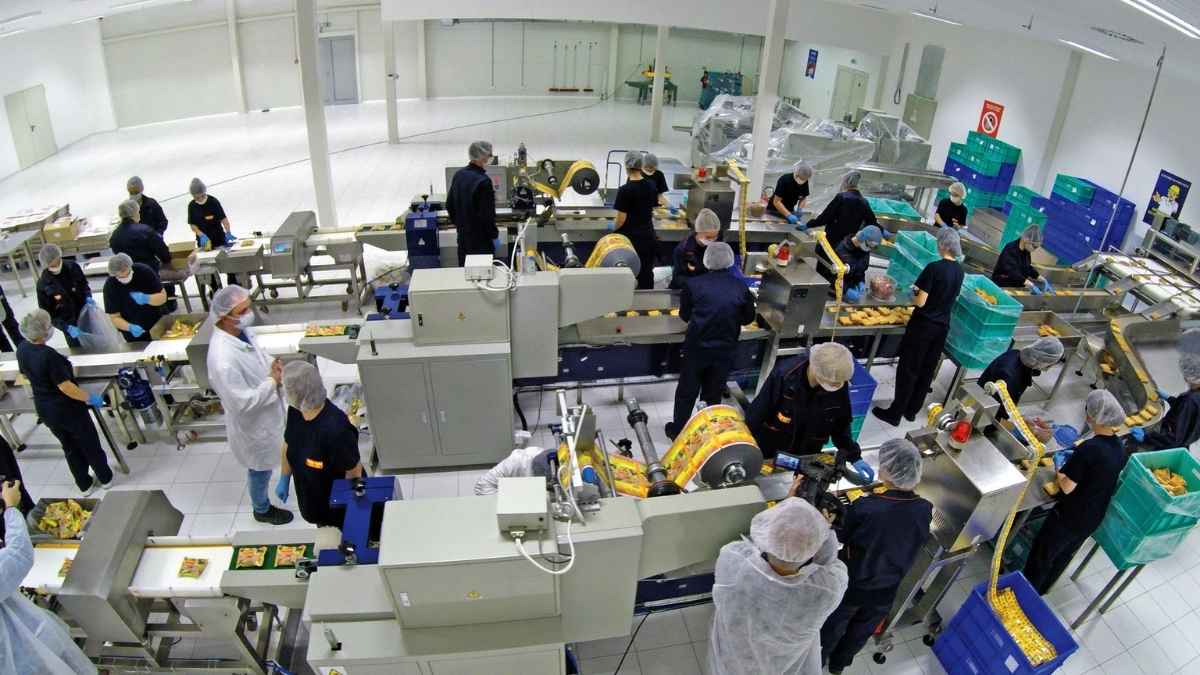
WALK INTO any shop in Nepal and you will find Wai Wai instant noodles. The company that makes them is one of the largest and most profitable in the country, part of a conglomerate that operates in more than 32 countries and whose chairman, Binod Chaudhary, is Nepal’s only billionaire. You cannot buy shares in the holding company that controls all of it. The same is true of the Golchha Organisation, a trading house that has been at the centre of Nepali commerce since the 1930s, and of Jagdamba Holdings, the private entity that sits above the country’s largest steel company and its cement ventures. These master companies—the control layer where family wealth is concentrated and strategic decisions are made—have no shares for sale. They do not appear on Nepal’s only stock exchange. They never have.
A stock exchange is, at its most basic, a place where members of the public can buy small pieces of large companies and share in their profits. It is also, less glamorously, a machine for making companies show their working. Any firm that wants the public’s money must publish its accounts every quarter, disclose what it earns and spends, name its largest shareholders and flag any conflicts of interest. Transparency is the price of access to capital.
Nepal has a stock exchange—the Nepal Stock Exchange, known as NEPSE—that on paper looks substantial. Its listed companies are valued at some 73% of the country’s annual economic output. By that measure, Nepal’s capital market is comparable in relative size to those of several middle-income countries. But most of what drives that number is the financial sector: banks, insurance companies and state-owned enterprises. When commercial companies do list, it is typically for a specific project—a cement plant that needs capital to build, a hydropower scheme that cannot be financed by a single family—not because the controlling family has chosen to open its books.
The reason banks are on the exchange is not because they chose to be. Nepal’s banking regulator requires every licensed commercial bank to sell at least a portion of its shares to the public and list on NEPSE. That rule does not extend to manufacturers, retailers or food companies, for example. The Nepal Rastra Bank’s own researchers noted the gap plainly: banks and financial institutions must list, but “there is no such mandatory requirement for companies in the real sector.” So the real sector, at the holding-company level, does not list.
The most valuable company on NEPSE is not a bank. It is Bishal Bazar Company Limited, a government-backed entity that essentially owns prime real estate in central Kathmandu. The second-largest is Nepal’s state telephone company. Strip out the state entities, the mandatorily-listed banks and the project-level IPOs of capital-hungry hydropower and cement plants, and Nepal’s stock exchange is a thin platform that tells you very little about the companies making real decisions in the country.
What the major family groups are avoiding, by keeping their holding companies private, is the paperwork that public status brings. A listed company must file quarterly accounts, disclose any transaction it conducts with a related party—a family member’s firm, a political associate’s business—and notify the regulator of anything that might move its share price. For an empire built on informal relationships with government ministries, bank loan officers as well as licensing bodies, these requirements are threats.
The steel case makes this concrete. Jagdamba Steels—the operating company that runs one of Nepal’s largest steel plants—filed an IPO application with the securities regulator, SEBON in 2023. To do that, it had to submit audited accounts. When investigators opened the April 2026 money laundering case against the Shanker Group, they found that Jagdamba Steel’s audited accounts had omitted a transfer of Rs450m ($2.9m) made to the personal bank account of a political fixer over four days in June 2021. It was the IPO disclosure process that created the paper trail investigators eventually followed. The holding company above Jagdamba Steel, however—Jagdamba Holdings—remains entirely private and files nothing. That is where the bigger picture stays hidden.
The people hurt by this opacity are not primarily foreign investors or economists. They are ordinary Nepalis who pay inflated prices for cement and steel because they cannot see the production costs a fully listed company would have to publish; who borrow from banks whose related-party lending to conglomerate owners is buried in footnotes; and who vote for politicians whose campaign financing flows through private companies that file no accounts at all. Nepal’s securities regulator spent almost eleven months in 2024 without a permanent chairman. Manipulation of thinly traded shares by large investors is openly discussed among retail investors who learned the lesson too late.
Nepal’s government knows this. A new transfer-pricing rule requires multinationals to document their cross-border dealings. The FATF grey listing, which Nepal has carried since February 2025, demands better financial transparency across the board. These are real pressures. But they target specific transactions rather than the underlying choice. Until Nepal requires its biggest businesses to show the public what they earn, what they owe and whom they pay at the holding-company level, the stock exchange will stay a project-finance notice-board, and the decisions that shape the economy will carry on being made in the dark. ■