IMAGE: RONALDO SCHEMIDT/AFP/GETTY IMAGES
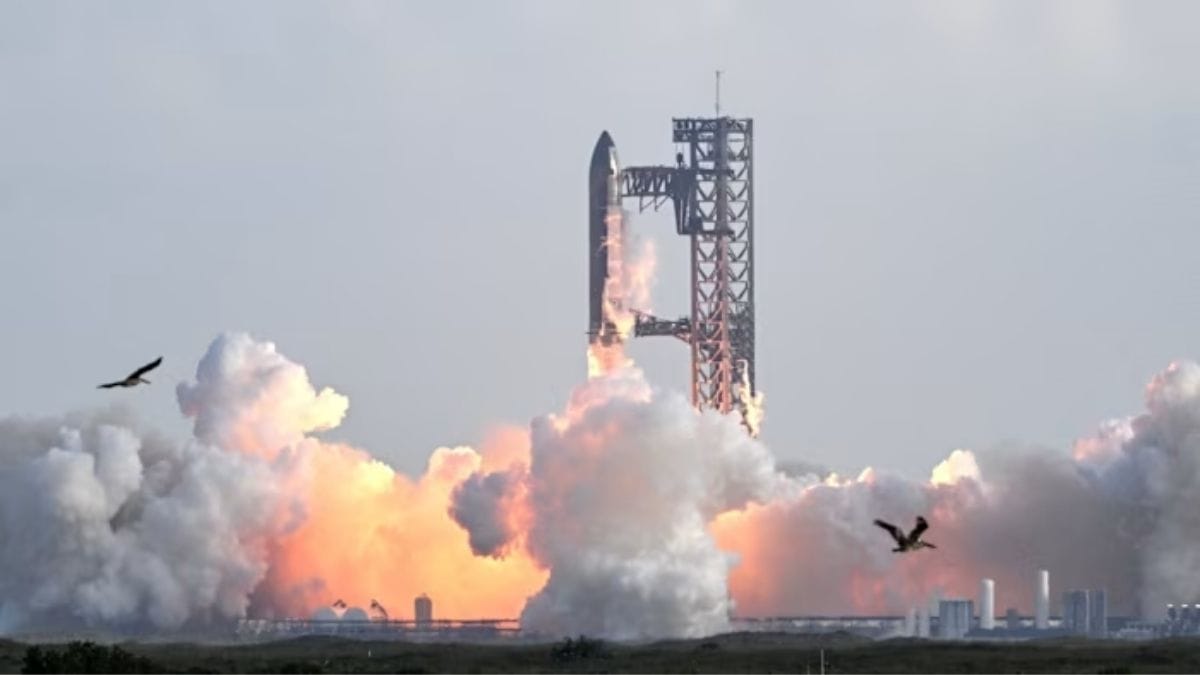
ELON MUSK does not merely build companies: he builds ecosystems. The latest and most audacious recombination occurred on February 2nd, when his rocket firm, SpaceX, absorbed his artificial-intelligence start-up, xAI, in an all-share deal valuing the combined entity at $1.25trn.
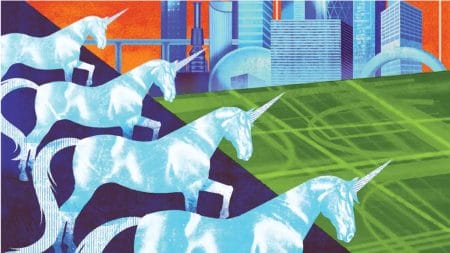
The transaction elevates SpaceX to a stratospheric $1trn valuation on paper, and prices two-year-old xAI at $250bn. In reality, though, it completes a circle of capital as well as data and ambition within the Musk universe that is unprecedented in modern business. It also raises an awkward question: is this visionary vertical integration or a financial shell game of dizzying scale?
The mechanism of the deal is illuminating. SpaceX will not use cash to buy xAI. It will issue $250bn worth of new shares, diluting its existing investors, to pay Mr Musk for his own AI firm. The billionaire thus swapped a stake in one of his private companies for a bigger stake in another, more valuable one. For outside shareholders, the maths is compelling only if they accept the new, higher valuation. SpaceX’s worth was marked up from $800bn to $1trn overnight, based on projected revenues from its Starlink satellite-internet service. xAI’s valuation, set during a $20bn funding round in January, was affirmed. The result is a paper titan, its foundations resting on inter-company transactions and the relentless repricing of private assets by their controlling shareholder.
The stated ambition is characteristically cosmic. Mr Musk argues that the voracious energy demands of AI data centres cannot be met on Earth. The solution, he declares, is to place them in orbit, powered by solar arrays and cooled by the vacuum of space. SpaceX, with its launch capabilities, is the logical vehicle to make this science fiction a reality. “In an age of AI maximalism, that’s worth trillions and trillions of dollars,” exults one investor in both firms. The planned initial public offering of the combined company, possibly raising $50bn in June, would provide the capital to begin that endeavour.
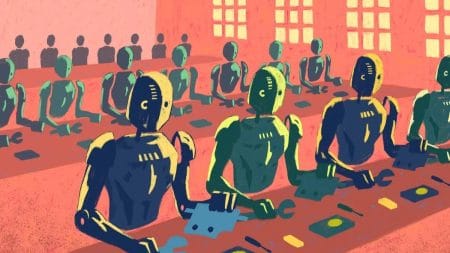
Yet the grand vision obscures a more terrestrial and immediate logic. xAI, though lavishly funded, is a late entrant in a ferociously expensive race. It burns cash to train models and build computing infrastructure. Its Grok chatbot is a distant competitor to the offerings from OpenAI, Anthropic and Google. Merging with cash-rich SpaceX provides a lifeline. It also continues a pattern of consolidation within the Musk empire. Last year xAI merged with X, the social-media platform formerly known as Twitter, gaining access to its data firehose. Now it gains SpaceX’s balance-sheet and, prospectively, public-markets funding.
The circularity is consequential. X’s data helps train xAI’s models. Those models power features on X. SpaceX may one day launch data centres for xAI. And public investors in the combined SpaceX-xAI will fund it all. Capital, data and technology flow in a closed loop, directed by one man. Mr Musk’s other ventures are not isolated. Tesla recently invested $2bn in xAI. The carmaker is pivoting towards AI and robotics, leading some to wonder if it, too, will one day be folded into the conglomerate.
There is a certain brutal logic to this vertical integration. In the scramble for AI supremacy, control over everything from chips and energy to data and distribution is a prized advantage. Alphabet, Amazon and Meta pursue variants of this strategy. But their empires are built on real, market-tested cash flows. Mr Musk’s is built on a series of audacious promises and valuations that have, so far, convinced a loyal band of private investors. The impending IPO will be the eventual test of that conviction.
The risks are not trivial. Combining a crucial government contractor like SpaceX with a controversial AI firm like xAI invites regulatory scrutiny. The technological hurdles for space-based data centres are immense; the European Space Agency counts fewer than 17,000 satellites in orbit while Mr Musk muses about constellations of a million. And the financial structure is exquisitely sensitive. If faith in the overarching narrative wavers, the circular flow of capital could seize up.
Mr Musk has always played a long game: one where the lines between companies are blurred in service of a transcendent goal. This merger is the purest expression of that philosophy yet. It creates a corporate entity of staggering ambition and equally staggering complexity. Its success depends not only on engineering rockets or AI, but on sustaining a story powerful enough to keep the financial universe he has created in a stable orbit, too. ■