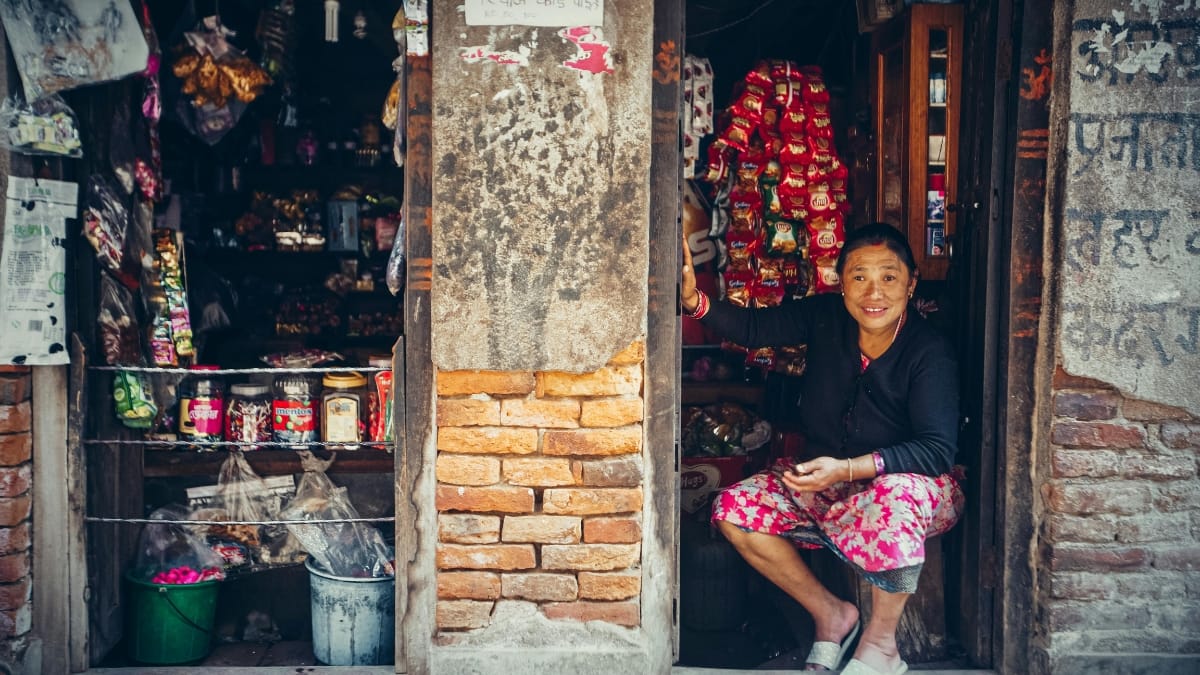
IMAGE: FLICKR
FOR A poor country, Nepal has a peculiar financial headache. Its foreign-exchange reserves have ballooned to $23bn, enough to cover some 19 months of imports—more than double the regulatory minimum. Inflation has plunged to a record low. The current account is in surplus to the tune of nearly 7% of GDP. By the usual metrics of emerging-market health, the place looks almost smug.
Yet the economy is barely moving. Growth stagnated at 3.4% in the first half of the fiscal year, reckons the World Bank, dragged down by a drought in the Madhesh plains, a limp private sector and political chaos that recently forced out a prime minister. Nepal has discovered a strange paradox: it is rich in remittances, and that may be part of the problem.
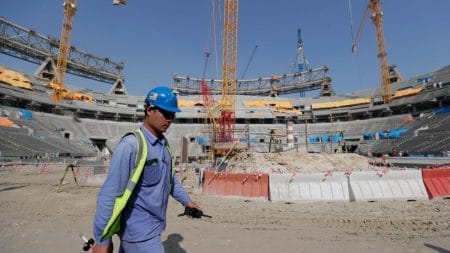
The money sent home by Nepalis working abroad has become the country’s dominant economic force. In the first half of the fiscal year, remittances climbed to 16.6% of GDP, up four percentage points from a year earlier. This happened even as the number of workers leaving the country fell. The explanation lies in a weaker rupee, which makes every dollar sent home stretch further, and a shift towards higher-wage destinations such as Japan and Europe. More money is also flowing through formal channels, as digital transfers replace hawalas. The result is a cascade of foreign currency that has propped up the rupee, padded the central bank’s armoury and, on paper, lifted extreme poverty down to 3% from 21.5% in 2011.
That success has created a new fragility. Remittances have become a narcotic. They sustain consumption, fund real estate and keep the trade deficit from spiralling. But they also hide the absence of anything resembling a dynamic private sector. Non-hydro private investment remains anaemic. Public capital spending is a disaster: in the first half of the fiscal year, the government executed just 12% of its capital budget, partly because of the unrest that gripped the country in September 2025.
The gap between what Nepal spends on debt servicing and what it invests in infrastructure has been widening since 2022. Politicians have little incentive to chase difficult reforms—such as simplifying taxes and relaxing capital controls—when family budgets are propped up by a son in Qatar or a daughter in Tokyo.
The political system has finally taken notice. Youth-led anti-corruption protests last September escalated into something the country had not seen in decades: the resignation of a prime minister and the dissolution of the House of Representatives. The unrest cost an estimated 1.3% of GDP in lost output. But it also cleared the ground. Snap elections on March 5th produced a single-party majority government under former mayor of Kathmandu, Balendra Shah, with a mandate to do the things that previous coalitions had dodged. That means improving policy predictability, accelerating hydropower investment and, most critically, relaxing capital account restrictions—a move that would allow money to leave the country more freely, which sounds perverse until you realise that the current regime traps capital and deters foreign investors.
Mr Shah will find that his room for manoeuvre is narrower than the reserve pile suggests. The Middle East, source of 77% of Nepal’s migrant workers, is on fire. A prolonged conflict there would hit remittances as well as tourism and energy security all at once. Nepal imports all its refined petroleum from India, which sources much of it from the Gulf. Disruptions in the Strait of Hormuz—through which roughly a fifth of the world’s oil flows—have driven up fuel prices, dragging inflation higher in their wake. The World Bank expects inflation to climb to 4.3% this fiscal year and to 5.1% next year.
The banking system, meanwhile, is showing cracks. The gross non-performing loan ratio has risen to more than 5%, provoking higher provisioning and targeted forbearance. The capital adequacy ratio of 12.6% remains above regulatory minimums, but asset quality is deteriorating just as credit demand is softening. Private credit expanded only marginally in the first half of the year, a sign that households and firms are hunkering down. Monetary policy has turned accommodative—the policy rate is down 75 basis points to 4.25%—but transmission is weak. Lower rates do not much matter if no one wants to borrow.
What comes next hinges on whether the new government—having pledged 7% real growth over the next five years—can wean the economy off its reliance on remittances. The World Bank projects growth of just 2.3% this fiscal year (down from 4.6% last year), climbing to 4.4% over the following two years as hydropower projects come online and reconstruction spending kicks in.
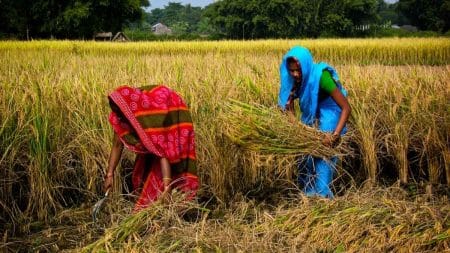
That recovery assumes that the Middle East conflict remains contained; that fertiliser imports keep flowing; and that the next monsoon does not drown the paddy fields of Madhesh. It also assumes something bolder: that Nepal’s political class, having been pushed to the brink by protesters, actually follows through. The country has plenty of foreign currency. What it lacks is the will to put it to work. ■