ILLUSTRATION: ADAM NIKLEWICZ, VIA THE ISPOT
JUST HOURS before the Federation of Nepalese Chambers of Commerce and Industry, the country’s most powerful business lobby, gathered for its 60th annual meeting on May 5th, the Supreme Court in Kathmandu ordered the release of a former president of the organisation. Shekhar Golchha, chairman of the Golchha Group, had been arrested the previous month for alleged securities fraud. The court found his initial detention illegal. Within hours police rearrested him on separate insurance-fraud charges. By the time delegates closed the AGM, Mr Golchha was back in custody. The timing was exquisite, even by Nepali standards: elections for FNCCI’s new executive committee were under way the same day.
The FNCCI has spent seven decades or so styling itself as the voice of Nepali business. Its claim to that role has rarely looked more fragile. The Golchha affair is a symptom of a bigger malady. An organisation that ought to champion competition and clean enterprise has instead become a vehicle for a narrow, politically connected elite. It defends its own against corruption allegations while failing the vast majority of businesses it supposedly represents. Now the state is pushing back. The collision threatens to break the federation apart or, just possibly, force it to reinvent itself.
Nepal’s private sector contributes some 81% of the economy and perhaps 86% of employment. Only a sliver of that activity flows through the FNCCI’s influential members. The federation’s leadership has long been a closed circle of dynastic families—the Dhakals, the Agrawals, the Golchhas—who rotate the presidency among themselves. The electoral process—where district chamber presidents and sectoral representatives cast decisive votes—pushes candidates to build support within both the business community and political networks before engaging with the government. One former president says: large sums, sometimes crores of rupees, change hands in these campaigns. “How can those elected to lead the FNCCI speak independently?” he asks.
That revolving door between business and government has greased many careers. A past president became coordinator of the Visit Nepal 2020 campaign. Another secured a lucrative highway project. Neither appointment obviously matched the individual’s expertise. The FNCCI’s motto might as well be “fulfilling the interests of its leadership” rather than advancing industrial development. As one economic journalist puts it, the federation “has failed the country by limiting itself to a lobby group”.
The lobby it runs is less about free markets than about cartels. Consider cement. When Nigeria’s Dangote Group tried to build a factory in Nepal, local producers reportedly persuaded the government to sabotage the plan. When Chinese competitors Hongxi and Huaxin attempted to enter, the same cartel argued that domestic capacity could meet demand unaided. Huaxin ended up partnering with a former FNCCI president. Hongxi partnered with another connected Nepali firm. Foreign capital was welcome only if it funnelled rents to the right people.
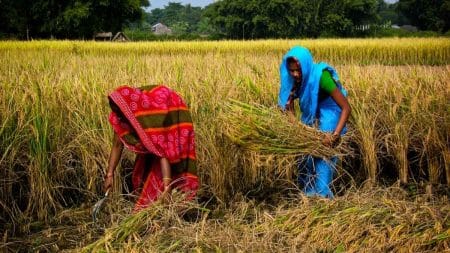
Agriculture, too, tells much the same story. In 2019 industrialists lobbied to block foreign investment in farming. When the restriction was eased two years later, a crippling condition was attached: 75% of agricultural output must be exported. Foreign capital could enter in name but never compete at home. The FNCCI’s history includes blockades against J Walter Thompson, against Maersk, against microbreweries (at the behest of larger beer companies). Each time the federation acted as a cartel enforcer rather than a champion of enterprise. The former president Kush Kumar Joshi calls this collusion “crony communism”. His own subsequent career suggests he knows the system from within.
The government’s response has been erratic. Finance Minister Swarnim Wagle, speaking at the FNCCI’s AGM, delivered a careful double message. The state cannot drive transformation alone, he said. But nor will it tolerate criminal activity carried out under the guise of business. “Those engaged in legitimate enterprises have no reason to fear,” he added, while urging future leaders to “prioritise integrity over factional interests”.
That warning landed hard. The Golchha case has split Nepal Inc. On one side stand those who see a former president facing legitimate charges under two financial statutes: securities law and insurance law. On the other stand those who see a politically motivated witch-hunt. The truth may lie somewhere in the middle. But for the FNCCI to rush to Mr Golchha’s defence without acknowledging the seriousness of the allegations is to risk appearing as an apologist for white-collar crime. The joint statement issued with two other chambers expressed “serious concern” that arrests were “discouraging the private sector”. It demanded a “hear first, detain later” approach. Nowhere did it concede that a former president accused of share-rigging might embarrass the organisation.
This defensiveness points to the FNCCI’s bigger failure: it has forgotten the 99% of businesses that are not large and influential. More than 99% of formal firms are privately owned and small. Their owners are younger, hungrier, politically unconnected and largely ignored. The FNCCI’s agenda—lump-sum tax systems, elimination of double taxation, easy access to government committees—is tailored to simplify tax avoidance for big incumbents. Small enterprises cannot afford the lobbyists or the campaign contributions. They do not get a seat at the table. That is why industrialists in the Bhairahawa-Butwal-Biratnagar-Birgunj corridor have floated a separate ‘4B’ grouping. That is why candidates from Koshi Province run on platforms of conveying “sentiments from the periphery to the centre”.
Anjan Shrestha, the incoming president under the FNCCI’s bylaw provisions, has heard these complaints. His platform is the most ambitious reform agenda in years. He promises to bar office bearers from any political party affiliation, arguing that “political alignment among business leaders has weakened the private sector”. He pledges to move “beyond traditional lobbying” and proactively introduce public-interest bills in Parliament. He wants data-driven policymaking and a proper grievance mechanism for entrepreneurs.
The obstacles are formidable. The bylaw amendment that removes automatic succession from senior vice-president to president is a step towards accountability, but the electoral college remains dominated by district chamber presidents who are themselves politically affiliated. Change the constituency and you change the incentives; leave it as it is and candidates will still need patrons. Moreover the trust deficit with the government has widened. “Despite repeated efforts, the government has failed to act on many of our suggestions,” a former president admits. The Golchha affair has turned that deficit into a chasm.
The FNCCI still has a choice. It can continue as a rent-seeking club for the connected few, defending its own against prosecution and blocking competition at every turn. Or it can become what it claims to be: a voice for all Nepali businesses, large and small, honest and above board. That would mean publicly repudiating cartel behaviour and establishing independent ethics machinery with real teeth, as well as welcoming anti-corruption enforcement as a public good rather than a threat. It would mean giving small enterprises veto power over policy positions that benefit large incumbents at their expense. And it would mean enforcing the political-affiliation ban on its own leaders, not just promising it.
The elections on May 5th were a test. If the old guard reasserts control of the executive committee, Mr Shrestha’s reform pledges will remain rhetoric. If his reformist panel gains strength, there is a narrow window to reverse decades of decline. But even then, the FNCCI cannot regain legitimacy without fundamentally reorienting itself. For an organisation that has spent decades asking “which businesses?” the answer, for most of its history, has been “the wrong ones”. The second arrest of Mr Golchha on election day was a reminder that the old model is failing and becoming a liability. The private sector that contributes 81% of Nepal’s economy deserves a better voice than that. ■