IMAGE: ONLINE KHABAR
A BRITISH financier went trekking in the Himalayas in 2003 and, like so many before him, fell for Nepal. Unlike nearly all of them, Tim Gocher stayed. Two decades on, his Dolma Fund Management manages some $108m across two funds, making it not just Nepal’s largest private-equity firm but effectively its only institutional one. That makes Dolma’s portfolio something rare: an honest map of where sophisticated international money believes this beautiful, frustrating, fragile country can actually generate returns. What that map shows—and what it leaves out—should worry anyone who wants Nepal to become more than a collection of globally integrated enclaves.
The portfolio breaks nicely into four clusters: renewable energy (mainly hydropower), technology, healthcare and e-logistics. Dolma has backed about 70 megawatts of hydropower, plus a Nasdaq-listed AI firm (Fusemachines), a data-services company (CloudFactory), hospitals, a food-delivery app, an internet provider and a masala company.
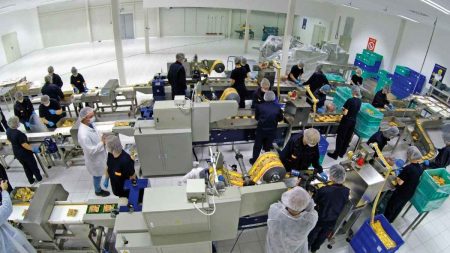
What is absent is more telling: manufacturing is missing, as is heavy industry. Textiles, garments and footwear do not feature. Large-scale agriculture is also absent, along with any meaningful exposure to tourism or hospitality assets. That reflects a sober consensus among the world’s most exacting development-finance institutions—FMO, British International Investment, the IFC, DFC and JICA all back Dolma—about where Nepal’s real comparative advantages lie.
Hydropower dominates the investment imagination; and the numbers are seductive. Nepal sits on perhaps 42,000MW of economically viable potential, of which less than 4,500MW has been built. Exports to India reached about 1,000MW in early 2026, earning nearly $700m in the first months of the fiscal year. India has promised to buy 10,000MW over the next decade under a 25-year power trade agreement signed in 2024.
Yet the thesis contains a contradiction. Transmission lines run through India, which controls the tap. Policy volatility terrifies infrastructure investors: the $2.5bn Budhi Gandaki project has been scrapped, restored and refinanced by successive governments.
And a bigger question lurks: is Nepal building hydropower to power its own industrialisation, or just to export electricity while domestic manufacturing withers? The evidence points towards the latter. Manufacturing’s share of GDP is in secular decline. Hydropower risks becoming an extractive industry: export revenues and royalties flow out, but domestic linkages stay slim.
Technology offers a different kind of hope. Fusemachines’ Nasdaq listing in October 2025, at a $280m valuation, was the single most consequential event in the history of Nepal’s startup ecosystem. It proved that a Nepal-founded AI company could access global capital markets. That exit validated Dolma’s thesis and, more important, signalled to other international investors that Nepal was not entirely off the map.
Yet the digital leapfrog narrative—that Nepal can bypass traditional development stages and move straight to a mobile-first economy—conflates two different things. Paying for groceries with a QR code (which is spreading) is not the same as building globally scaled technology companies (which remains exceptionally rare). Household smartphone penetration in Nepal is estimated at 85%, according to the Nepal Telecommunications Authority. The domestic market has just 30m people, most of them poor. Fusemachines succeeded by looking outward, rather than by serving Nepalis.
Tourism occupies a strange position. Nepal’s most visible global brand has attracted a wave of international hotel investment—IHG, Marriott, the IFC—all betting on the premium segment. Yet Dolma holds no tourism assets in its funds. That divergence is revealing.
The fund’s managers know the operating environment intimately and have concluded that risk-adjusted returns look better in hydropower, tech and healthcare. They are probably right. Foreign arrivals in 2025 reached 1.15m, approaching but not surpassing the pre-pandemic peak of 1.19m. Growth has stalled. A single, capacity-constrained airport serves the entire country. Roads turn 200km journeys into eight-hour ordeals. The premium segment can function as an enclave, insulated by helicopter transfers and private generators. Mass-market tourism cannot.
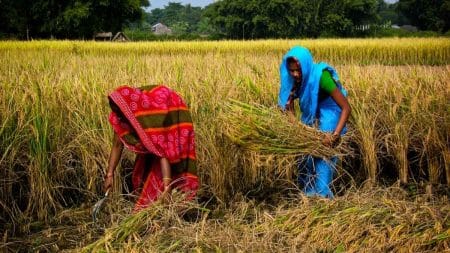
What international capital refuses to touch is the real story. Manufacturing, labour-intensive exports, large-scale agriculture, urban infrastructure: these sectors are almost entirely absent from the PE/VC landscape. That is a rational assessment of Nepal’s structural constraints: landlocked geography, a small domestic market, weak infrastructure, policy unpredictability and an exchange rate systematically appreciated by remittance inflows. Remittances reached $11.55bn in the first nine months of the fiscal year, a 31.9% year on year increase.
That money sustains consumption and props up foreign reserves, now covering 18.4 months of imports. But it also produces Dutch disease, pricing Nepali goods out of export markets. The sectors that lifted Bangladesh, Vietnam and Cambodia out of poverty—textiles, garments, footwear—are shrinking in Nepal. And the impending loss of preferential trade access as Nepal graduates from least-developed-country status in November will make things harder.
The tax‑exemption episode in 2025 exposed the tension at the heart of impact investing. Dolma channels investments through a Mauritius shell to avoid Nepali capital gains tax. When the government terminated the double‑taxation treaty with effect from July 17th 2026, the finance ministry allowed the exemption to continue for existing investments, shielding the fund from an estimated $6.5m tax bill. Critics called it a scandal. The government called it necessary to retain scarce foreign capital. Both were right. Dolma’s investors include development‑finance institutions from Switzerland, Japan, Britain, the Netherlands and America: none of which have tax treaties with Nepal. The Mauritius structure is legal and standard. But it complicates the narrative that impact investing is fundamentally different from conventional profit‑seeking.
The new Rastriya Swatantra Party government, elected after the Gen-Z protests that toppled K.P. Sharma Oli in September 2025, talks ambitiously: 7% growth, a $100bn economy, 1.2m new jobs. Fitch Ratings noted that a parliamentary majority should lower the risk of political instability.
Yet seasoned investors have learned not to confuse electoral mandates with governance transformation. Nepal scores 34 on the Corruption Perceptions Index, ranking 109th globally, unchanged for years. Capital expenditure execution remains abysmal: in the first nine months of the year capital spending was 24.3% of the annual budget, reflecting persistent implementation weaknesses.
The Dolma portfolio tells a sobering story, perhaps more honest than the rhetoric of investment summits. International capital sees Nepal as an energy platform, a technology niche, a climate‑finance beneficiary, a consumption market and a premium tourism destination. It does not see a manufacturing hub, an agricultural exporter or a country generating broad‑based productive employment at scale.
That leaves Nepal with a fundamental choice: accept the narrow but globally integrated economy that international money is willing to finance; or undertake the difficult institutional reforms—from infrastructure execution and tax simplification to corruption reduction and policy predictability—that would make a wider transformation investable. The portfolio is a mirror. It reflects not only what investors think, but what Nepal has failed to become too. ■