IMAGE: THE KATHMANDU POST
JUST BEFORE the clocks struck midnight on December 31st 2025, a fifth of Nepal’s population had not yet been born the last time the country enjoyed single-party majority rule. That odd fact captures both the fragility of the state and the scale of the opportunity now before it. Two days of street protests in September, led by young Nepalis demanding accountability and something resembling a future, produced a political outcome that had seemed extinct: a government with a clear mandate and no coalition partners to appease. The new administration’s first signals have been unambiguous. The private sector, already responsible for some 81% of GDP, is to be treated as the engine of growth rather than a milch cow for rent-seekers.
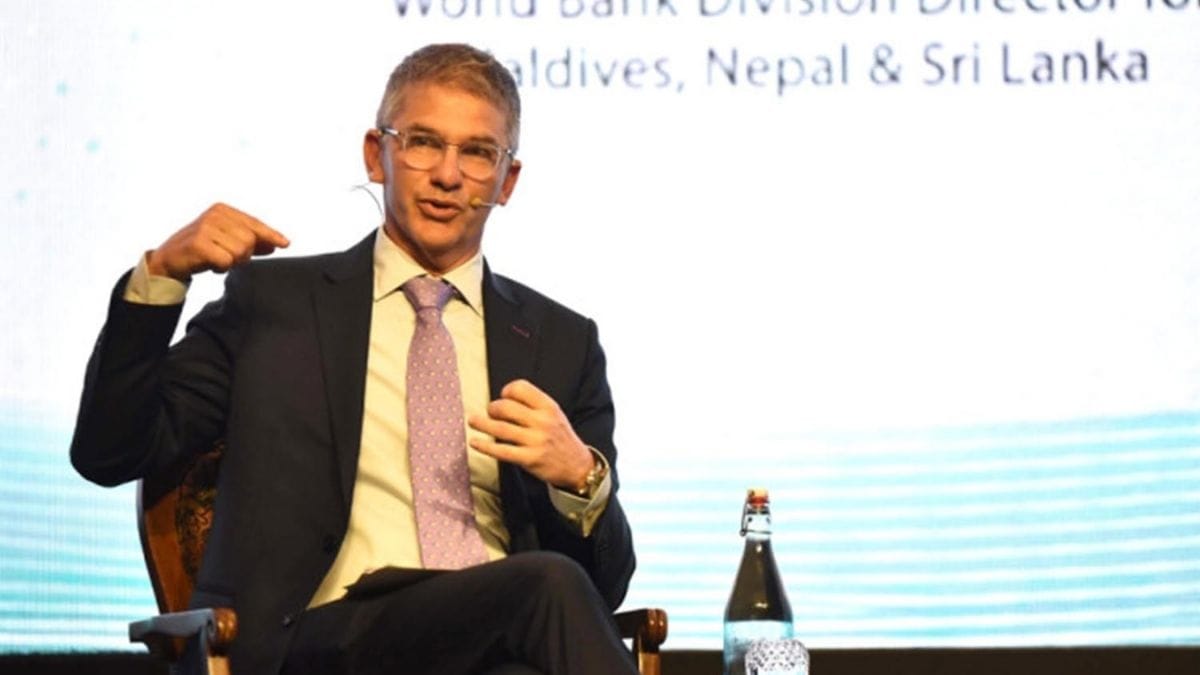
That shift in tone matters because the numbers are brutal. Half a million young Nepalis enter the labour force a year. Chronic out-migration has become the country’s catastrophe. David Sislen, the World Bank’s country director for Nepal, Sri Lanka and the Maldives, offers a vivid metric: in the 21 months he has lived in Kathmandu, 1.2m people have left to find work abroad. Over the expected four-year duration of his assignment, the equivalent of the capital’s entire population will depart. “It is a staggering number,” he said on May 13th at a conference in Kathmandu. The Bank’s new seven-year country partnership framework, approved a year ago, puts jobs at its centre. But as Mr Sislen is careful to note, not all jobs are created equal.
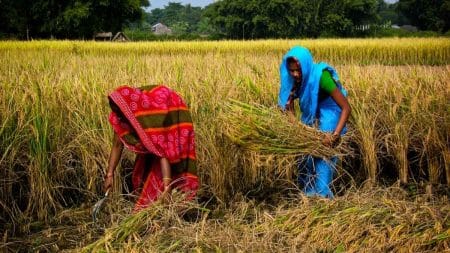
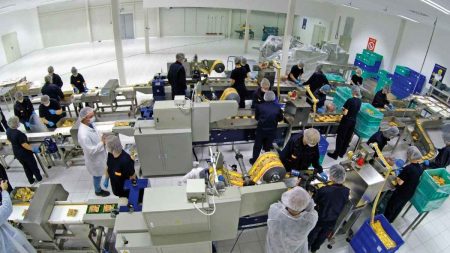
The old development imagination, still influential in Nepali policy circles, dreams of agricultural self-sufficiency or a manufacturing revival. Neither, in Mr Sislen’s assessment, is realistic. The country’s geography, its fixed exchange rate with the Indian rupee and the sheer time needed to build irrigation schemes (the so-called national pride projects would take 40 years at current implementation rates) militate against a factory-led future. Instead the World Bank sees services—tourism, information technology, digital exports—as the likeliest source of rapid job growth. That view is not merely hopeful. Last year Nepal exported nearly $1bn in IT services, reckons industry insiders. For a country with GDP per capita of $1,447, that is not pocket change.
Yet the gap between potential and performance remains yawning. Over the past two decades Nepal has grown at an average annual rate of 4.2%. Vietnam, which started from a similar baseline, has reached four times the income per person. To close that gap, Mr Sislen argues, Nepal needs sustained 7% growth. The difference between 4% and 7% is the difference between a country that haemorrhages its young and one that offers them a reason to stay.
What stands in the way? Mr Sislen offers a three-part framework: infrastructure, policies and finance. Take infrastructure first. Last year the government executed less than 65% of its capital budget. Over the past decade the execution rate has only fallen. Roads, urban infrastructure, civil aviation: all are in desperate need of attention. The delays can seem absurdly pedestrian: permission to cut down a tree, rights of way for electric poles, land acquisition stuck in procedural limbo. But these small failures accumulate into a binding constraint on private investment.
On the policy front, the new administration has signalled serious intent. Repealing restrictive laws, reforming a tax code that allows retroactive changes (a practice that unnerves any foreign investor), and introducing a one-stop investment service are all on the agenda. The capital account remains largely closed, which makes profit repatriation a gamble. Double-taxation treaties are missing. And then there is the small matter of the Financial Action Task Force’s grey list, with an assessment due in months. A move to the blacklist would raise the cost of doing business so sharply that much of the reform agenda would be moot.
Finance poses a peculiar paradox. Nepal’s banking sector holds assets equivalent to north of 120% of GDP. Yet capital feels constrained. That is partly because lending is overwhelmingly collateral-based and short-term. More fundamentally, early-stage venture money and angel investment are almost absent. The remittances that flow into the country—$2m per hour, or roughly $1.2m during a 30-minute conversation—largely bypass productive investment in favour of consumption or real estate. Tapping that pool of domestic capital for enterprise is one of the country’s great unfulfilled possibilities.
The World Bank Group brings an unusual range of instruments to bear. The public-facing arm (the International Development Association, where Mr Sislen sits) lends to governments and provides policy advice. The private-facing arm, the International Finance Corporation (IFC), has committed up to $750m in Nepal across sectors including hospitality, energy, digital infrastructure and small businesses. The IFC does not parachute in to cherry-pick deals. It works upstream, providing technical assistance and advisory services, then tries to mobilise third-party capital rather than keeping everything on its own balance sheet.
A recent $29m programme with WorldLink, a Nepali internet provider, combined subsidised public money, a partial credit guarantee from the World Bank and private funding from Standard Chartered. That sort of blended finance—public and private, concessional and commercial—is, Mr Sislen argues, the future of development.
Where will the jobs actually come from? The World Bank’s answer points to three sectors. Tourism depends critically on civil aviation reform, which is long overdue and, by all accounts, now has real political backing. Digital services require a data-protection act (Nepali law currently lacks one) and a cybersecurity policy. Hydropower, the great hope for export earnings, faces a harder problem. Three mega-projects—Upper Arun, Dudh Koshi and Budhi Gandaki—would together need $8bn-9bn of investment. There is no plausible way to raise that sum from public sources alone.
Yet public-private partnerships in Nepal remain politically fraught. Mr Sislen points to a recent World Bank operation in Bhutan, where an international private sponsor, grant money and concessional lending from the Bank’s developed-country window were combined to finance a hydropower project. Nepal will need many such structures.
The most intriguing bet Mr Sislen makes concerns climate. Kathmandu, for all its current problems with air pollution (85% of which originates within the valley) and water stress (consumption of 40 litres per person a day, less than a third of the recognised minimum), has one asset that no amount of policy reform can replicate. In 25 years, as summer heat makes much of South Asia increasingly unliveable, the valley will be temperate. That climatic advantage could attract the digital economy in ways that tax breaks alone cannot. “It is the country of the future, not the country of the past,” Mr Sislen insists.
Three signals would convince him that this inflection point is real. First, foreign direct investment. Nepal has attracted barely 15% of the emerging-market average over the past decade. A single serious inbound deal would matter more than a dozen policy papers. Second, civil aviation reform. Without it, tourism cannot scale. Third, a shift in public discourse. On Nepali social media, Mr Sislen observes, the private sector is still often portrayed as a problem rather than a partner. When that tenor changes, he says, he will know the country has turned a corner.
Before that happens, however, there is a more basic task. Nepal has achieved universal primary enrolment, a real accomplishment. But learning poverty—the share of ten-year-olds who cannot read a simple sentence—stands at some 70%, including private schools. The remittances that flow in are buying children places in private education, which has become the escape route from a dysfunctional public system. That is a coping strategy rather than a solution. Foundational learning, Mr Sislen argues, is the crisis beneath the crisis. All the talk of AI engineers and cybersecurity specialists will come to nothing if a generation cannot read well enough to learn the basics.
The understated optimism of the World Bank’s position is worth noting. Mr Sislen does not pretend that reform is easy, or that past failures are irrelevant. Policy unpredictability, cited by 41% of firms in a recent survey as the single greatest barrier to investment, has a long half-life.
Yet the combination of a clear political mandate, a plausible sectoral strategy (services, not agriculture or manufacturing) and the creative use of blended finance adds up to something that has been missing in Nepal for decades: a story about the future that is not merely a repetition of the past. Whether that story gets written depends on whether the government can do the boring work of fixing tree-cutting permits and electric-pole rights-of-way while keeping its eye on the prize of 7% growth. The young people leaving at a rate of 2,000 a day will be watching. ■