IMAGE VIA GOOGLE
FOR A country that suffered up to 18-hour daily blackouts a decade ago, Nepal’s electricity revolution is a welcome triumph. The lights now stay on. The rivers that once only flooded paddy fields now spin turbines. Private developers have poured billions into hydropower, transforming a nation of chronic scarcity into a seasonal exporter.
But triumph has a dangerous twin: hubris. The Rastriya Swatantra Party (RSP)-led government now promises to generate 15,000 megawatts (MW) within five years and 30,000MW within a decade.
The ambition is seductive. Nepal imagines itself as the clean-energy battery for South Asia, selling Himalayan hydropower to India, Bangladesh and beyond. The government speaks of industrial growth, green hydrogen and export-led prosperity. These are fine words. They are not a strategy.
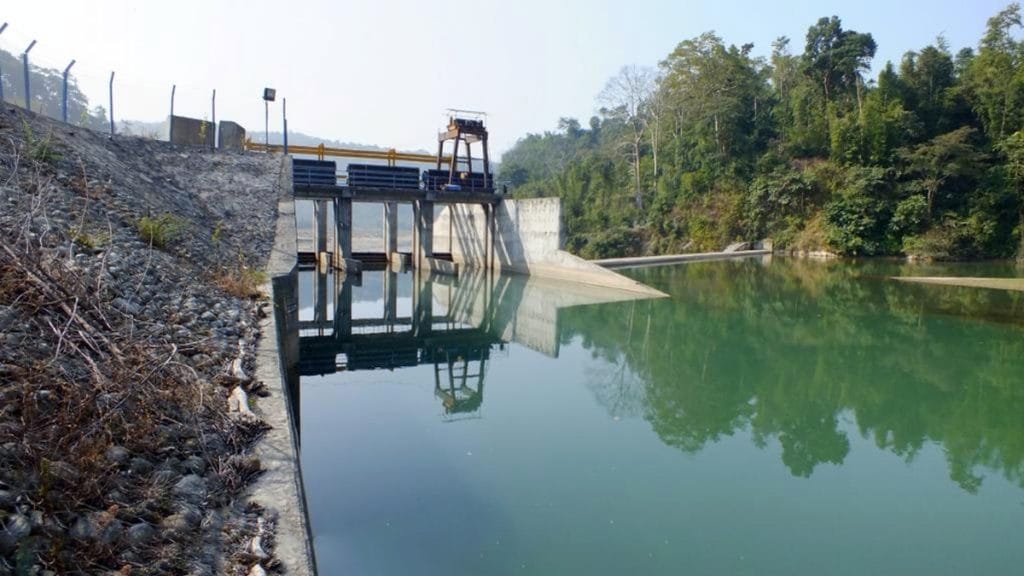
The central confusion is simple yet fatal. Installed capacity is not the same as monetizable electricity. Run-of-river (RoR) plants, which dominate Nepal’s system, produce abundantly during the monsoon and barely trickle during the dry winter. As of mid‑April, Nepal’s total installed capacity stood at 4,200MW. However, Nepal’s rivers fluctuate dramatically between seasons, with flow varying anywhere from 10 to 20 times between monsoon and dry periods, creating massive seasonal instability in generation. A 30,000MW system would amplify this seasonal insanity: colossal wet-season surpluses with nowhere to go, and persistent dry-season deficits that force Nepal to keep importing from India.
The government knows this. It talks up reservoir projects like Budhigandaki (1,200MW) and West Seti (750MW). But storage dams are environmentally costly and take a decade to build. Run-of-river projects are faster, easier to finance and line developers’ pockets sooner. So the bias towards the wrong kind of hydropower continues. The result is a generation mix that makes Nepal a reliable exporter only during the months when its neighbours need power least.
That is the second dark truth: India, Nepal’s only plausible buyer, is changing. Solar power is now cheaper and faster to deploy than hydropower, with large Indian conglomerates investing billions in massive solar farms. Nepali power, produced at higher unit cost, risks becoming expensive electricity sold into a cheap market.
The agreement to export 10,000MW to India over the next decade is a political framework, rather than a fixed-price power purchase agreement. It assumes a regional energy market that is rapidly disappearing. As of August 2025, Nepal’s total approved export capacity to India stands at some 1,090MW (plus 40MW to Bangladesh), still far from the 10,000MW headline.
And even if buyers existed, the wires do not. Transmission lines lag so far behind generation that during peak monsoon flows Nepal wastes electricity. According to former energy minister Deepak Khadka, a single flood in Rasuwa in July 2025 disconnected 260MW from the national transmission system. Building 30,000MW without the grid to carry it away is building a fleet of lorries without roads. The government has announced plans to add 731 km of national transmission lines, but that is a drop in the bucket.
The investment needed is staggering. According to energy expert Prabal Adhikari, the 2024 Energy Development Roadmap requires an estimated $46.5bn to achieve its targets. That is roughly the size of Nepal’s GDP: a crushing burden for an economy of Nepal’s size. The banking system is already heavily exposed to hydropower; one major bank has financed 56 hydropower projects with a combined capacity of 3,000MW. A shock to the sector would ripple through the entire financial system.
The Nepal Electricity Authority’s (NEA) profits are indeed shrinking. In February 2025 the NEA reported a profit of Rs11.36bn for the first six months of fiscal year 2024-25. But by April 2025 the NEA released a white paper showing a loss of Rs5.26bn, contradicting former executive director Kulman Ghising’s earlier claim of an Rs8bn profit. The NEA’s total liabilities now stand at Rs385bn, with Rs171.4bn in long-term foreign loans under government guarantee. Independent producers have also complained that the NEA “has not been able to make a profit due to delay in construction of transmission lines” and other bottlenecks. Its fiscal outlook is deteriorating.
The 2025 budget introduced a “take and pay” provision for power purchase agreements, under which the NEA would pay only for electricity it actually consumes, rather than the “take or pay” model where payment is guaranteed regardless of use. Industry groups warned that “banks will not invest in projects with PPAs based on ‘take and pay’” and that this would “disrupt the safe investment environment in hydropower”. Following widespread criticism, the government reversed the policy, but the episode shattered lender confidence and froze new project financing. Even after the reversal, the damage lingers.
This is not an argument for abandoning hydropower. It is an argument for growing up. Nepal needs storage as well as transmission lines, and not just turbines. It needs a realistic assessment of what India will actually buy, at what price, rather than a political headline. The finest engineering minds can build 30,000MW. But only sober economics can turn those megawatts into prosperity. Absent that, Nepal risks becoming a cautionary tale: a country that learned to generate electricity but forgot to sell it. ■
This piece has been amended.