IMAGE VIA IRRI
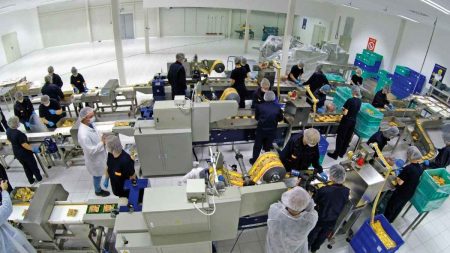
IN 1995 factories produced 9% of Nepal’s GDP. By 2024 the figure had sagged to 4.4%, according to the World Bank. The country has been deindustrialising without ever having industrialised. Yet over those three decades, poverty halved, consumption surged and Kathmandu’s skyline thickened with remittance‑financed apartment blocks. The economy found a workaround. The question is whether that workaround can last.
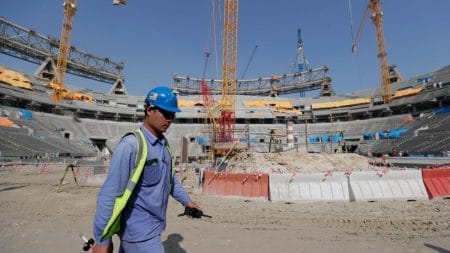
It works like this. Every year well over 800,000 Nepalis (equivalent to the population of a large city) board flights for the Gulf, Malaysia or beyond; the latest labour permit figures show a 35% surge in the first quarter of 2025-26 alone. They send back cash: remittances are expected to account for 33% of GDP this fiscal year, the highest on record and more than six times the global average.
Those inflows sustain private consumption at 86% of output; total consumption (including government) reaches a stunning 93%. They also, insidiously, poison the ground for everything else. The central bank pegs the Nepali rupee to its Indian counterpart, and the flood of foreign exchange has yanked up the real effective exchange rate by an estimated 15‑20% since 1993. Imports become cheaper; domestic production becomes costlier. The upshot is an economy that imports its noodles, biscuits and steel while its own farmland lies fallow.
The few manufacturers that survive do so against the odds. This past winter the state electricity authority cut power to 25 factories over a long‑running dispute about dedicated‑line tariffs, wiping out an estimated 15,000–24,000 jobs (the exact figure is disputed). The argument, unresolved since 2020, centres on Rs8bn ($60m) in arrears. Even with hydropower capacity expanding five‑fold in a decade (from 800MW in 2015 to 4,200MW), the obstacle is governance, rather than watts.
Across the border, Bangladesh parlayed reliable energy and cheap labour into a garment industry that employs some 4m people. Vietnam turned foreign direct investment into an export machine that ships goods worth some 90% of GDP. Nepal’s entire goods exports, by contrast, amounted to Rs191bn in the first eight months of this fiscal year—against imports of Rs1.29trn. The deficit touches 113 of 142 trading partners.
Could services fill the gap? Tourism drew some 1.16m visitors in 2025, still below pre‑pandemic levels, and contributes about 7% of GDP. But a coup scare or a West Asian war can empty trekking trails overnight, as it did recently. IT services reportedly earned $1bn in exports last year (up from $515m in 2024), much of it still low‑end web development; the sector cannot absorb the half‑million young people entering the labour force annually. Hydropower, the great hope, will probably cross 4,500MW of installed capacity this year, with exports already trickling to Bangladesh. Dams, however, are capital‑hungry and create few jobs. Bhutan, a hydropower state of 800,000 souls, can spread dam revenues thinly and still lift incomes. Nepal has 30m people. The numbers are unforgiving.
The comparison that stings is Sri Lanka. It reached upper‑middle‑income status on services and remittance‑backed consumption, then combusted in 2022 when tourism evaporated and import bills soared. The missing ingredient was a broad manufacturing base to generate foreign exchange when the flows stopped. Nepal, with its $42-45bn economy (nominal) lashed to the rupee peg and a workforce increasingly marooned abroad, is one prolonged Gulf labour shock away from the same cliff edge.
Yet nobody in Kathmandu is losing sleep. The current arrangement suits too many constituencies. Banks prefer parking liquidity in real estate and import finance over risky industrial loans. Merchants profit from the import surge. Politicians avoid the hard graft of special economic zones—the Bhairahawa industrial zone, planned 20 years ago, is still largely inactive. Households with a son in Doha feel no urgency to demand factory jobs. Remittances act as a systemic sedative, dulling the pressure for structural change.
Development textbooks describe a well-known path: shift workers from fields to factories, raise productivity, diversify exports. Nepal has swapped the factory floor for a departure lounge. The outcome has been a peculiar kind of growth—poverty‑reducing, consumption‑driven, entirely dependent on the whims of foreign labour markets. It can sustain lower‑middle‑income status. It cannot, on any plausible trajectory, deliver the broad‑based productivity gains that upper‑middle‑income life demands. ■