IMAGE VIA BIZZ BUZZ
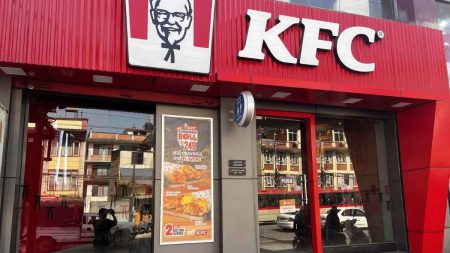
UBER FLICKED the switch in the Kathmandu Valley this week, signing up 1,000 drivers through a local partner, TaxiMandu, and offering zero commission for a limited launch. For the 1.16m tourists expected to land in Nepal this year, the familiar app will be a welcome shield against airport taxi touts and fare-haggling. For everyone else, the American giant has entered a market where the rules are whatever the most organised person with a loudhailer says they are.
Start with the numbers that should matter. Kathmandu has about 12,350 licensed taxis, each requiring a black number plate that costs some Rs1.5m ($9,800) in informal payments on top of a vehicle price of Rs3–3.5m. The city’s 11,400 registered e-rickshaws and tempos, plus privately owned minibuses that carry 27.6% of trips, operate in a grey zone that transport syndicates—part union, part cartel—have controlled for decades. Nine years after the first ride-hailing app launched, the sector still has no national law. A 2020 order from the Patan High Court to regulate the business gathers dust; a federal draft standard was circulated in April 2026. This is a system that works rather well for the syndicates and the officials who collect the plate fees.
When the provincial government of Gandaki tried to issue ride-hailing rules last year, the transport unions shut down the country. The prime minister’s office promptly asked Gandaki to suspend its regulations. The province obliged. The Supreme Court then blocked that suspension, leaving a provincial law that nobody enforces. Bagmati province, which contains Kathmandu, has since decided to move slowly, “fearing a backlash”.
In such an environment, the law is a bargaining chip. Uber’s initial strategy—using only black-plate cars—sidesteps the explosive question of whether private red-plate vehicles can carry paying passengers. It is a market-layer, not a market-maker, at least until the politics settle.
The incumbents it layers onto are already bloodied. Pathao, the Bangladeshi firm whose name has become a verb for ride-hailing in the city, takes a 15–20% commission. inDrive lets riders and drivers haggle, taking 10%. Yango, backed by Russia’s Yandex, arrived a year ago charging 3% or nothing.
The upshot has been carnage for drivers: per‑kilometre earnings have reportedly fallen from Rs27–28 a few years ago to as low as Rs9–10: though that low figure comes from a single speculative report and is not widely corroborated. What is certain: fuel prices have jumped 39% since the war in Iran erupted in late February, to NPR 219 a litre—the highest in South Asia. In April drivers rallied with placards reading “Petrol expensive, fares cheap” and demanded a state‑mandated floor of Rs30 a kilometre. The platforms’ zero‑commission war has merely added accelerant.
So Uber’s arrival will be felt first in the airport queue and the tourist’s peace of mind. The bigger transformation depends on a state that can set rules and mean them. Kathmandu’s some 1.5m vehicles choke roads built for half that number—though estimates vary, with some sources putting the figure at 1.17 million and others at 1.75 million. Only 69 traffic lights cover the valley, and many are old or broken (a precise percentage is not officially reported). The platform can price congestion but it cannot unpick the syndicates or the permit rackets.
Indeed, on May 22nd the government itself halted registration of all new public vehicles in the valley, citing severe congestion—a sign that the state is capable of intervention, just not yet of coherent regulation. The real contest is not between apps but between an algorithmic order and a political disorder that profits from keeping things informal. In that match, the smart money remains on the loudhailers. ■