IMAGE: KJ
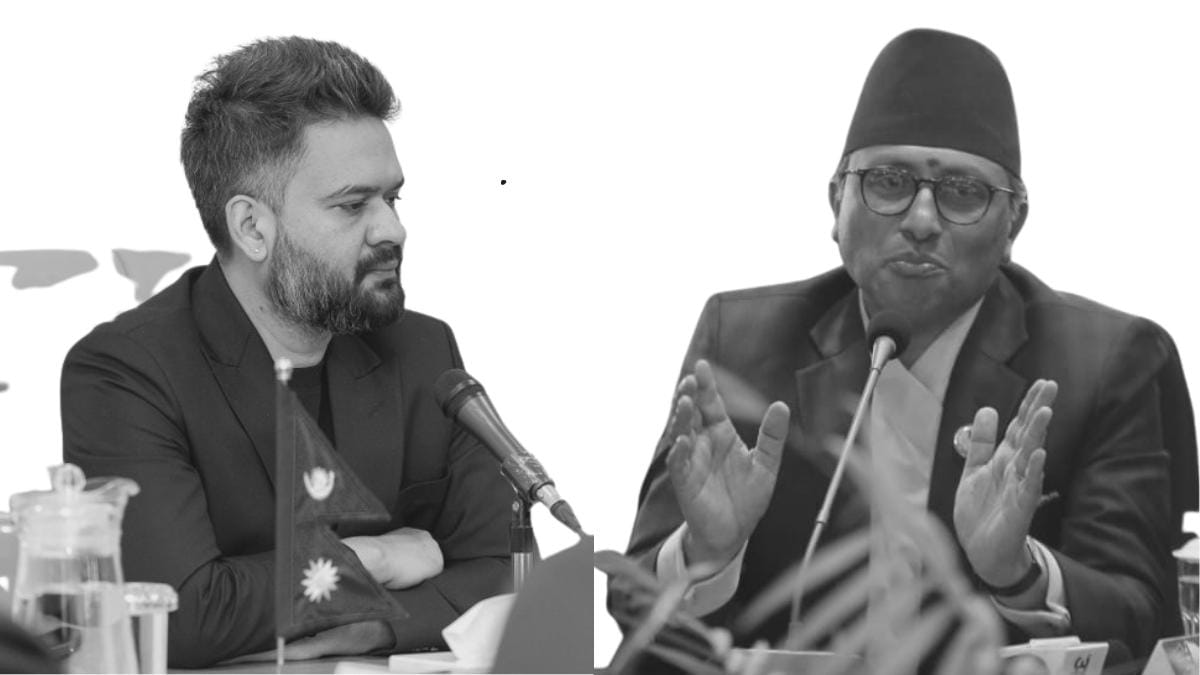
WHEN NEPAL’S finance minister stood before parliament last week and announced that personal income tax exemptions would double and 31 government bodies would be abolished, he was speaking to one audience. When he announced that the nutrition allowance for Dalit children would double, that health insurance would be extended to nine in ten Nepalis within three years, and that civil servants would get their first pay rise in four years, he was speaking to another. The puzzle is why both announcements appear in the same budget. The answer says something interesting about where Nepali politics has arrived.
The short version is this. The youth movement that brought this government to power was not really about left or right. It was not demanding a bigger welfare state or a leaner one. It was angry about a state that seemed to exist mainly for the benefit of the people running it: one that consumed enormous resources, produced few services and distributed what little it delivered through networks of patronage rather than through systems that worked for ordinary people. That specific grievance turns out to be one that tax cuts and cash transfers can both address, in different ways, without contradicting each other. Understanding why requires a short detour into what Nepal’s state actually looks like.
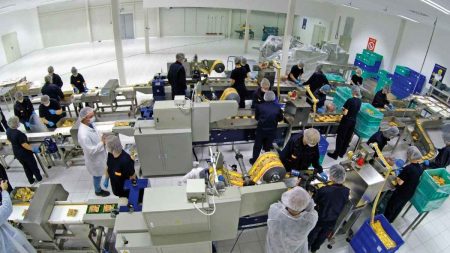
Nepal has too many government bodies doing too little. It has layers of coordinating committees, regulatory bodies and administrative units in Kathmandu that spend most of their energy coordinating with each other rather than delivering anything to anyone outside the capital. At the same time, it has too few doctors in remote provinces, too few agricultural extension workers reaching actual farmers and too few functioning clinics in districts where maternal mortality is still high. The problem is not just that the state is too big or too small. It is that the money flows towards the overhead and away from the output.
The budget tries to tackle that. On one side, it abolishes 31 government bodies, merges six more and restructures eighteen others. It cuts office running costs, removes staff perks at state enterprises and eliminates spending lines that have long been vehicles for minor corruption: camera purchases, television sets, training junkets abroad. The government estimates these savings at some Rs20bn. That is not a large sum against a total budget of Rs2.12trn, but the point is not primarily fiscal. It is political. Cutting the visible privileges of the administrative class is popular with the urban voters who powered the movement that brought this government into office.
On the other side, the budget increases direct transfers to the people the administrative class was nominally serving. The Dalit children’s nutrition allowance doubles. Health insurance expands. The education budget reaches Rs218bn, the largest allocation of any ministry. Child cancer treatment in government hospitals becomes free. The government plans to complete the resettlement of landless Dalit families within the year. These are the choices of a government trying to route social protection around the bureaucratic middlemen who have historically consumed much of its value.
This is the idea at the heart of what might loosely be called technocratic populism: the belief that you can make the state deliver more to ordinary people by making it do less administratively. Strip away the coordinating committees. Merge the overlapping agencies. Cut the perks. And use what you save to send money more directly to the people who were supposed to benefit in the first place. It is not a new idea. Versions of it have been tried in India, in Rwanda, in various Latin American countries over the past two decades. The results have been mixed, because the hard part is not the cutting. It is building the delivery systems that replace what was cut.
The tax reform fits the same pattern, though it takes a moment to see how. Doubling the personal income tax exemption threshold to one million rupees removes more wage earners from the tax net entirely. Cutting the top marginal rate reduces the bill for higher earners. Simplifying customs duties from eleven bands to seven, and removing excise duties on 360 products, reduces the cost and complexity of running a legal business. None of these changes help Nepal’s poorest citizens directly, since people too poor to pay income tax do not benefit from income tax cuts. What they do, in theory, is pull more economic activity into the formal, registered, taxable economy: which eventually produces more revenue, which funds the transfers that do reach the poor.
That chain of logic depends on a big assumption: that lower taxes and simpler rules actually bring more businesses into the formal economy rather than reducing what registered businesses pay. The government is projecting a 22% increase in tax revenue next year while cutting several rates. To square that circle, it needs either strong economic growth or a significant shift in compliance behaviour, or both. The VAT rebate for digital payments—a 10% discount on the tax for consumers who pay electronically and receive an invoice—and the lottery for migrant workers who send money home through official bank channels are the main tools designed to shift that behaviour. They are well-designed instruments. Whether they are powerful enough to move the needle on aggregate compliance in a single year is a different question.
Where the budget is most innovative is in its approach to agriculture. Rather than running subsidies through dealers and intermediaries—the system that has historically meant fertiliser money reaching traders rather than farmers—the government offers a direct capital grant of 40% to farmers who invest up to Rs20m in crops or livestock. The grant shrinks by ten percentage points each year for four years and disappears once the farm is established. Alongside that, crop insurance premium subsidies rise to 80%, and a warehouse receipt system will let farmers use stored grain as collateral for bank loans. These are policies meant to cut out the middleman.
The political sustainability of this whole approach depends on timing. The benefits that are immediate and visible—the tax cuts, the doubled children’s allowance, the civil service pay rise—arrive quickly. The benefits that come from better governance and a more formal economy—higher private investment, faster growth, more tax revenue—take years to materialise.
If the first wave of benefits arrives and the second does not, the government will face pressure to keep spending on transfers and keep cutting taxes simultaneously, which is only possible if you borrow to fill the gap. Nepal’s budget already projects borrowing of Rs657bn to cover the difference between spending and revenue. That number will grow if the growth dividend from reform takes longer to arrive than the budget assumes.
What is different about this government, compared with its recent predecessors, is that it has been specific. The Investment Express—the automated business approval system—has a three-month deadline. The bad bank, designed to buy troubled loans off commercial bank balance sheets and free up lending, is supposed to be running by the end of this year. The health insurance expansion has a percentage target and a three-year timeline. Specific commitments are easier to measure than vague ones, which means this government has given its critics more precise tools with which to hold it to account.
Nepal’s political culture has for years rewarded the announcement and forgiven the failure to deliver, in part because the gap between the two was wide enough that no delivery ever looked like complete success and no failure looked like complete betrayal. A government that is specific about what it intends to do by when makes that ambiguity tougher to sustain.The extent to which that specificity extends to actual implementation is what the quarterly spending figures and private investment data will start to reveal well before the next budget is read. ■