IMAGE: GOLYAN GROUP
HARI BHAKTA Sharma, who runs a pharmaceutical company and once led the Confederation of Nepalese Industries, told a parliamentary committee in late May that anyone who runs a factory in Nepal must be paying for sins from a past life. He was not describing a bad year. Manufacturers have said much the same for a long time and this year gave them fresh evidence.
The year was respectable, on paper. The National Statistics Office estimated that manufacturing grew 2.83% in 2025-26, up from 2.27%, and that the wider industrial sector (which includes construction and electricity) grew 5.77%. Cement, iron rods, cables and beer led the gains. But manufacturing contributes only 5.7% of GDP, and over the past decade it has grown by 2.9% a year against 4.2% for the economy. The central bank has described industry’s fall from 22.2% of GDP in 1995 to 12.8% in 2025 as premature deindustrialisation.
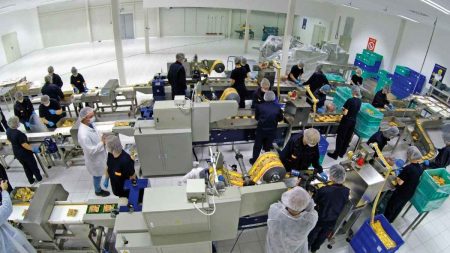
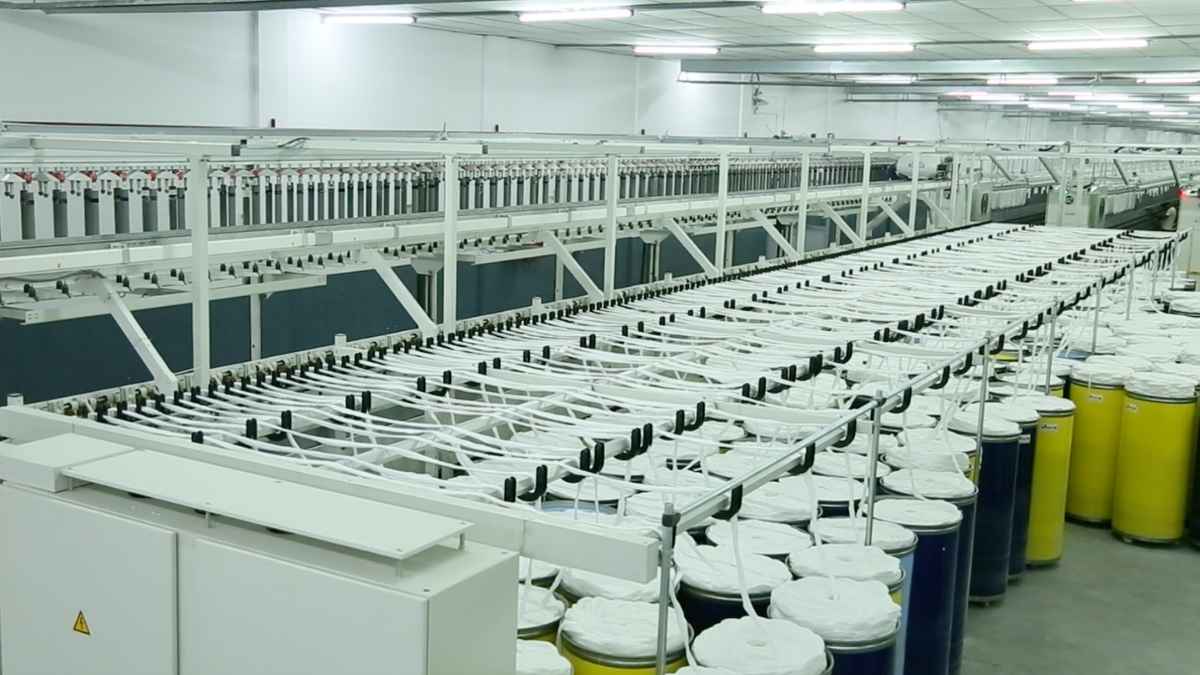
Look inside the factories and the picture darkens. In the first half of the fiscal year, average capacity utilisation was 42.11%, slightly lower than a year earlier. Garment makers were an exception at 95.74%, followed by other textile producers at 90%. Only 461 new industries registered, against 581 a year earlier. Bank lending to industry grew 7.99%, against 17.66% in the same period of the year before. The central bank’s own list of problems (high costs, backward technology, a shortage of skilled labour) would have been recognisable a decade ago.
Exports flatter the picture. Soybean oil supplied about 40% of the total in the first five months of 2025-26, according to customs data. Nepali firms import crude soybean and sunflower oil (Argentina is now the third-largest source of imports), refine it and sell it to India, where Nepal enjoys duty-free access under the South Asian Free Trade Area. Strip it out and the central bank noted in February, export growth falls to 5.7%. The same analysis warned that a cut in India’s duties on vegetable oils from other countries could wipe out nearly half of Nepal’s exports to India.
Then came the war. After the Strait of Hormuz closed, a vice-president of the Birgunj Chamber of Commerce said in April that production in most factories there had been halved; plastics makers in Hetauda cut output by 40%. A sack of ordinary cement rose from Rs1,050 to Rs1,275, and a kilogram of steel rod from Rs95 to Rs121. Contractors in Bagmati Province said work had stopped. Cooking gas, which Nepal imports through India, was still scarce in September, and the industry minister resigned on the 10th, a day after saying that all 58 gas companies should lose their licences.
The government’s own manner has frightened investors. Since the third week of March police have arrested more than half a dozen businessmen, according to Lagani, a Nepali outlet. The best known was Shekhar Golchha, a former president of the Federation of Nepalese Chambers of Commerce and Industry (FNCCI), held in April in a share-trading investigation. The Supreme Court found his detention illegal in early May. FNCCI, the Confederation of Nepalese Industries and the Nepal Chamber of Commerce issued a rare joint statement urging the state to “listen first, arrest later”. The head of the bankers’ association told the finance minister that his members feared arrest merely for making loans. The Post noted that the government has every right to pursue collusion between business and politics, but asked whether the economy would bear the cost of its methods. The FNCCI’s president added that uncertainty over leases of industrial land, affecting about 700 firms, and a revived dispute over power lines had made owners wary.
Among the better-run factories were hydropower plants, which used 82.74% of their capacity in the first half. On August 26th the Bhotekoshi flood damaged 13 hydropower projects and five solar plants, 759MW in all, and put losses in power generation and transmission at Rs151bn.
The next test is outside the country. Nepal is scheduled to leave the UN’s list of least developed countries on November 24th, which would phase out duty-free access to the European Union and Japan, markets that matter most to the garment makers running at 96%. The government asked in May for a three-year delay, citing weak growth and risks to exports and jobs, and the UN Economic and Social Council has sent the request to the General Assembly, whose Second Committee was due to take it up on October 7th. The decision falls before November 24th. The figures three years from now will depend on factory floors, not New York voters. ■