Rollin’ with the flow
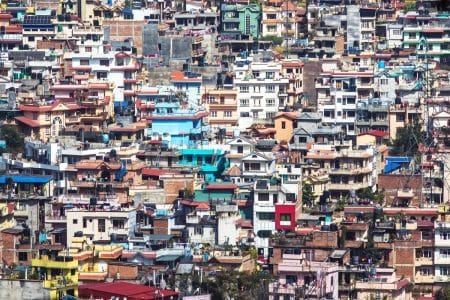
From a rooftop in Kathmandu, the signs of progress are evident. Cranes punctuate the skyline. New apartment blocks gleam in the sun. The streets below are clogged with imported cars and motorcycles. Nepal’s economy has expanded by roughly five percent a year for decades, a respectable clip that should, in theory, have transformed a poor and mountainous country. Yet a closer look rips open a disquieting truth. The growth is an illusion, or something perilously close to one. Nepal is running hard just to stay in place.
The numbers tell a sobering story. Since the mid-1990s, nearly seventy percent of the country’s economic expansion has come from what economists dryly term “capital accumulation”. This means piling on more labour and more concrete, not from generating smarter ideas or better goods. The true engine of lasting development, total factor productivity—the bit of growth that comes from innovation and efficiency—has inched forward at a glacial 0.25% a year. Neighbouring Bangladesh manages double that. Vietnam’s rate is several times higher. Nepal is adding inputs, but getting pitifully little extra output from them.
For a hopeful moment, this seemed likely to change. After a civil war ended in 2006, a measure of political calm arrived. Between 2007 and 2014, productivity growth leapt to a more encouraging 1.3%. Then the earthquakes struck, followed by an Indian border blockade, perennial power cuts and a pandemic. The fledgling momentum evaporated. Crisis management became the permanent occupation of the state, and whatever reformist zeal had flickered was extinguished.
The foundational problems are mundane, and maddeningly addressable. The country devotes a paltry 0.3% of its national income to research and development. Its tax code offers no incentive to innovate. Factories still rely on costly diesel generators because the grid cannot provide reliable electricity, decimating already slim profit margins. The education system produces graduates for jobs that do not exist, while the jobs that might exist go unfilled for want of skilled workers.
Beneath those failures sits a core dilemma. Nepal’s economic lifeblood is also its poison. Each year remittances from citizens working abroad flood in, amounting to a quarter of GDP. This cash keeps families afloat and fuels the consumer boom in Kathmandu and Pokhara. But it also warps the economy. Less than ten percent of these funds are invested productively. The rest flows into daily consumption or speculative real estate, bidding up land prices to vertiginous levels.
The influx of foreign currency has propped up the rupee, making the country’s non-existent exports even less competitive. It has also shattered the local labour market. A worker can earn five times as much doing manual labour in the Gulf or Malaysia than in a Nepali factory. The rational choice is to leave. Between 1,500 and 2,000 do so every day, often the young and the ambitious. The nation’s much-vaunted demographic dividend is being harvested abroad and wired home, where it is spent on motorbikes and kitchen renovations.
The structure of the economy has mutated in response. Manufacturing’s share of output has halved since 2000. Fertile land lies fallow for lack of hands to till it. Nepal now imports processed foods such as biscuits and noodles that it could easily make itself. Policy has actively worsened the problem. Tariffs are structured perversely, taxing raw materials more heavily than finished goods, thereby penalising domestic production. Industrial strategy is a jungle of contradictions.
Even apparent bright spots prove hollow. Official figures trumpet half a billion dollars in annual IT exports. But delve into the details, as a recent World Bank report did, and you find that nearly seventy percent of this is low-value gig work—data entry and basic web design on freelance platforms. Less than half a percent of the workforce is in tech. There is no Nepali unicorn, nor any company on the path to becoming one.
The greatest frustration is the waste of obvious potential. The country sits atop a hydroelectric goldmine, with the theoretical capacity to generate 45,000 megawatts from its raging rivers. Yet it remains a net importer of electricity from India. A flagship project, Upper Tamakoshi, took fifteen years to complete, bogged down in political meddling and bureaucratic torpor. Unlike Norway, which built a globally competitive metals industry on the back of cheap, clean power, Nepal has no plan to use the energy it might one day produce. The power is an end in itself rather than a means to build something else.
Solutions are not mysterious. Remittances, if channelled through formal instruments like diaspora bonds, could fund export zones and energy infrastructure. A serious vocational training system could marry skills with market needs. Labour laws could be simplified to formalise the vast informal sector. Agricultural land, now fragmented and increasingly abandoned, could be consolidated and linked to agro-processing parks. The country exports raw tea and herbs for pennies; it could be selling packaged, branded goods for dollars.
The obstacle is not a lack of plans. The National Planning Commission produces them in volume. Donors fund endless studies. The deficit is one of execution. Ten governments in fifteen years have fostered a political culture allergic to long-term thinking. Red tape smothers most initiatives before they begin. The result is an economy on a treadmill, fuelled by the hard work of its absent citizens, going nowhere fast. It is entirely possible, Nepal is proving, to grow poorer by growing. ■