ILLUSTRATION: KATMANDU JOURNAL
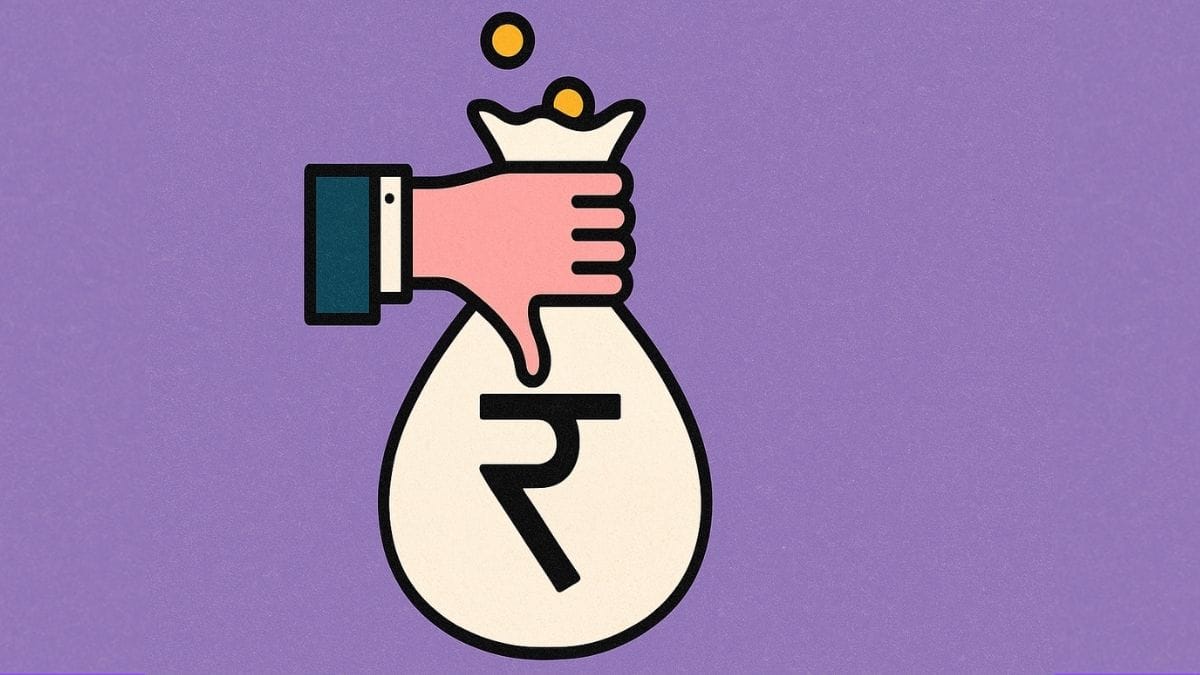
ON MAY 7TH the Nepal Rastra Bank fixed the Indian rupee at 160.00 to buy and 160.15 to sell, per 100. The rate has not moved in years. The Nepali rupee has been pegged to its Indian counterpart since 1960, settling at 1.6 to the Indian rupee in 1993 after experiments with gold and a trade-weighted basket. For traders in Birgunj and bankers in Kathmandu, the number is as fixed as the Himalayas.
The peg has long served as Nepal’s nominal anchor. It ties prices in Kathmandu to prices in Delhi; removes exchange-rate risk from two-thirds of Nepal’s trade; and lets the hundreds of thousands of Nepalis working in India send money home without worrying about currency swings. India accounts for around 60 per cent of Nepal’s foreign trade, receiving more than 82 per cent of its exports and supplying nearly 58 per cent of its imports, according to the Department of Customs. Nepal’s trade deficit with India reached Rs 951.95 billion in the fiscal year ending mid-July 2026.
The anchor has costs. Because Nepal maintains an open capital account with India, the peg leaves the Nepal Rastra Bank with little room to set interest rates for domestic conditions. The constraint is the impossible trinity: a country cannot simultaneously fix its exchange rate, allow free capital movement and run an independent monetary policy. Nepal has chosen the first two. When the Reserve Bank of India raises rates, the Nepal Rastra Bank must follow. When India’s inflation rises, Nepal imports some of it.
The debate over whether to keep the peg has returned to the centre of Nepali politics. The Rastriya Swatantra Party, which won a resounding victory in the March elections, had promised in its manifesto to commission a study on the fixed rate. Finance Minister Swarnim Wagle said in August that devaluation or a free float could hurt the economy for now, pointing to the need to build export capacity before changing the regime. The Nepal Rastra Bank’s monetary policy for the fiscal year 2026-27, released in July, continues to treat the fixed exchange rate with the Indian rupee as the intermediate target.
What has changed is the situation of reserves. Gross foreign exchange reserves reached $24.14 billion in July, an all-time high, up from $19.5 billion a year earlier. The reserve covers 19.2 months of prospective imports of goods and services, according to the central bank. The build-up comes not from a manufacturing boom but from remittances, which rose 41.2 per cent in rupee terms in the first ten months of the fiscal year. Nepal received Rs 257.49 billion in remittances in the month to mid-May alone.
The abundance has provoked a question that Urja Singh Thapa, a columnist, put in the Kathmandu Post in April: if Nepal has the insurance of $24 billion, why is it still paying the premium of lost monetary independence? The reserves are enough to defend the peg against most plausible shocks. They also hide the weakness that the peg helps to entrench. The Nepali rupee is estimated to be overvalued in real effective terms by 8 to 18 per cent, according to World Bank and IMF benchmarks cited in a central bank study on foreign exchange liberalisation. An overvalued currency makes imports cheap and exports expensive, deepening Nepal’s dependence on imported goods and stifling domestic manufacturing.
The trade figures bear this out. Nepal’s exports reached a record Rs 315.29 billion in the last fiscal year, but imports were Rs 2,096.37 billion. Much of the recent export growth comes from refined soybean, palm and sunflower oil, which Nepali traders sell to India under least-developed-country tariff preferences. The sustainability of that trade depends on rules of origin and Indian tariff policy, rather than on Nepali competitiveness.
The peg also transmits India’s monetary conditions into Nepal’s economy. In the 2026-27 monetary policy, the Nepal Rastra Bank set an inflation target of around 5.5 per cent, close to the Reserve Bank of India’s comfort zone. Consumer price inflation in Nepal was 5.04 per cent in mid-May, up from 2.77 per cent a year earlier, driven by higher food and transport costs. The central bank kept its policy rate, standing deposit facility rate and bank rate unchanged, citing ample liquidity and comfortable reserves. The policy is accommodative at the margin and constrained by the peg.
The IMF’s advice, delivered at its Spring Meetings in April, was to keep the peg in good times and reconsider it in good times, not in stress. “For Nepal, the pegged exchange rate is the nominal anchor,” said Thomas Helbling, a deputy director in the IMF’s Asia and Pacific department. “Our general advice is for such systems, if they are well established, to keep them and reconsider the exchange rate in good times, not in times of vulnerabilities or stresses.”
By that logic, Nepal’s reserves and remittance inflows make this a good time. The government’s 7 per cent growth target and the central bank’s 5.5 per cent inflation target suggest the authorities are not treating the moment as one for bold experimentation.
A more important question is whether the peg still serves Nepal’s trading interests. In September Nepali and Indian officials met in New Delhi and agreed to review the trade treaty for the first time in 17 years. The treaty has been renewed automatically since 2016, and again in 2023, while non-tariff barriers and para-tariffs have accumulated. Nepali exporters complain that sanitary and phytosanitary measures block agricultural goods from the Indian market. A technical committee will meet within six months to identify issues for revision. The trade deficit with India is widening, and the peg does little to narrow it.
The case for the peg rests on stability rather than competitiveness. For a small, import-dependent economy with a narrow foreign-exchange market, the peg provides predictability for traders, investors and households. It anchors inflation expectations. It reduces the cost of remittances from India, which are the economy’s main source of foreign currency. A free float would introduce volatility into a market that has little capacity to absorb it. The derived rates against the dollar, euro and pound would become real market prices, and the Nepali rupee would probably depreciate. Imported fuel, food and medicine would become more expensive. The poor would bear the first blow.
The peg will stay. The alternatives are worse; and the institutions needed to manage them are not yet built. A managed crawl, a gradual adjustment of the peg to correct for the inflation differential with India, is the most that can be expected in the near term. It would preserve the anchor while allowing the real exchange rate to depreciate. It would require the central bank to accept a slower pace of disinflation and to manage capital flows more actively. It would also require India’s acquiescence, which is not guaranteed. In the past, when Nepal tried to fix the rate at 101 to 100, India objected strongly, and the peg reverted. The reserves buy time. They do not buy a strategy. ■