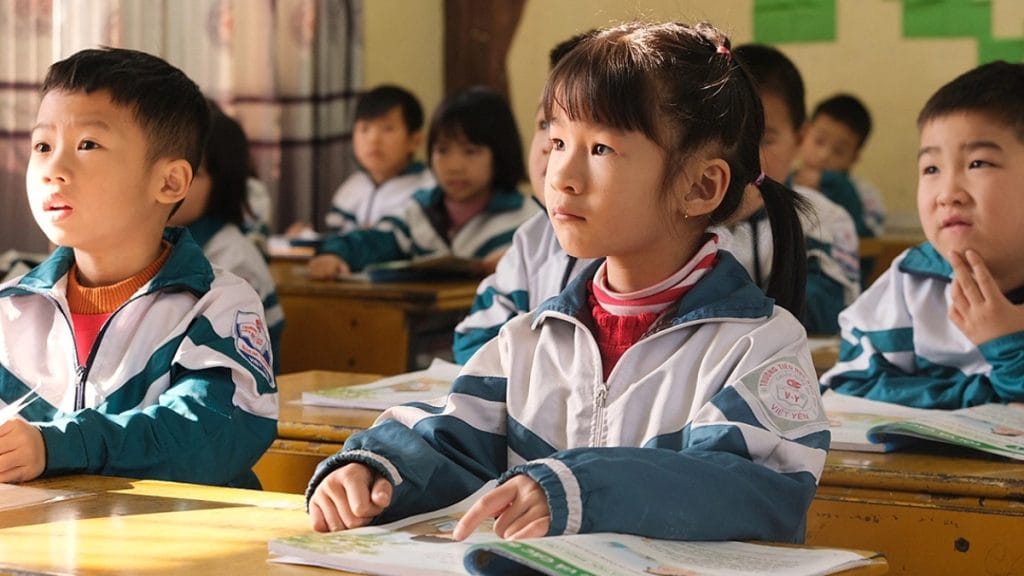
In 2018 Vietnamese 15-year-olds performed comparably in reading and science with their American and British counterparts. They did so even though Vietnam’s GDP per capita was lower than India’s. The feat was not achieved through moonshot reforms or Silicon Valley gimmicks but something more banal: better schools. For countries like Nepal, where classrooms are a graveyard of potential, Vietnam’s success is stunning and enviable.
Nepal, too, reveres education. Parents sacrifice a fifth of household income to send children to private schools. The state proclaims “education for all” in every policy document worth its laminate. Yet the outputs are underwhelming. Fewer than half of Grade 10 students pass national exams. In a country where nearly one in three children attends public school, the quality of learning is at best unpredictable and at worst nonexistent.
Vietnam shows poverty need not be destiny. Can Nepal take note or will it continue to mistake expansion for progress?
Vietnam’s gains come from a ruthless focus on the classroom. It spends about 20% of its public budget on education (versus below 12% in Nepal). Not because it can afford to but because it cannot afford not to. Its schools are obsessed with early learning: foundational literacy and numeracy are treated as a national imperative. Teachers are trained regularly, observed closely and rewarded meaningfully. Poor performance invites scrutiny. Strong performance invites imitation.
Nepali classrooms by contrast are stuck in pedagogical time loops. Lessons are often read verbatim from textbooks. Assessments test memory rather than mastery. And teachers—underpaid and undertrained as well as usually absent—rarely see the inside of a training hall after recruitment. In Vietnam school principals are treated as educational CEOs, held to account for outcomes. In Nepal they are more usually appointed for convenience or caste rather than competence.
This is not only about money. Vietnam’s per-student spending is humble by global standards. But what it spends it spends well: on learning materials; on support systems; and on getting children ready before the learning gap becomes a life gap.
Nepali education reformers are not asleep: they are simply distracted. Since the end of the monarchy the country has passed no fewer than three waves of federal education restructuring. Each has promised better decentralisation and each has delivered more confusion. Responsibilities are spread across three levels of government with few incentives to collaborate and plenty to blame.
Meanwhile the private sector flourishes not because it is good but because it is better than the alternative. Elite boarding schools resemble English public schools, complete with blazers and debate clubs. Budget private schools, which cater to the masses, operate on wafer-thin margins but outperform their public counterparts. They do so not because they are lavishly resourced but because they are less encumbered. They can fire bad teachers. Public schools, governed by union politics and bureaucratic inertia, rarely can.
Even where reform takes root, it routinely wilts. A much-lauded teacher licensing system now functions more as a formality than a filter. A new curriculum introduced in 2019 promotes critical thinking but few teachers know how to teach it, and few students are assessed for it. Policymakers speak of “digital classrooms” while rural schools are having trouble keeping the lights on.
Cultural capital is not in short supply. Education here is still regarded as the best inheritance. But reverence alone does not translate into rigour. Vietnamese policymakers did not wait for teachers to self-improve. They built systems (of monitoring, of mentoring, of measuring) that nudged even mediocre teachers toward adequacy. Excellence, where it emerged, was showcased and scaled.
Nepal could do the same but it must start with admitting that what exists is not working. It must stop promoting teachers on the basis of tenure. It must fund schools based on learning outcomes, not enrolment targets. And it must build data systems that actually inform policy rather than just produce donor reports.
There is also a political lesson. Vietnam’s single-party system allows it to implement unpopular reforms with relative ease. Nepal’s democracy is messier and less patient. Local elections bring new school committees every five years, usually staffed by loyalists with little interest in education. But the underlying principle, political will, still applies. You do not need authoritarianism to prioritise children. You just need focus.
Vietnam’s success was not inevitable. It was constructed (brick by brick, lesson by lesson) over decades. It focused on what matters: teacher quality, school leadership and early learning. It avoided the temptations of grandstanding and rather focused on governance, pedagogy, accountability.
Nepal does not lack ideas. It lacks follow-through. Too many reforms are stillborn, too many conferences end with lunch. The temptation to chase the next big initiative, such as AI, coding bootcamps and tablet distribution, should be resisted until the basics are fixed.
A Vietnamese proverb says, “To eat fruit, you must plant the tree”. Nepal has planted many seeds. But it has not watered them. If it wants to harvest a demographic dividend rather than a disillusioned youth bulge, it must take schooling seriously and not ceremonially.
It is not poverty that holds back its education system. It is the poverty of its ambition. ■