Image: AP
In the end, it was not a bang but a spreadsheet error. Elon Musk, having spent five months at the helm of the so-called Department of Government Efficiency (Doge), has stepped down with less to show for it. The world’s richest man had promised to shave $2trn from America’s annual federal budget. He departs with $175bn in claimed “savings”. Many of them unverified, some imaginary and all irrelevant in the face of a ballooning deficit.
Mr Musk’s role, an obscure classification as a “special government employee”, was meant to be short-lived by law. Still insiders believed that—like most rules in Washington—it could be bent. No such luck. His abrupt exit, announced on X (née Twitter), ends a brief, noisy chapter of Silicon Valley meets Swamp. “The @DOGE mission will only strengthen over time,” he insisted, although few would wager their Bitcoin on it.
The idea was Muskian in its ambition, if not in its execution. Doge would root out waste; streamline bureaucracy; and make the federal leviathan leaner, faster, perhaps even profitable. It bore more than a passing resemblance to Musk’s managerial style: chaotic, centralised, allergic to process. Cost-cutting meant pink slips en masse. Cabinet secretaries grumbled as departments were told to “run like a startup”, which often meant running without HR, compliance or coffee.
Yet the promised $2trn never materialised. Most of the alleged $175bn was duplicated entries, optimistic estimates and creative accounting. A Financial Times review found Doge’s maths often relied on “projected eliminations” and “anticipated behaviour shifts”—terms that would make even WeWork’s accountants blush.
Musk blames Congress. Legislators, he says, hamstrung his efforts with procedural foot-dragging and “spending addiction”. But the real blow came not from budget hawks but from a hawkish budget. President Donald Trump’s “Big Beautiful Bill”—a deficit-swelling tax package passed by a single vote in the House—offended Musk’s fiscal sensibilities. “I think a bill can be big, or it can be beautiful,” he said, “but I don’t know if it can be both.”
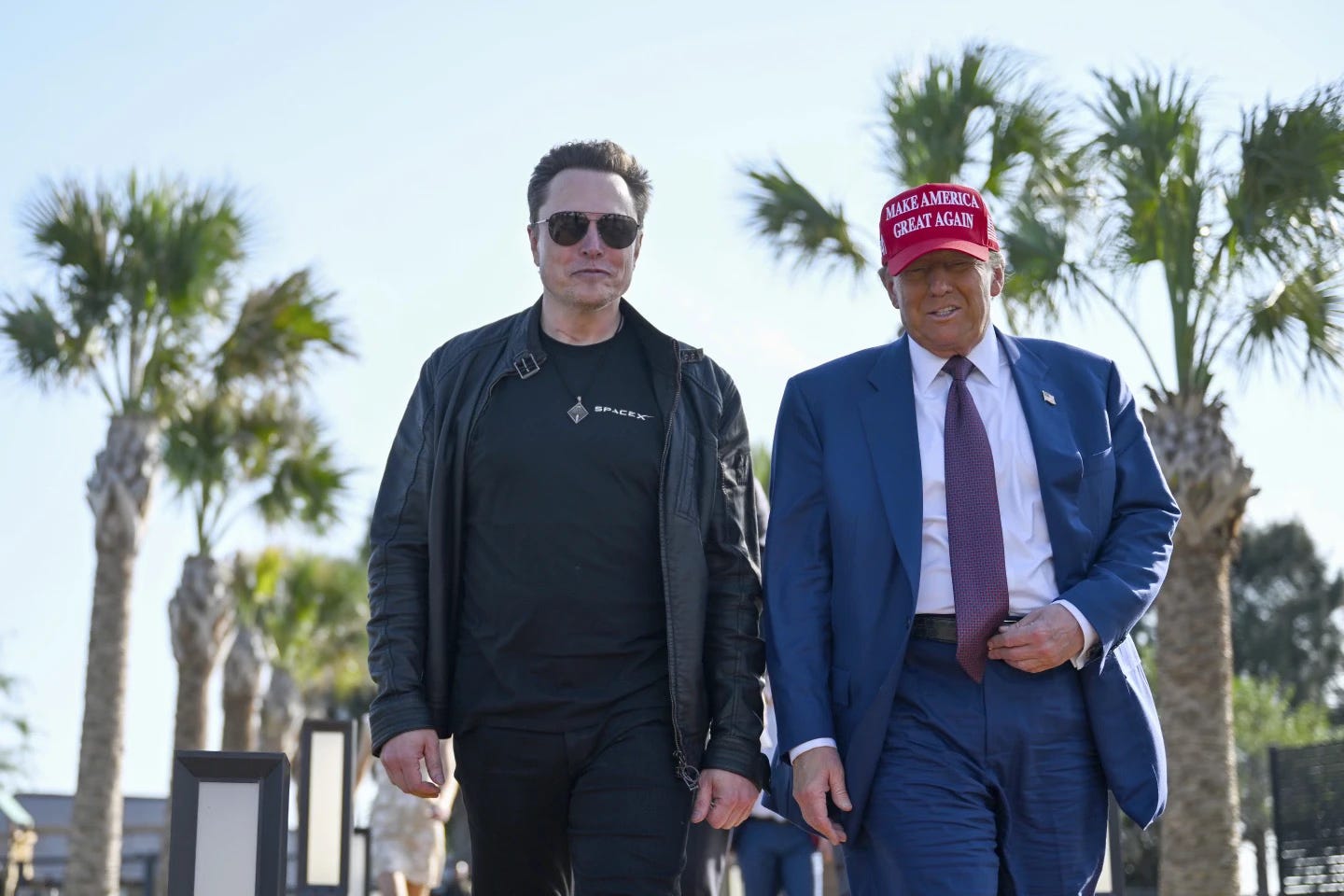
This may be the closest thing to a political divorce in modern plutocracy. Musk was Trump’s top donor in 2024, spending more than $250m to boost his campaign. In return he was handed not a cabinet post, but a sideshow—a rebranding exercise for austerity with a meme name and a Twitter strategy. It backfired. Tesla sales slumped. Investors fretted. SpaceX engineers were left wondering whether their CEO was off counting paperclips rather than planning Mars missions.
The rift, though, is not purely fiscal. Musk has also derided the administration’s trade policies, calling one official “dumber than a sack of bricks”. His enthusiasm for MAGA economics appears to have curdled into bemused contempt. Even his political giving is cooling: “I’ve done enough,” he now says, sounding like a man who has just realised that politics yields fewer returns than rocket science.
Musk, for his part, is going back to basics—sleeping in factories, micromanaging product launches, firing executives by tweet. His critics will see this as a retreat. His fans will see it as a homecoming. Investors may simply be relieved.
As America’s deficit continues its ascent—past $34trn and counting—one might wonder if Doge was ever a serious attempt to rein it in. Or if it was just a billionaire’s brief vacation from capitalism, playing at government before retreating to more comfortable orbits.
In any case, Mr Musk has left the building. And the budget remains very much beautiful, in the Trumpian sense: vast, bold and utterly unaffordable. One senior official described Doge’s legacy as “mostly PowerPoint”. ■