Image via Ratopati
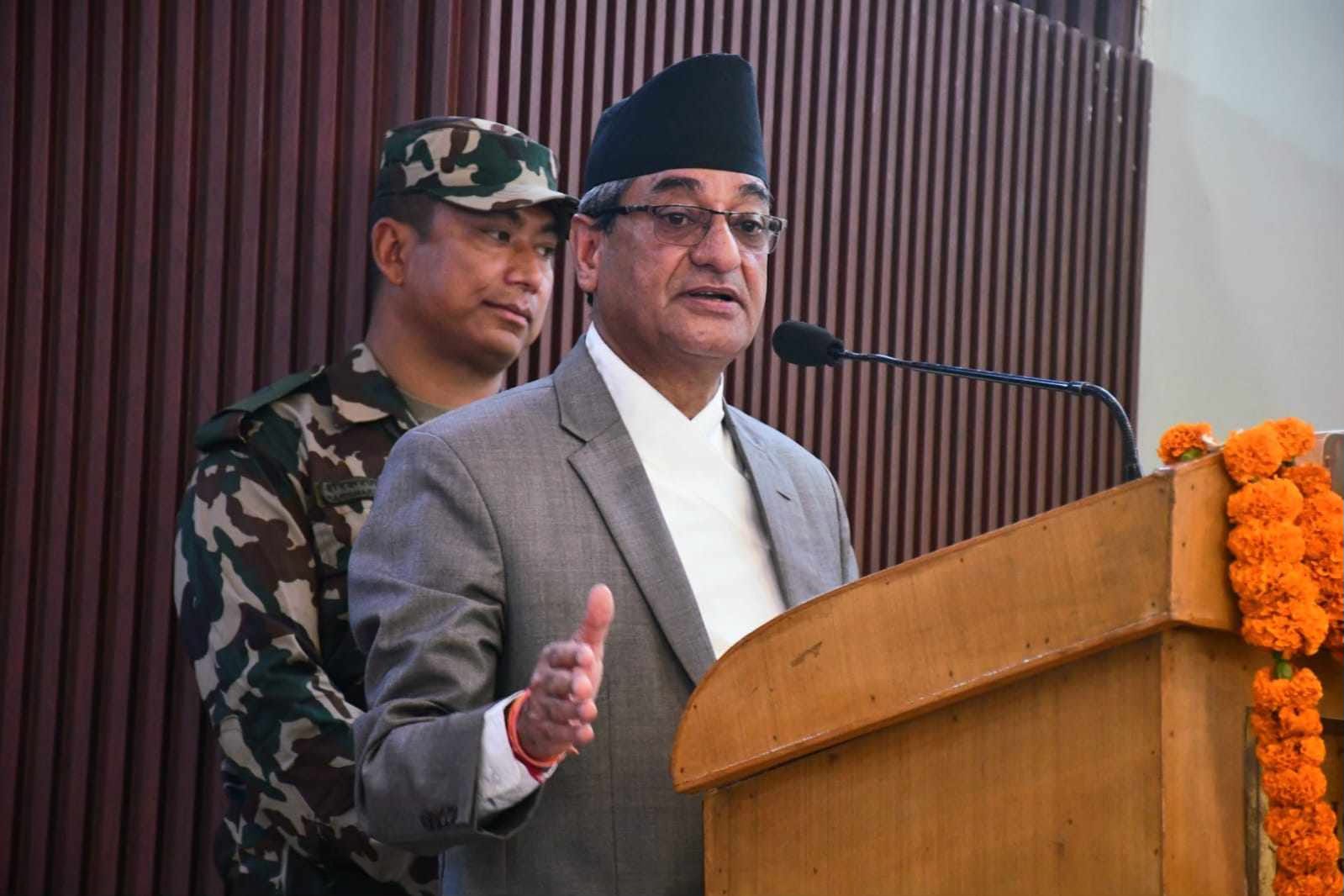
If scandal were a currency, Nepal would be drowning in counterfeit notes. The ongoing visit-visa scam centred at the Tribhuvan International Airport’s immigration office has exploded into a political spectacle, casting Home Minister Ramesh Lekhak into the limelight. As officials face bribery investigations, Lekhak denies involvement. Yet calls for his resignation abound, threatening to eclipse the systemic rot underpinning the crisis: a dysfunctional immigration apparatus ripe for exploitation.
The saga erupted when the Commission for the Investigation of Abuse of Authority (CIAA) raided the airport’s immigration office, confiscating documents and detaining Joint Secretary Tirtha Raj Bhattarai on bribery charges. The allegations describe a sprawling network issuing fake visit visas to Nepalis, disguising human trafficking as tourism. This is not a mere clerical faux pas but a well-oiled racket implicating immigration staff, security and airline personnel alike.
Remarkably, the home minister has escaped formal charges. Mr Lekhak’s rebuttal is pointed: the accusations are politically motivated, lacking official complaints or investigations against him. He questions the logic of resigning amid speculation, warning against a dangerous precedent that reduces ministers to political scapegoats. He cites past ministers who weathered inquiries without stepping down, suggesting governance cannot grind to a halt at every murmur of suspicion.
Prime Minister KP Sharma Oli doubles down on this defence, dismissing opposition demands for Lekhak’s resignation as “biased” and “baseless”. Oli’s position reflects the precariousness of the coalition government: a power-sharing arrangement between Nepali Congress and the CPN-UML, scheduled for a handover to Congress leader Sher Bahadur Deuba. Stability, fragile and prized, must not be sacrificed on factional pyres.
Yet opposition parties, notably the CPN (Maoist Centre) and Rastriya Swatantra Party, have seized the scandal to disrupt parliamentary proceedings and press for accountability. Meanwhile, some within Nepali Congress, spearheaded by Shekhar Koirala, call for the minister’s exit on moral grounds. The tug-of-war exposes a familiar Nepali dilemma: the blurred boundary between ethical obligation and political manoeuvring. Resignations become currency in factional battles, often divorced from objective guilt.
Crucially, the scandal predates Lekhak’s tenure, spotlighting systemic vulnerabilities rather than isolated malfeasance. Nepal’s immigration system operates under opaque outbound travel restrictions intended to regulate labour migration. Ironically, these restrictions incentivise corruption, creating a lucrative black market for fraudulent visas. Some experts advocate radical reform: scrapping or simplifying travel controls to eliminate rent-seeking opportunities. Yet such overhaul calls for political will and bureaucratic discipline, scarce commodities in Kathmandu’s corridors of power.
For now what is imperative is an independent, transparent inquiry that can sift fact from factional fiction. The CIAA’s current probe, though vigorous, is criticised for opacity and political partiality. A genuinely empowered committee, insulated from partisan interference, might more credibly expose the scandal’s full reach and recommend institutional reforms.
The crisis places the government on a razor’s edge. Capitulating to demands for resignation absent evidence risks governance paralysis and undermines public confidence. Conversely, a defensive posture that appears to shield elites fosters cynicism and erodes accountability. Lekhak’s conditional readiness to resign if proven guilty gestures toward responsibility but requires an investigation that commands trust well outside Kathmandu’s political salons.
Transcending local squabbles, the visit visa scam epitomises broader governance troubles: endemic corruption, factional infighting, institutional fragility. Without reform the immigration system is vulnerable to exploitation: with human trafficking as its most troubling fallout.
Nepali politicians would do well to recall that scandals, much like epidemics, require transparent cures rather than bandages. Otherwise, the only thing Nepal will reliably export alongside its citizens is a contagion of cynicism. ■