Image: Nepal Tourism Board
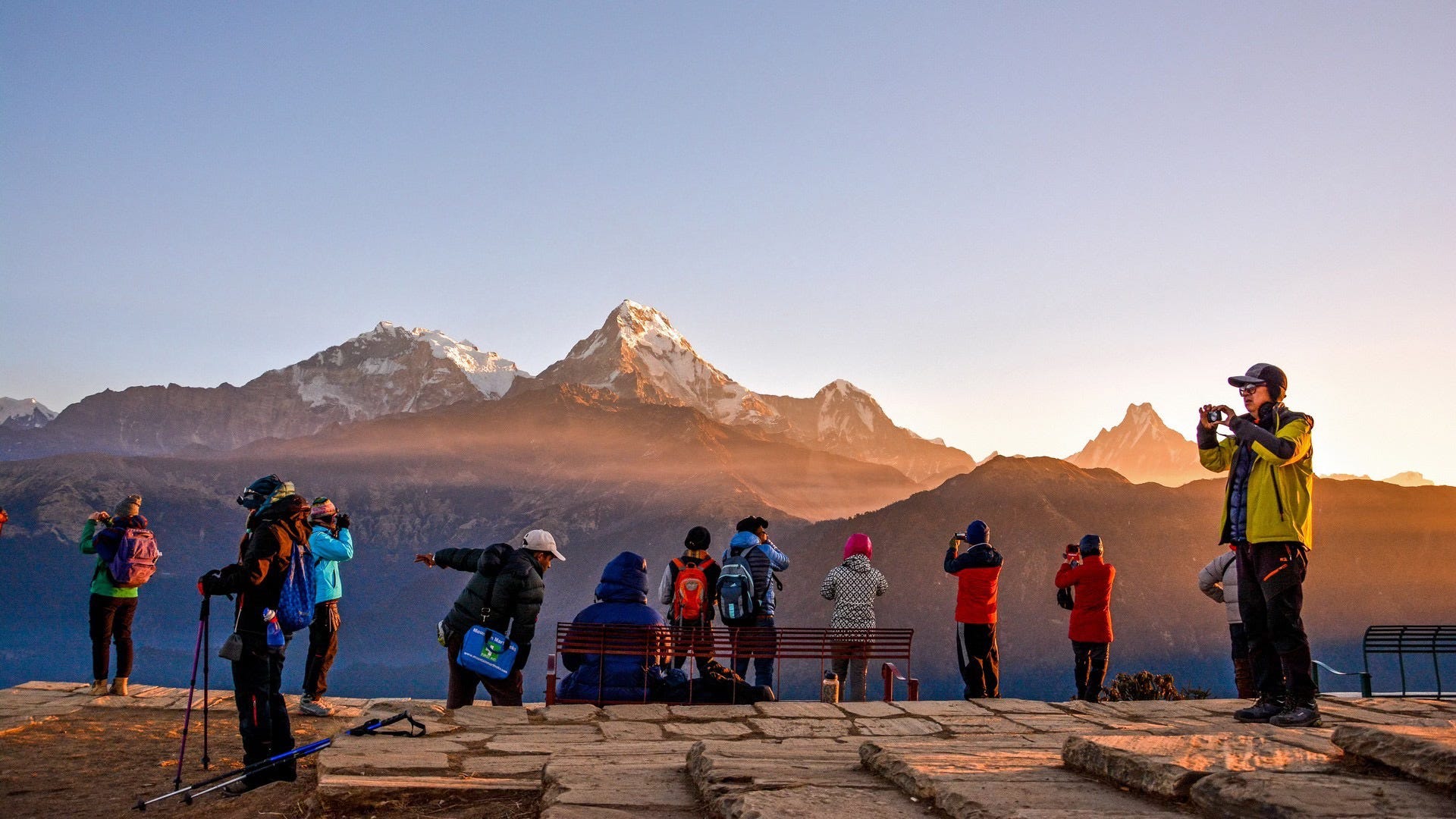
Nepal sells hardship. The country’s most lucrative export is not tea or textiles but a romanticised struggle against altitude, cold showers and questionable Wi-Fi. This formula—adventure with a hint of asceticism—has naturally enticed travellers from Berlin to Busan. When covid-19 grounded the globe, its tourist economy, reliant on foreigners with Gore-Tex jackets and Instagram ambitions, collapsed. The crowds are now returning. But the fragility has not been mended: it has merely been concealed.
Tourist arrivals have rocketed. After plunging from 1.2m in 2019 to 230,000 in 2020, visitor numbers bounced back to more than 1m in 2023. Early figures for 2024 are even rosier: March set a record with over 128,000 arrivals. At this rate, 2025 may surpass the symbolic million mark once more. Nepal’s rebound outpaces regional peers. Sri Lanka still contends with political aftershocks, and Bhutan’s pricey entry fee deters all but the most committed. By contrast, Nepal presents high-altitude adventure at mid-altitude prices.
Yet the recovery is better viewed as a weather forecast than a climate report. The surge reflects pent-up demand rather than any structural change. The sector is woefully narrow, heavily reliant on a few peak trekking seasons and a handful of over-trodden trails. Adventure seekers still flock to Everest and Annapurna in March–April and October–November. But the monsoon months—June to August—are barren: with fewer than 70,000 visitors across all three in 2023. This cyclical volatility makes business planning a Himalayan guess.
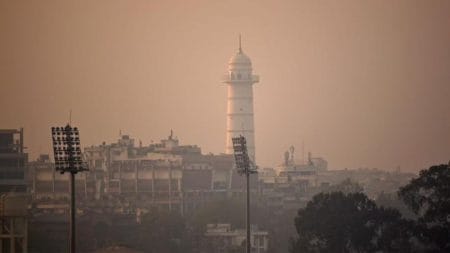
Diversification remains a talking point rather than a policy. Successive governments have pledged to promote “quality over quantity”, targeting affluent tourists from the Gulf, China and Southeast Asia. But implementation lags behind rhetoric. Nepal’s digital infrastructure—spotty Wi-Fi, sluggish online visa portals, erratic domestic flights—is still more an endurance test than a draw. Even Kathmandu’s main airport, the nation’s tourism bottleneck, provides the ambience of a regional bus station on a bad day.
Meanwhile competition is evolving. Vietnam courts long-term travellers with digital nomad visas and spruced-up beach towns. Georgia presents gastronomic tourism alongside Soviet nostalgia. Bhutan, ever the outlier, has doubled down on its “high value, low volume” mantra, raising its tourism levy to $200 a day—though recent tweaks now slim the fee to $100 after the fourth night, a nod to pragmatism as well as principle. Nepal continues to provide value, but at the cost of vision.
To its credit, the country retains enviable raw materials. The natural assets—peaks, rivers, monasteries—are second to none. Few places can promise spiritual renewal and oxygen deprivation in the same itinerary. And Nepal is remarkably affordable. For the price of a long weekend in Zurich, one can walk the Manaslu circuit, complete with a guide, porter and regular servings of dal bhat. This is a potent comparative advantage, particularly for younger travellers and middle-income tourists from India, China and Southeast Asia.
There are signs of adaptation. A small but growing cadre of Nepali entrepreneurs are experimenting with boutique eco-lodges, agro-tourism and curated cultural experiences. Domestic tourism has grown, yanked up by rising incomes and the democratisation of aspiration. Travel influencers now hail from Pokhara as well as Prague. In theory, this broadens the sector’s base and cushions against external shocks.
But tourism alone will not carry the economy uphill. Directly, it contributes around 7% of GDP, and double that if one includes indirect effects. It generates foreign currency, supports rural livelihoods and offers a rare exportable service. But unlike manufacturing, tourism struggles to scale. It is labour-intensive but not labour-absorbing. The same Everest trek requires roughly the same number of porters as it did twenty years ago.
Worse, tourism is acutely vulnerable. Political instability, climate shocks or diplomatic spats could all deter future arrivals. One avalanche in Langtang or a visa row with India could undo a season’s gains. And though tourists are forgiving—adventure often rewards adversity—investors are less sanguine. Capital, unlike backpackers, rarely returns for the scenery.
For Nepal to convert tourist footfall into development, it will need to upgrade more than just airport lounges. Land regulation is opaque; environmental protections weakly enforced; and marketing efforts scattershot. A strategy that sees tourism not merely as a cash cow but as part of a broader services ecosystem—linking education, health, transport and technology—would serve better than another slogan-heavy campaign.
You can check out any time you like, but you can never leave
Until then Nepal will be a beautiful detour, much visited and little transformed. The mountains are back in postcards and profile pictures. The trouble is bringing them into the balance sheets. ■