Image: Jabin Botsford/The Washington Post
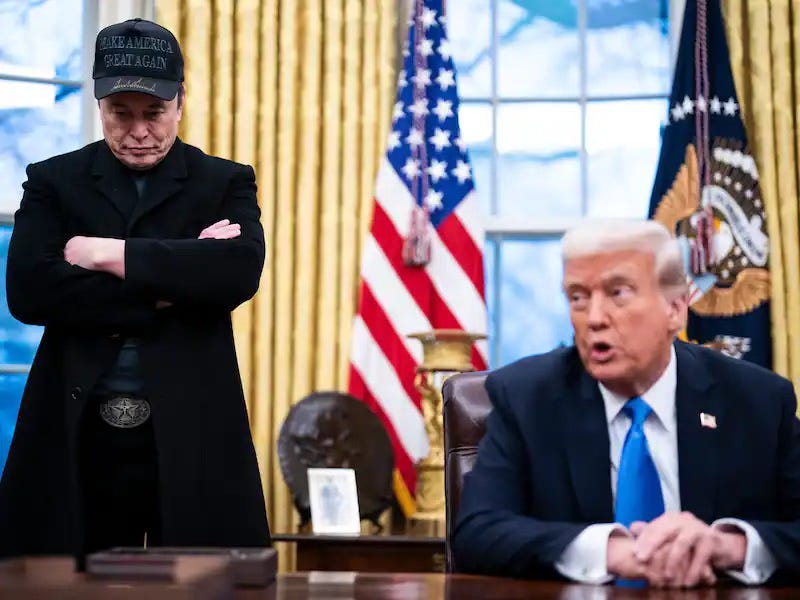
The world’s most powerful man is threatening the world’s richest. Donald Trump has turned on Elon Musk—who was a de facto cabinet adviser—and branded him “crazy”. In retaliation, Musk is calling for impeachment, threatening to ground NASA astronauts (only to row back later) and musing about building a new political party.
The spat is about a tax bill. Mr Trump’s “big beautiful bill” would end certain green subsidies, cap corporate tax deductions and inflate the deficit by $2.4trn, according to the Congressional Budget Office, among others. That has upset Mr Musk, whose empire—Tesla, SpaceX, Starlink—has long drunk deeply from the well of federal largesse. The president, thin-skinned as ever, did not take kindly to criticism. “Terminate Elon’s Governmental Subsidies and Contracts,” declared Mr Trump, less than a year after hailing Mr Musk as a “genius” and welcoming his campaign donations.
The break-up is messy but hardly surprising. Their alliance was always one of convenience. Mr Musk enjoyed access and influence under Trump’s second term, heading up the ill-fated Department of Government Efficiency (Doge) and occasionally moonlighting as an emissary to Big Tech. Mr Trump, for his part, relished the endorsement of the world’s most famous innovator—and his campaign coffers. But ideological fault lines were bound to emerge. One man worships rockets, AI and carbon-free living; the other is nostalgic for coal, tariffs and the combustion engine.
Critics accuse Mr Musk of being an opportunist who cosied up to power to boost his own ventures—which is comical given that he now blasts “disgusting pork” in Trump’s bill while pleading to keep EV incentives alive. The billionaire’s belated anti-Trump epiphany is unlikely to endear him to Democrats either, many of whom remember his earlier flirtation with right-wing culture wars.
Yet for all the posturing, his threats carry weight. SpaceX is essential to America’s space ambitions, and Starlink has become a backbone of communications in geopolitical hotspots from Ukraine to the Taiwan Strait. Cancelling those contracts might save money in theory. In practice it would set fire to the Pentagon’s procurement plans.
Markets, unsurprisingly, are unimpressed. Tesla shares tumbled 14% after Mr Trump’s tirade, erasing $150bn from its market value—more than thrice the size of Nepal’s GDP. That reflects more than just political risk. Investors may be recalibrating their assumptions about how deeply intertwined Musk Inc. is with Washington—and how vulnerable it is to the vagaries of one man’s wrath. The president’s suggestion that the easiest way to trim the budget is to kneecap Musk’s empire is, in fiscal terms, fanciful. But in political terms it is a warning shot. If loyalty is transactional, so too is protection.
Meanwhile Mr Musk is playing his own long game. “Trump has 3.5 years left. I’ll be around for 40+,” he noted. That may be optimistic, given the fragility of Silicon Valley stardom. But it speaks to his ambition. Whether it takes the form of a new party, a tech-backed Senate slate or a disruptive media platform, Musk seems bent on shaping the political landscape he once merely funded.
Washington insiders say more of Musk’s allies will be purged from federal agencies in the coming weeks. Already, Trump has pulled the NASA nomination of Jared Isaacman, Musk’s billionaire-astronaut friend, citing long-past donations to Democrats.
The Department of Government Efficiency was meant to identify and trim wasteful spending—some $180bn in cuts, it claims to have found. Now its architect is being vilified for doing just that. “Without me, Trump would have lost the election,” Musk lamented. Perhaps. But in Washington gratitude has the half-life of a tweet.
Mr Trump has always believed loyalty is owed not earned. Mr Musk believes influence is his birthright. Their detente was a bubble inflated by mutual utility—and like most speculative bubbles, it has burst spectacularly. ■