In the age of artificial intelligence, the most human trait may prove to be taste. As machines churn out competent code, plausible prose and even the occasional passable painting, the scarce resource is no longer output but discretion. In a world flooded with options, the person who knows which one to choose becomes more valuable than the system that generated them.
This is not a matter of elitist aesthetics or a return to aristocratic connoisseurship. Rather it is a recognition that as generative AI democratizes creation, blurring the line between production and imitation, discernment becomes the bottleneck. The very ubiquity of choice, produced at negligible marginal cost, means that deciding what not to do becomes as important as knowing what is possible.
Taste, then, is not merely about surface-level style. It is, in the broadest sense, judgement with flair: the ability to fuse form with function, sense with sensibility. This matters not only to designers or artists, but to CEOs, policymakers and anyone faced with competing priorities and limited time. As generative AI proliferates across industries from marketing to medicine to management consulting, taste becomes the instinct that guides strategic decision-making through the noise.
The irony is that technology, in solving the problem of creative scarcity, has introduced the problem of aesthetic overload. Every pitch deck can now come in multiple fonts and layouts. Every corporate strategy memo can be rewritten in the style of Hemingway or Haruki Murakami. Inspiration is cheap; curation is not.
Strangely enough, that’s where the contradiction begins. AI is getting better at generating but no better at judging. That is a structural limitation. AI models do not possess cultural context, emotional intuition or lived experience. They can replicate taste but they cannot originate it. Like a talented forger, they may mimic brushstrokes without understanding the painting’s soul.
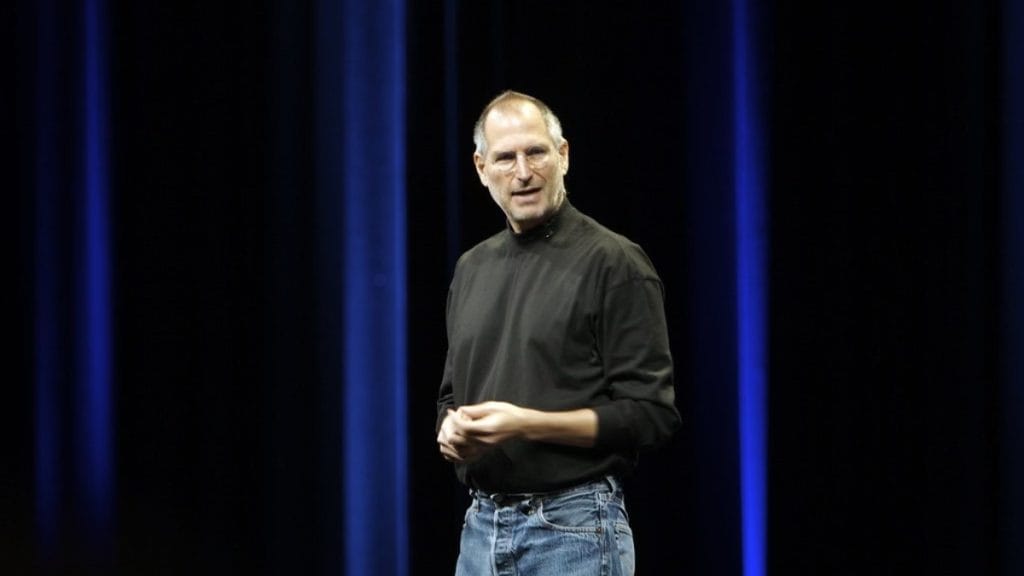
Consider the launch of the iPhone in 2007. The device was revolutionary but the presentation—Steve Jobs in a black turtleneck revealing “a widescreen iPod with touch controls or a revolutionary mobile phone”—was itself an act of taste. Every detail from the keynote pacing to the minimalist slides signalled intentionality. Taste was the difference between a product demo and a cultural moment.
It is no coincidence that OpenAI has reportedly turned to Jony Ive, the design maestro behind Apple’s golden era, to help shape its future. At a time when the underlying models are increasingly commoditised, and the outputs increasingly interchangeable, the frontier of value is in differentiation: what is just so, what feels right. Taste, in this context, is a strategy made beautiful.
This has broader implications for leadership. Much of the business world, obsessed with metrics and efficiency, has treated taste as a luxury. But in the AI era, it becomes a necessity. The capacity to decide how something is expressed, when it is deployed and why it resonates: those are no longer aesthetic frills but central elements of influence. The leader with good taste is not merely choosing fonts, they are shaping culture.
Taste also has a moral dimension, albeit a subtle one. We speak of decisions being “in poor taste” not because they are insensitive: tone-deaf, vulgar or exploitative. This matters when AI, left unchecked, can amplify harmful biases or generate outputs that, though technically compliant, are culturally corrosive. Google’s AI image generator, for example, was recently manipulated into producing inappropriate content involving minors. The system lacked both filters and taste.
Unlike technical skills, taste cannot be trained through prompts or code reviews. It must be cultivated. It begins with exposure: to literature, architecture, cinema, cuisine. One must see the best to sense what elevates. From exposure comes discrimination: an ability to sift the enduring from the trendy, the elegant from the overwrought. And finally, reflection: a willingness to revisit and refine one’s preferences over time.
Such development need not be confined to art schools or luxury brands. Business schools and leadership programmes could do more to nurture aesthetic intelligence, examining why a certain memo was persuasive, a presentation memorable or a brand unforgettable. Strategy after all is as much about narrative as it is about numbers.
Yet few institutions treat taste as a teachable skill. It is too commonly assumed to be innate or irrelevant. The fallout is a generation of leaders adept at analysis but adrift in judgement. In the AI era that imbalance becomes costly. As the machines generate more, humans must filter more, and the filter must be fine.
This is not to say that taste will save humanity from automation. But it may distinguish the effective from the overwhelmed. In a deluge of plausible outputs, what matters is not what can be said but what should be said, and how. Taste becomes the edge that AI cannot automate, the fingerprint on every decision, the unspoken glue between style and substance. ■