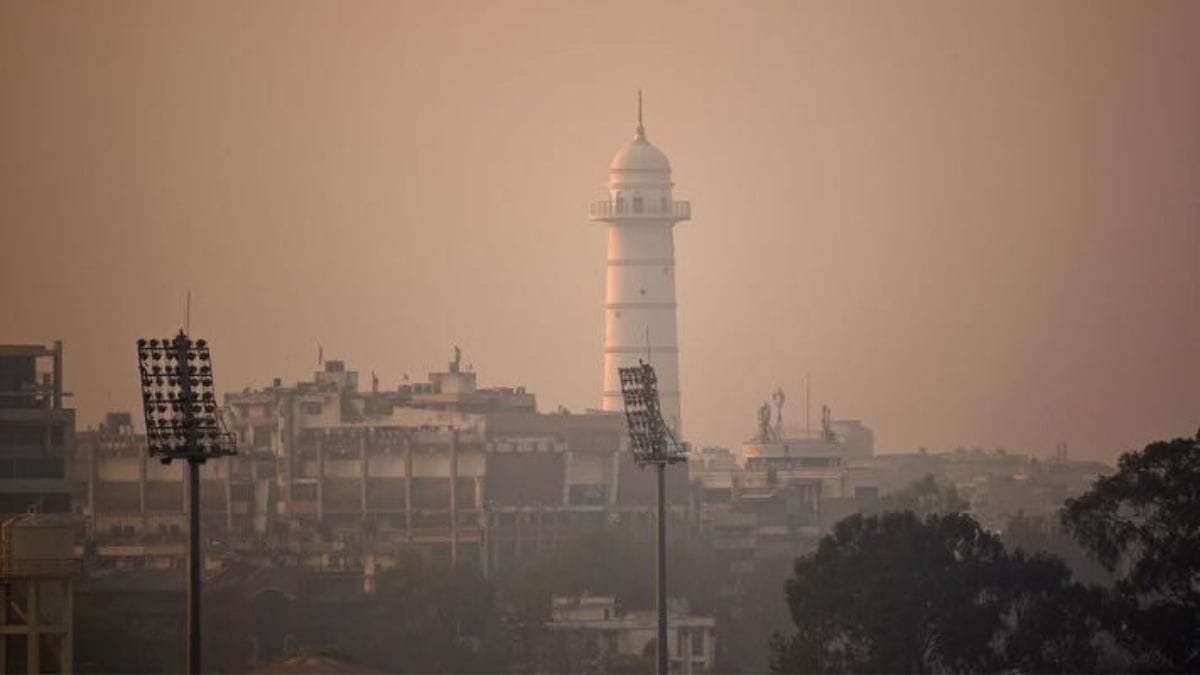
IMAGE VIA THE KATHMANDU POST
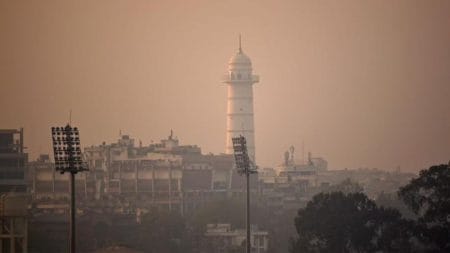
THE 4M residents of the Kathmandu Valley are breathing air that the World Health Organisation classifies as chronically dangerous. On February 12th, across the Nepali capital the Air Quality Index for fine particulate matter—PM2.5, the stuff small enough to slip from lungs into the bloodstream—hit 175, placing Kathmandu among the ten most polluted cities on the planet. Anything above 150 is “Unhealthy” for everyone.
The timing is no coincidence. February is the cruelest month in this bowl-shaped valley, when a warm air layer settles over the cool surface like a lid on a pot. Thermal inversion traps the capital’s own filth. But this year the recipe includes an extra ingredient.
Forest fires in Sindhupalchok and Dolakha, burning weeks earlier than usual after a winter without rain, have been pumping smoke into the prevailing westerlies. Satellite data show hundreds of alerts since late January. The fire in Gaurishankar conservation area alone smouldered for nine days, immolating habitat for red pandas and sending a plume of black carbon straight into the valley’s stagnant air.
The sources closer to home are the usual suspects, only less checked than before. Vehicle emission testing has been largely suspended since last June. Even when it functioned its credibility was shredded by spot checks showing 80% of diesel vehicles with “green stickers” actually failing the standards they purported to pass. The brick kilns ringing the city continue to burn, many still using traditional technology despite years of talk about cleaner “zig-zag” methods. And everywhere there is dust—from construction sites and unpaved roads to the legacy of the 2015 earthquake’s rubble, still not fully cleared.
The health consequences land disproportionately on the people with nowhere to hide. Urban informal workers—vegetable vendors, day labourers, the 90% of the workforce without contracts—lose workdays to coughing fits they cannot afford. Brick kiln workers, already poor, show respiratory morbidity above 42%, nearly five times the rate in cleaner rural districts. Kanti Children’s Hospital has seen a 50% rise in respiratory cases over a decade. The sale of inhalers for children has soared.
The economic toll is brutal. The World Bank puts the annual cost of air pollution at more than 6% of Nepal’s GDP—up to $4bn—through lost productivity, healthcare bills as well as deterred tourists. That is a heavy drag for a poor country. Yet the political system responds with the velocity of continental drift. The Kathmandu Valley Air Quality Management Action Plan, unveiled years ago, allows authorities to declare a public health emergency if the AQI surpasses 300. The city has topped global pollution rankings on multiple days without any agency deeming the threshold met. The bureaucracy is fragmented: the Ministry of Forests and Environment sets goals, the Department of Environment monitors, the traffic police are supposed to enforce, and nobody quite does.
Election season, with a parliamentary vote scheduled for March 5th, has further scrambled priorities. Prime Minister Sushila Karki has been reviewing security logistics in Solukhumbu, not pollution spikes in the capital. Voter education programmes launched on February 15th reached millions of citizens with information about the election. No comparable campaign warned them about the air.
What makes Kathmandu’s crisis distinct from Delhi’s better-known winter smog is its near-permanence. The valley’s geography—a basin ringed by hills—means it cannot easily flush itself. Even in months the WHO would rate merely “unhealthy for sensitive groups”, the annual average PM2.5 concentration hovers around nine times the global guideline. On bad days it spikes to 15 times that level. The city lacks the flatland winds that sometimes cleanse Indian cities. It is a pollution pit by design.
There are proposals enough. Environmental groups, including ICIMOD, advocate an Integrated Clean Air Authority with real powers to direct ministries and spend money. They want legally binding emission targets, subsidies for electric vehicles and brick-kiln conversions, and a joint commission with India on transboundary pollution. The government’s own 2020 Action Plan called for many of these things. The gap between paper and practice is where the smog accumulates.
So the valley chokes on. The same atmospheric stability that traps the smoke also keeps the rain away, and without rain there is no washout. The forecasts show no break in the weather pattern. Schoolchildren walk to class through haze thick enough to sting eyes, past vegetable vendors whose profits shrink with each sick day, under a lid of warm air that will lift only when the season turns. The government has set new standards for rolled oats, which is something. But the most basic standard of all—the right to breathe air that does not kill you—remains unmet, and nobody in authority has seen fit to mention it. ■