When the Nepal Rastra Bank recently reported net foreign direct investment (FDI) was negative for the three consecutive years, the news barely made headlines. Such figures, once shocking, have become mundane. In the first eight months of this fiscal year, net FDI into the country collapsed to a negative $40.4mn. For a country with GDP aspirations as lofty as its mountains, Nepal’s reliance on the kindness of strangers is both chronic and insufficient.
Yet though global investors are wary, spooked by currency risk and bureaucratic byzantinism, another breed of capital has been pouring in. Development finance institutions (DFIs), backed by foreign governments and multilateral banks, are stepping into the void. Part aid and part investment, DFI money is not a substitute for FDI. But here it may be the next best thing.
Unlike traditional FDI, which is fickle and often speculative, DFI funding is stubbornly patient. These institutions typically back commercially viable private-sector projects in emerging economies, particularly those that are underserved by domestic lenders. More important, they bring capital where capital fears to tread: into hydropower, agriculture, SMEs, green infrastructure and even internet providers. For a country with more than $17bn annual financing gap to meet the Sustainable Development Goals, just under half its GDP, every dollar matters.
Nepal has become something of a darling for DFIs in recent years. The Dutch entrepreneurial development bank FMO, British International Investment (BII), Finnfund of Finland, Swedfund of Sweden and the International Finance Corporation (IFC), the World Bank’s private-sector arm, have all found a foothold. And unlike traditional investors, who tend to window-shop Nepali markets before bolting for Bangalore or Bangkok, DFIs are buying in.
The methods are manifold. Equity, for one. FMO’s multi-year investment of more than $26m in NMB Bank, one of the country’s more adventurous commercial banks, dates back to 2008. BII took a $12m equity stake in Worldlink, a leading ISP, in 2019, and upped its bet in 2023 with another $8.4m—joined by Dolma Impact Fund II (DIF II), a private equity fund part-financed by DFIs, which contributed $6.9mn. DIF II, now capitalised at over $70m, is assembling a portfolio that includes tech logistics firm Upaya City Cargo and a multi-specialty hospital.
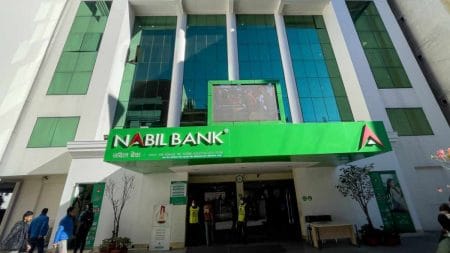
Debt is more common. Unlike local lenders, DFIs tolerate long tenures and modest returns, making them ideal financiers of banks that serve SMEs, Nepal’s economic backbone. IFC’s $20m to Sanima Bank and $25m to NMB Bank are earmarked for small enterprise lending. BII has lent $25m to Global IME Bank, the country’s largest. Altogether such flows remain modest compared with South Asian neighbours, but they are consequential in a market starved of long-term finance.
The biggest splash came in the form of some $450m consortium debt package for the Upper Trishuli-1 hydropower project—a rare alignment of eight DFIs from Korea’s Eximbank to France’s Proparco. It is being watched as a test case for more complex infrastructure investment in a notoriously difficult regulatory environment.
Still, even the most forgiving DFIs have their limits. Nepali FDI regime—governed under the Foreign Investment and Technology Transfer Act (FITTA) 2019—remains a maze of red tape, discretion and delay. Despite improvements such as trimming the minimum investment threshold from NPR 50m to NPR 20m and easing foreign loan approvals, much is still unresolved. A long-promised “one-stop service” for investors has become more Kafka than convenience. The idea of automatic FDI approval, or streamlined visa processing for foreign professionals, seems permanently caught in the committee stage.
DFIs also face structural hurdles. Fitch, a credit-rating agency, has assigned Nepal a speculative-grade “BB-” rating—commonly termed “junk status”—similar to Bangladesh, indicating a higher investment risk compared with countries with investment-grade ratings. Weak hedging mechanisms also leave investors exposed to currency risk. And though ESG compliance is increasingly demanded by DFIs, Nepali enforcement mechanisms remain toothless. As a consequence, many DFIs still favour safer routes like lending to banks over direct equity in firms, and shy away from the country’s vast but messy SME sector.
Perhaps more worrying is the lack of investable pipeline. Invest for Impact Nepal, an investment accelerator, has flagged the shortage of bankable projects as a big barrier. Private equity funds like Business Oxygen (BO2), a DFI-backed pioneer, have made some headway, investing in niche firms such as MedPro International, education start-up Karkhana, among others. But these remain small-scale exceptions in a largely informal economy.
And yet in a country long dependent on remittances and development aid, DFIs provide a middle path: market-driven yet mission-aligned. Unlike donor grants, DFI investments are tied to commercial performance rather than conference declarations. And unlike FDI, they come with a certain tolerance for dysfunction.
For now this is capital with a conscience, and a calculator. DFIs are not in Nepal for charity. They want their money back, ideally with some returns. But they are also willing to wait, guide and take the scenic route. In that sense, they mirror Nepal itself: slow-moving, high-risk and occasionally magnificent.
The long and winding road
Whether they will catalyse wider foreign investment, as some hope, remains to be seen. But in a country where planning is aspirational and politics unpredictable, DFIs are, at least, showing up. And in Nepal that alone counts as commitment. ■