If imitation is the sincerest form of flattery, then Norway, Singapore and Saudi Arabia ought to be blushing. From Delhi to Dhaka, the idea of launching a sovereign-wealth fund (SWF) is rapidly becoming a hallmark of modern economic aspiration: an elegant solution, at least on paper, to the messy problem of how to grow national wealth without taxing voters or trusting markets. Now Nepal, not known for its fiscal surplus or resource windfalls, plans to join the club. The budget for the fiscal year 2024–25 included a plan to launch a national wealth fund. The goal is to channel remittance inflows into “productive investment”, using a special-purpose vehicle to backstop infrastructure projects.
It is easy to see the appeal. Done well, a SWF can leverage state capital to attract foreign investment, stabilise volatile revenue streams and accumulate long-term assets. Britain’s new national wealth fund aims to attract £3 of private capital for every £1 it invests. Gulf states are acquiring stakes in cutting-edge tech firms to future-proof their economies. In theory Nepal could do the same: invest in export infrastructure, co-finance hydropower transmission lines, use its own capital to crowd in foreign money. In practice this is wishful thinking.
Start with the basics. A sovereign-wealth fund is not an economic strategy. It is a balance-sheet device. The logic is this: when governments accrue excess capital—typically from resource exports or persistent trade surpluses—they can set some aside for future use. In Norway oil revenues are transformed into equity stakes in Apple and Alphabet. In Singapore foreign-exchange reserves become strategic investments through Temasek and GIC. These are countries with something to convert: black gold, current-account surpluses, decades of technocratic governance.
Nepal, by contrast, has none of those luxuries. Its foreign reserves are not the product of trade success but of labour exports. Remittances, amounting to nearly a quarter of GDP, are privately earned rather than publicly generated. The government does not tax them directly, nor does it control them in any meaningful sense. Nepal’s central bank manages a modest pot of reserves (which, like the weather in Kathmandu, are highly volatile), largely to stabilise the rupee and pay for imports. Dipping into that pot to chase global returns would be a gamble.
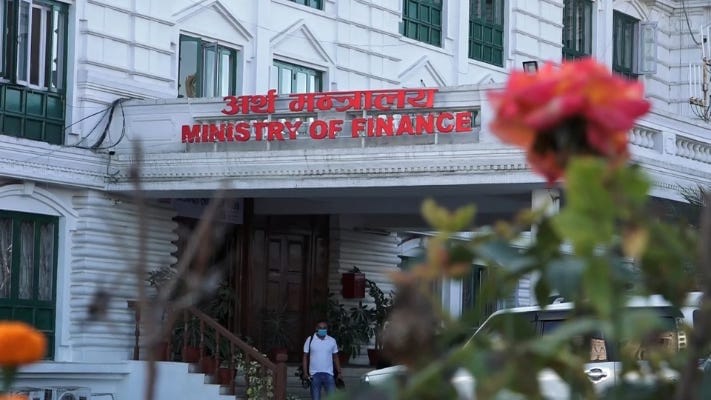
The gamble is not only financial but institutional too. Managing a wealth fund requires robust governance, clear mandates and insulation from political interference. These are in short supply in Kathmandu, where oversight of public spending remains patchy. It is no coincidence the proposal for a SWF emerged not from a technocratic white paper but from parliamentary posturing. A senior politician floated the idea of investing remittance reserves to “secure the future of our youth”. The opposition countered with vague promises of national renewal. Then came leaks suggesting the Ministry of Finance had commissioned a feasibility study. The idea, in other words, has less to do with macroeconomics than with marketing.
Even if the fund were professionally managed, its underlying economics are volatile. Redirecting scarce public capital into a sovereign vehicle does not conjure wealth from thin air. It simply shifts risk. Rather than allowing private citizens to invest their remittance income as they see fit—on land, in shops or in education—the state would assume the burden of choosing winners. This is not only paternalism: it is poor economics. As the Modigliani-Miller theorem famously reminds us, governments cannot generate real value by reshuffling assets. If the state borrows to invest, investors will price in the risk. Higher returns, if they come, will be offset by higher borrowing costs.
Proponents argue a SWF would allow Nepal to diversify its reserves—allocating 60% to domestic investments (like hydropower or export infrastructure) and 40% to international markets. This mimics the classic 60/40 stocks-to-bonds model beloved by pension funds. But Nepal is not a pension fund. It is a capital-starved country struggling to patch potholes; modernise its grid; and meet basic service obligations. Every dollar parked in a long-term wealth fund is a dollar not spent on urgent needs today. One might just as plausibly ask why, if the state is such a savvy investor, it doesn’t raise taxes and grow the fund even faster. The answer, of course, is no one believes it would.
To its credit, the government has gestured at productive use cases. Investments in clean energy exports to India could yield stable foreign income. Transmission lines and cross-border interconnectors are sorely needed. But none of this requires a new sovereign fund. The country already has public investment programmes, donor-financed projects, bilateral funding pipelines, among others. Creating a parallel vehicle risks redundancy at best and misgovernance at worst.
Nor is this just a Nepali problem. Across the developing world the SWF craze reflects a broader discomfort with democracy’s untidiness. Wealth funds confer the illusion of technocratic control: independent boards, sleek offices, global assets. But they also present an escape hatch from political accountability. Decisions taken by fund managers, shielded from parliamentary scrutiny, can reallocate national priorities. In fragile states this is a recipe not for development but for discretion without consequence.
There is, admittedly, one corner of the Nepali state where the wealth-fund model has already taken root: the Social Security Fund. Funded by employer and employee contributions, it operates as a nascent pool of investable capital. Its returns are small; its governance limited; and its portfolio conservative. But it exists. Reforming and strengthening this institution would yield more bang for the buck than conjuring an entirely new vehicle from scratch.
Nepal does face a genuine macroeconomic trouble: a chronic trade deficit, Dutch Disease effects from remittance inflows and a worrying overreliance on foreign labour markets. But the solution is not to mimic oil-rich states with very different endowments. It is to invest steadily in productivity, reduce barriers to private enterprise and improve the delivery of public goods. Glamorous funds cannot substitute for boring competence.
Wish you were here
Sovereign-wealth funds are, in the right context, prudent tools. But context matters. Norway uses its fund to smooth volatile oil revenues. China uses its fund to deploy surplus capital strategically. Nepal is tempted to use an SWF to repackage capital scarcity as a long-term vision. That is not a strategy. It is stagecraft.
And the curtain, inevitably, will fall. ■