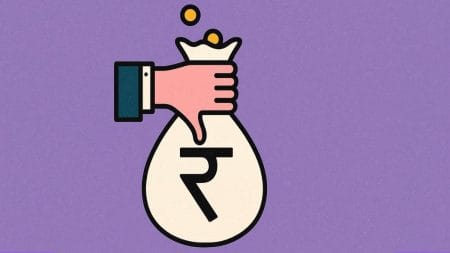
In software’s heyday, value came from code, customers and cashflows. Now it comes from vibes.
Nowhere is that clearer than in the booming business of generative artificial intelligence (AI), where firms with neither revenue nor roadmap are fetching valuations that would make dot-com era bankers blush. Financial modelling is out. Narrative is everything. Investors aren’t buying companies anymore: they’re buying dreams, blindfolded.
Start with the numbers. Perplexity, a search startup positioning itself as a scrappy David to Google’s Goliath, generated $34m in revenue in 2024 while burning nearly twice that. Yet it managed to attract a $14bn valuation, implying a multiple over 400 times revenue. Mira Murati’s Thinking Machines Lab raised $2bn at a $10bn valuation without a product and a pitch deck. These are not outliers. They are emblematic of a market where capital is abundant and conviction is the rarest asset. And the fear is not of backing a dud—but of missing the next unicorn.
Historically software firms were judged by their annual recurring revenue (ARR), customer churn and gross margins. The SaaS model, with its tidy forecasts and dependable cashflows, appealed to investors with a taste for predictability. No longer. Generative AI companies peddle experimentation, replacing subscriptions. Usage is fickle and hard to forecast. Customers flirt but rarely commit. ARR has given way to what venture capitalist Jamin Ball dubs “ERR”: experimental run rate.
And yet the money keeps flowing. Anysphere, which builds a coding assistant called Cursor, reportedly scaled its revenue fivefold to $500m in six months. Windsurf, a similar firm, was snapped up by OpenAI for $3bn. Few believe such growth is sustainable. Fewer still seem to care. What matters is velocity: proof, however fleeting, that a company is in the slipstream of the AI hype cycle. In this market momentum is mistaken for product-market fit.
Optimists argue this is rational. Generative AI, they say, is as profound as the rise of the internet or the smartphone. Costs will fall. Use-cases will multiply. Talent, once assembled, can be deployed across domains from law to logistics. Better to overpay now than be priced out later.
Perhaps. But there are reasons to keep the champagne corked. For one, the barriers to entry are low. Open-source models and cheap fine-tuning mean new players can emerge overnight. Defensibility is often a function of distribution rather than differentiation. The incumbents meanwhile are not idly watching from the sidelines. OpenAI, Google and Anthropic are building models and applications, squeezing startups from both ends of the stack.
Moreover capital efficiency, the sacred metric of earlier software waves, has all but vanished. AI firms guzzle computing power with the enthusiasm of a Cold War physics lab. What worked for Dropbox or Slack (a few engineers, viral growth, negligible costs) does not work for a company spending millions a month on Nvidia GPUs. The comparison some now draw is not to SaaS but to biotech: capital-intensive; hit-or-miss; and prone to fizz.
All this makes the venture capital world’s current exuberance look eerily familiar. The logic resembles that of crypto or cleantech during their respective frenzies: pick enough lottery tickets and one might just win big. That may be fine for generalist funds with deep pockets. But it could prove ruinous for the hundreds of startups now chasing relevance with little more than pedigree and pitch decks.
Still, venture capital has never shied from a good spectacle. Storytelling, once the domain of founders, is now a key skill for investors. What matters is not what a company earns, but what it might represent: a challenge to incumbents and a platform for developers as well as a magnet for talent. The result is what one might call vibe valuation: a pricing model that favours narrative over numbers.
This is not to dismiss all AI investing as folly. After all the biggest fortunes of the previous two decades were made by betting early on trends the market had yet to grasp. But the line between foresight and fantasy is as thin as Himalayan air. For every OpenAI, there are dozens of firms that will disappear when the funding tap runs dry.
In time, gravity will reassert itself. Interest rates are no longer near zero. Public markets are demanding profit. And talent, though still mobile, is tiring of pivots and perpetual beta. The survivors will be those who combine vision with viable economics. The rest will fade—as ephemeral as the prompts that generated them.
But for now spreadsheets are for the faint-hearted. In the age of AI faith is the new due diligence. ■