There are many ways to sabotage a struggling economy. Bombs are crude. Sanctions are blunt. Taxes, by contrast, are tidy and legal and less likely to make headlines. America has opted for the last. Buried deep inside its “One Big, Beautiful Bill” is a provision that taxes remittances sent abroad by non-citizens. It is the sort of measure that ends up doing outsize damage in places most Americans will never visit.
The new rule, passed by Congress and now awaiting Donald Trump’s signature, will require financial institutions to deduct 3.5% from any cross-border transfer above $15, unless the sender can prove they are an American citizen. Those wrongly taxed may apply for a refund. Few will. Even fewer are likely to know they are eligible. Most will lose the money. Some will avoid the system entirely.
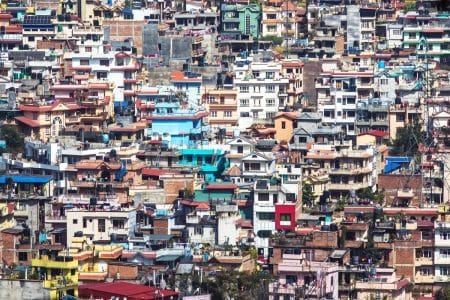
In Washington, where billions here and there scarcely move the dial, the projected $26bn in revenue over ten years looks trifling. But in countries like Nepal, which receive more in remittances than they do in aid, the losses will bite. The Centre for Global Development estimates Nepali migrants in America sent home around $780m in 2024. The new tax and its ripple effects—such as higher transaction fees—could strip more than $25m from that flow. That amounts to 0.1% of Nepal’s gross national income. In America such a sum would barely cover a mile of motorway. In Nepal it pays for medicine, fertilisers, school fees and sacks of rice.
The official logic runs as follows: make remitting costlier and illegal immigration becomes less attractive. The real effect will be different. Taxing remittances will neither stop migrants nor raise meaningful revenue. But it will almost certainly drive more money into informal channels: hawala networks, crypto wallets or flights carrying envelopes of cash. That would hurt both sender and recipient. It would also erode financial transparency; trim dollar inflows into recipient economies; and confound regulators trying to monitor illicit finance.
Nepal is particularly exposed. Remittances account for a quarter of its GDP, among the highest shares in the world. Roughly 12% of that comes from America. Transfer fees are already steep: sending $200 across borders costs 6.4% on average. The new levy will push that figure to nearly 10% for transfers from America, making it the most expensive G7 country from which to send money. A Nepali migrant wiring $500 a month will lose an extra $210 a year, equal to a month’s wages for many of their relatives back home.
The pain will not be shared evenly. Nepali elites rarely wire money to the hills of Gorkha or the towns of Dhanusha. But more than half of US-based Nepalis remit funds. Most are recent arrivals. Nearly 70% came after 2010. They are disproportionately young, skilled and ambitious. They send more money, more reliably, than older migrant cohorts in the Gulf, who are often poorly paid and precariously employed. American Nepalis invest not only in families but also in businesses and hometown infrastructure. Punishing them may feel like easy politics. It is lousy economics.
The idea of taxing outbound remittances is not new. It has surfaced in states like Oklahoma and Arizona, where it was pitched as a way to make undocumented migrants “pay their fair share”. It now appears to have gone federal. But this is not a tax on illegality. It is a tax on foreignness. Students, green-card holders and H-1B tech workers will all be caught in the net.
The policy resembles a capital-control measure by stealth, albeit one outsourced to private banks. It punishes financial intermediation and rewards informal transfers. It undermines formal banking channels and weakens the very institutions America has long lectured others to build. More perversely, it comes at a time when aid flows are stagnating and foreign direct investment is retreating from risk. Since 2010 FDI to developing countries has shrunk by 41% while remittances have climbed by 57%. In 2019 they overtook FDI as the biggest source of external finance to the developing world.
Unlike aid remittances come without political strings. Unlike loans they need not be repaid. They are often better targeted than state programmes: money sent from a factory job in Ohio tends to go directly to a family’s household budget. In Nepa, they have underwritten everything from rural consumption to urban-property booms. They are no substitute for structural reform. But they have, at times, forestalled collapse.
The fallout will not be purely economic. America has spent decades marketing itself as a beacon for talent. In Nepal that branding worked. Between 2012 and 2021 more than 5m Nepalis applied for the US diversity visa lottery, nearly one in six people in the country. Nepal’s overseas education outflows, mainly to America, now account for 78% of its total export earnings. A shift from low-skill to high-skill migration was taking root, if not as official policy then at least as a national aspiration. The remittance tax complicates that trajectory.
It is hard to see who wins. The fiscal windfall for Washington will be imperceptible. The reputational damage may not be. America has every right to control its borders and enforce its tax code. But exporting costs to countries with fewer options and smaller cushions is unlikely to win it many friends. Nepal is not alone in its vulnerability. Dozens of economies from Sri Lanka to El Salvador rely on remittances for stability. Washington’s message to them is: your diaspora can stay, work and remit, so long as they pay extra for the privilege.
Better, perhaps, to recall an old truth of global finance: money, like water, finds a way. Policymakers who try to dam it rarely stop the flow. They simply reroute it, often underground. ■