Image: Google
There is a comforting story told about tourism in poor countries. A visitor arrives, spends money. And that cash ripples through the local economy, creating jobs and funding public services. In Nepal, a land that lives by its majestic landscapes, that story is only half-true. The foreign trekkers and pilgrims do bring vital income. But watch where the money goes. A startling amount of it, nearly half of every tourist rupee, does not ripple at all. It drains straight out of the country, spent on imported goods and services. Nepal gets the visitors but it often misses the point.
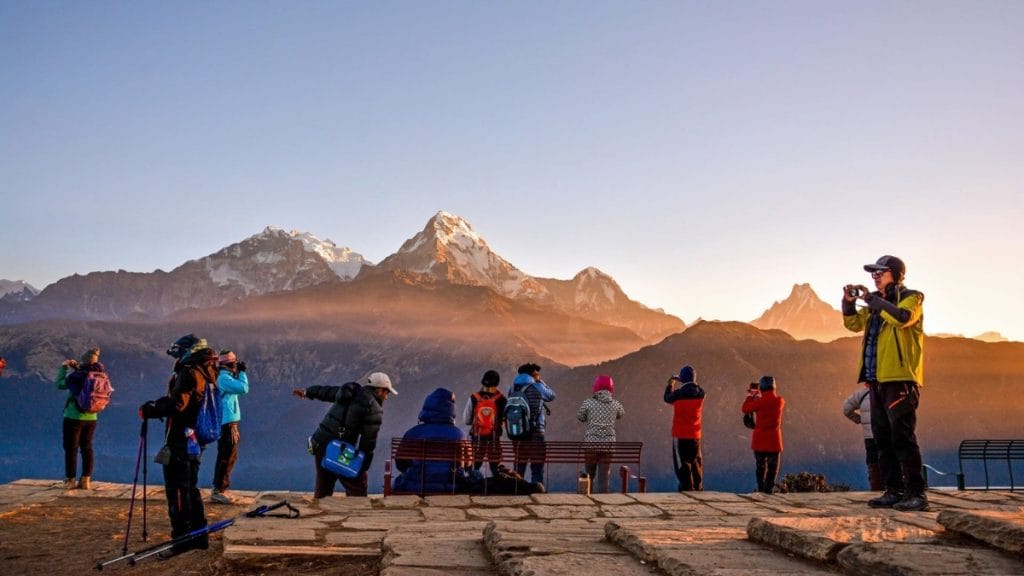
Start with what tourism does well. It is a rare bright spot in a choppy economy. The sector brings in about a quarter of Nepal’s total export earnings and directly employs perhaps 100,000 people. On the trails to Everest or Annapurna, each hiker supports a small army of guides, porters, lodge-keepers and so on. The government wins, too, through taxes on hotels, airport levies and fuel duties. When tourist numbers rise, so does the state’s tax take, which in turn helps pay everything from teachers’ salaries to road repairs and new toilets. For many remote communities, it is the only game in town.
Yet the multiplier effect—the extra economic activity generated by each tourist dollar—is weaker than it should be. Studies suggest it is about 1.2, meaning a dollar of tourist spending creates just 20 cents of additional national income. Why so low? Because Nepal’s tourism industry is built on imports. The tea in the hotel pot comes from India. The instant noodles on the trek come from Thailand. The hiking gear is made in China. Even the beers are often brewed abroad. The country provides the scenery and the labour, but the supply chains start elsewhere. This “leakage” starves local businesses of demand and means tourists support as many jobs overseas as they do in Nepal.
This is not just bad luck: it is a failure of policy and planning, as well. For decades Nepal has chased tourist volume rather than value. It lets foreign airlines and tour operators control the lucrative gateways. Fancy hotels are generally run by international brands that siphon profits abroad. There has been little effort to build domestic industries that could supply the sector, from food processing to gear manufacturing. Contrast this with neighbouring Bhutan, which charges visitors a high daily fee and strictly manages numbers to protect its economy and environment. Nepal’s approach is the opposite: a low-margin free-for-all.
The state’s own spending habits do not help. When tourist numbers grow, the government tends to build more roads and airports. But the data show a one-way street: more tourists lead to more infrastructure, but building infrastructure does not, by itself, attract more tourists. The bulldozers follow demand; they rarely create it. And the taxes earned from tourism generally get spent on government consumption—paying bureaucrats—rather than on investments that would fix the sector’s ugly flaws like power cuts, bad roads and a lack of skilled workers.
What would a smarter approach look like? First, it would plug the leaks. This means nurturing local suppliers—from cheese producers in the hills to textile makers in the valleys—so that more of what tourists consume is made in Nepal. Second, it would upgrade the offer. Why not develop high-value niches like wildlife tourism, adventure sports, cultural festivals and so on that keep visitors longer and spending more? Third, it would use data. Nepal still lacks a proper “tourism satellite account” to track the industry’s full impact, so policymakers are guessing in the dark.
Tourism will not solve all of Nepal’s economic troubles. But it could do far more good than it does today. At the moment, the country is like a magnificent hotel that imports every sheet and spoon. It rents out the view but keeps little of the premium. The tourists will keep coming for the peaks. The challenge is to make sure more of their money stays in the foothills. ■