Photo: ACT Alliance/Paul Jeffrey
Nepal has more workers than work. This defines its present and shadows its future. A swelling youth population, a thinning formal sector and an outsized reliance on migration suggest a labour market long on supply and short on structure.
The arithmetic is beguiling. Two-thirds of the population falls within working age; half are under 25. The fertility rate has fallen sharply, which, combined with growing life expectancy, promises both demographic momentum and an approaching pension headache. In theory these figures offer the makings of a productivity surge. Yet on the ground, labour is perennially underutilised or pushed abroad.
The facade of high employment conceals the problem. An employment-to-population ratio of 81% throughout the 2010s evokes dynamism. The reality is more disturbing: three-quarters of workers are either self-employed or unpaid family contributors. Fewer than one in four are in wage-paying jobs. Only a sliver, 1.1%, are employers. Informality accounts for 65% of all jobs. The dominant mode of employment is not employment at all but subsistence.
Productivity flatters to deceive. Output per worker lags far behind regional peers, and the pandemic sent it into reverse. A 5.6% contraction in 2020 was followed by further plunge the next year. The virus exposed structural fragilities rather than creating them. Informal sectors bore the brunt, wiping out income streams for millions. Around 2 million jobs were disrupted, pushing many into further insecurity or emigration.
Labour migration has provided economic release, if not transformation. Over half of households have at least one migrant or returnee. Most are men between 18 and 35, occupying low-skilled jobs in the Gulf or Malaysia. Remittances, at 25% of GDP, sustain household consumption but do little to boost productive investment. Nearly four-fifths of these flows are spent on food, rent and education. Savings rates are modest. The state’s preferred export appears to be its own citizens.
Return migration is growing and problematic. Some 756,000 Nepalis of working age have returned home, many due to job losses abroad. Their reintegration has been patchy. Stigma, bureaucratic hurdles and a stagnating job market blunt their prospects. Meanwhile women—officially discouraged or banned from certain categories of foreign domestic work—tend to migrate irregularly, exposing them to abuse and exploitation.
Internally economic geography is sluggish to evolve. Urbanisation has crawled to 21%, far behind regional averages. Migration within the country is dominated by marriage and family reasons. Economic motives are rising, particularly among youth, but have yet to reshape labour allocation. Small and medium enterprises, which absorb 1.7 million workers, struggle to access credit. Most operate in low-margin sectors with little capacity to scale.
Unemployment data provide little solace. The official rate of 11% sits uneasily beside high participation. Youth unemployment is 8.1%, concentrated amongst those with education. Disguised unemployment in agriculture, especially amongst women, is pervasive. A broader measure—labour underutilisation—captures 39% of the potential workforce. The state has yet to devise policies that match its citizens’ time with the economy’s needs.
Gender disparities remain entrenched. Although female participation is high, it reflects male out-migration more than empowerment. Women are overrepresented in unpaid and vulnerable forms of work. Their average monthly earnings lag behind men’s by 30%. Only 15% of firms are led by women, despite outperforming the regional norm. Barriers to finance and social norms constrain their mobility and entrepreneurship. Legislation exists but its enforcement remains desultory.
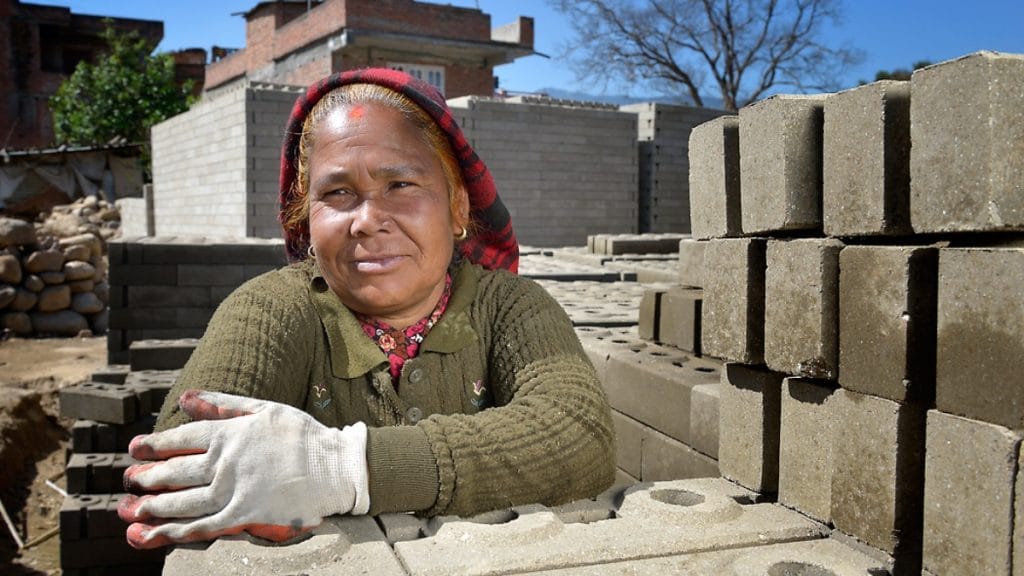
Children are working when they should not be. Nearly a third of children between five and seventeen are economically active. Some 15% are in child labour, and over 3% in hazardous occupations. Brick kilns, transport and carpet weaving are prolific employers of minors. Poverty and school closures have kept children in work and out of classrooms while enforcement remains tokenistic.
The structural imbalance shows up in national accounts. Labour’s share of GDP has tanked to 37% from 40% in 2010. The figures betray growing inequality and wage stagnation. Nepal sits well below India on this front, and its collective bargaining mechanisms lack muscle. As the informal economy has shrunk only modestly, now 30% of GDP, the economy’s formalisation has stalled at the rhetorical level.
A youthful, underemployed population with limited formal absorption capacity and heavy reliance on remittances is not an enviable position. Nor is it novel. Yet the window for a demographic dividend is narrowing. The difficulty is not in generating employment but in shifting its quality and structure. The state’s options are finite but consequential: simplify labour protections; lower barriers to credit; integrate migrants and formalise informality. None is especially glamorous. Each is overdue.
The politics of labour reform are rarely thrilling. In Nepal they may prove decisive. Where labour remains unproductive, the country must work harder at making work matter. ■