Updated Siddhababa Tunnel
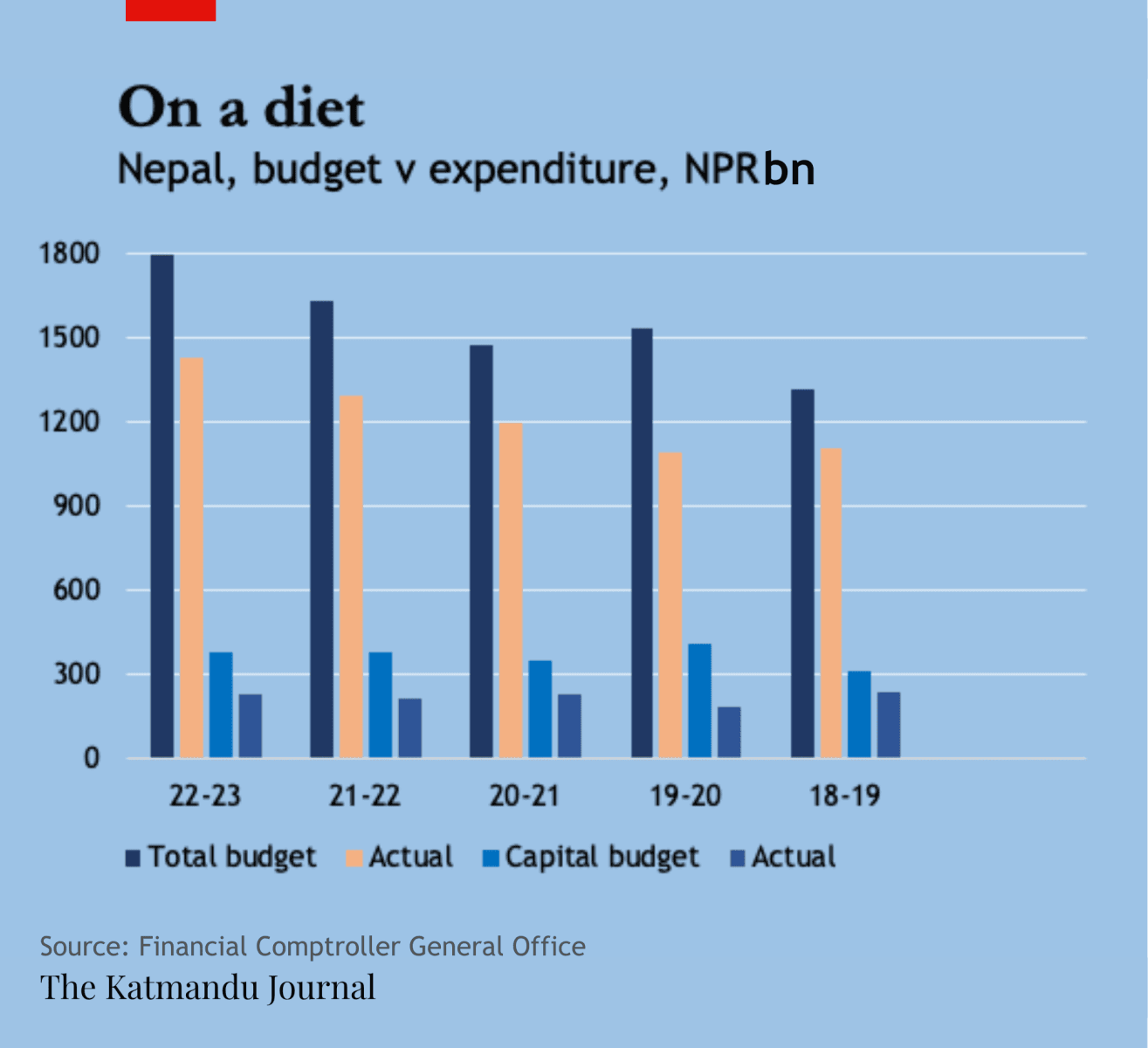
Nepal talks about infrastructure the way gamblers talk about jackpots—in billions. Last year’s capital budget was NPR 352bn, almost a fifth of total spending. But visions written in zeroes do not lay bricks. Barely 63% of the capital allocation was actually spent. The bottleneck is not the purse. It is the state’s rusty machinery of delivery.
The preferred method, Design–Bid–Build (DBB), is a relic from a slower age. It slices projects into neat sequential stages—design, tender, build—with different contractors for each. In theory that separation keeps procurement honest. In reality it breeds silos, finger-pointing and expensive detours. The designer blames the builder. The builder blames the plan. The project stalls.
Auditors have seen the wreckage up close. A dozen “national pride projects” examined in 2022-23 were riddled with cost overruns, repeated extensions, shifting specifications and lethargic land acquisition. These failures persisted even when money and expertise were at hand. DBB hardens the wall between drawing board and worksite, turning late-stage disputes into trench warfare.
Other countries have torn down that wall. Design–Build fuses design and construction in one contract, forcing collaboration and early problem-solving. EPC—Engineering, Procurement and Construction—goes further, putting one firm in charge from blueprint to ribbon-cutting, often with performance guarantees. Nepal has tried EPC in hydropower, at the Pokhara International Airport and now at the Siddhababa Tunnel. The politics were messy but at least the incentives aligned.
Public–Private Partnerships have delivered almost half of the country’s electricity, tapping private capital and competence to fill public gaps. Yet beyond power, PPPs are rare. Bureaucrats cling to turf; policymakers hesitate; expressways and industrial parks languish. More advanced models, from Integrated Project Delivery to Construction Management at Risk, exist elsewhere but are treated here like foreign curiosities.
The legal scaffolding for change is not absent. The Public Procurement Act of 2007, and a 2021 directive endorsing EPC, nod toward reform. But the culture still worships the lowest bid and rigid sequencing, as well as the illusion that paperwork is progress.
Changing the delivery model will not neutralise every obstacle: Himalayan topography, fickle politics, weak state capacity. But unlike the mountains, procurement rules can be moved. Matching the method to the project’s complexity would do more for roads, bridges and power plants than another round of grandiose budget announcements.
The problem is not only under-spending. It is too many projects live and die in filing cabinets. Steel rusts in depots. Tunnels flood before they open. Bridges stand half-built like monuments to indecision. Until the machinery that builds the nation is rebuilt itself, the country will keep drafting blueprints it never inhabits. ■