IMAGE: GETTY IMAGES
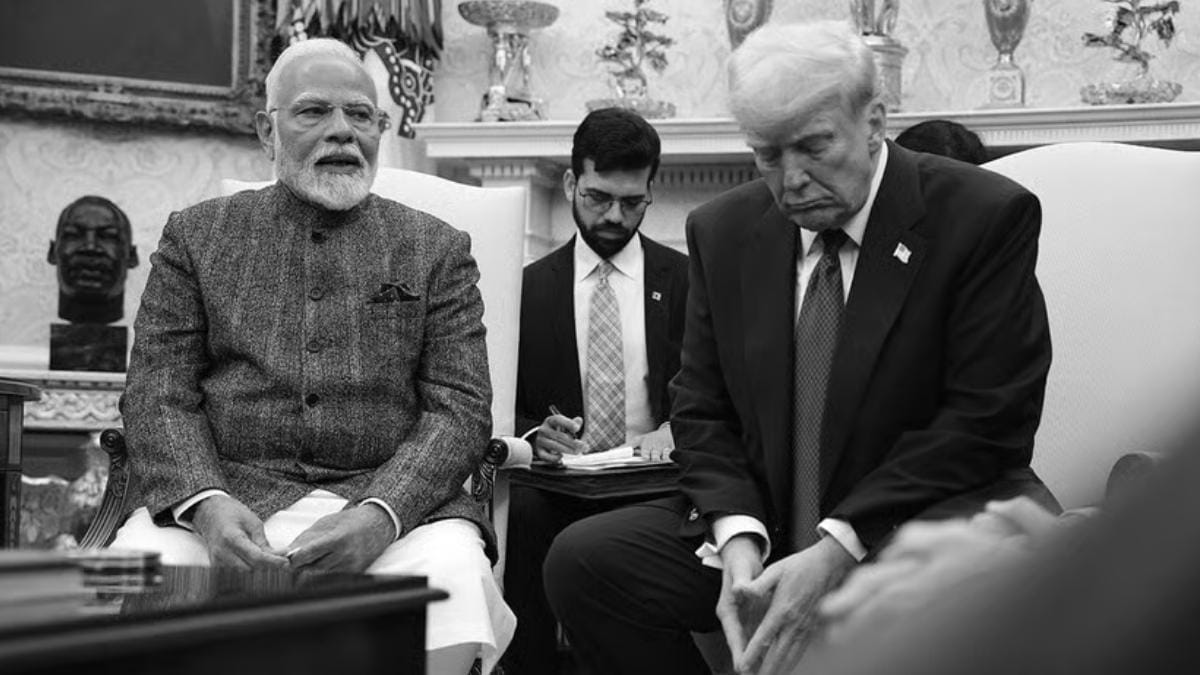
In late July Donald Trump did what his diplomats had warned against: he slapped 25% tariffs on a broad range of Indian exports. A second volley arrived days later, this time tied to India’s oil purchases from Russia. The combined 50% levy, effective August 27th, has left Delhi scrambling. The measures sting economically and bruise politically. Prime Minister Narendra Modi had worked hard to cultivate a personal rapport with the American president. That illusion now lies in ruins, swept away by the same transactional instincts that define Mr Trump’s view of international commerce.
The immediate damage is clear. India is among the worst-hit targets of America’s tariff blitz, alongside Brazil, which also faces 50% levies. Garments, textiles and consumer electronics face a sharp loss of competitiveness. The manufacturing ambitions Mr Modi has long promoted—hoping India might replace China as a factory hub—look increasingly precarious. Apple, which now produces one-fifth of its iPhones in India, is a rare exception. Most global firms are more cost-sensitive. Bangladesh and Vietnam, neither subject to punitive tariffs nor fixated on self-reliance, look increasingly attractive.
The political costs are harder to quantify, though no less real. The image Mr Modi projected—disciplined, commanding, globally respected—has been dented. The fallout comes amid domestic turbulence. In Bihar, where elections loom, a controversy over revised voter rolls has prompted allegations of voter suppression. Rahul Gandhi, the opposition leader, accuses the Election Commission of partiality during the 2024 general election. The Commission denies any misconduct. Still, the controversies reinforce a wider narrative of institutional stress, and of a governing party growing anxious as its majority narrows.
Mr Modi’s response has been to lean into economic nationalism. His Independence Day address on August 15th cast the tariff row as proof of India’s growing strategic independence. He reiterated the goal of building a $10trn economy by 2047 and framed the crisis as a prompt to redouble reform efforts. The message plays well domestically. Rural unrest remains limited. Pro-government media have kept voter list controversies quiet. Even Mr Trump’s tariffs, presented as foreign bullying, have helped reinforce Mr Modi’s “Atmanirbhar Bharat” (self-reliant India) doctrine.
There are reasons for guarded optimism. Inflation fell to 1.6% year on year in July, an eight-year low. A strong winter harvest and favourable monsoon have kept food prices subdued. Real rural wages are growing, supporting rural consumption, which had lagged after the pandemic. Targeted welfare schemes for women have bolstered household income in key voting blocs. Tax and monetary policy are also lending support. The central bank has cut rates by a full percentage point this year, with more easing likely. Income-tax thresholds have been raised, exempting 85% of taxpayers. A long-awaited overhaul of the goods-and-services-tax (GST) regime—streamlining four rates into two—took effect on August 15th. Shoes and cars may soon be cheaper; so, too, the compliance burden.
These tailwinds are nudging consumer sentiment upwards. Private spending accounts for 61% of GDP and remains the main engine of growth. Yet persistent structural flaws undermine the expansion. Youth unemployment in cities hovers near 20%. Labour-force participation, at 55%, is rising, but much of the new work is informal or underpaid. Corporate investment remains weak—only 12% of GDP—and many firms show little appetite for new capacity. Net foreign direct investment is falling even as gross inflows rise. The perception of cronyism, fuelled by the concentration of large infrastructure contracts among a handful of conglomerates, discourages broad-based private investment.
Critics argue India risks drifting into a form of welfare populism without the productivity gains to sustain it. Karnataka now spends a sixth of its state budget on cash transfers and subsidies. These may deliver electoral dividends but they limit fiscal space for investment in infrastructure or health. At the national level, reform momentum has slowed. Land and labour reforms have stalled in the face of farmer protests and state-level resistance. Judicial bottlenecks and regulatory inefficiencies further deter investors.
The government has not abandoned reform entirely. On August 19th it announced a new committee focused on easing business compliance and scrapping petty regulations—over 300 offences, such as mislabelled biscuit weights, are to be decriminalised. The GST reform and tax relief package, while popular, also seek to stimulate enterprise and consumption. But these are modest in scope. A more ambitious agenda—liberalising labour markets, rationalising subsidies and accelerating privatisation—means wider political consensus, particularly with states.
Some states have taken the initiative. Tamil Nadu grew more than 10% in 2024, on pragmatic land acquisition policies and flexible labour rules. Telangana and Maharashtra have begun phasing out free electricity for farmers, replacing it with solar subsidies and targeting industrial power costs. These experiments in “competitive federalism” hint at a possible path forward: reform not by fiat but through inter-state rivalry.
Foreign policy, too, is being recalibrated. Mr Modi’s scheduled visit to Tianjin on August 31st—his first to China in seven years—marks a tentative thaw after the 2020 border clash. A meeting with Xi Jinping is expected, signalling India’s renewed interest in pragmatic engagement. China is a key supplier of components, particularly in pharmaceuticals and electronics. Imports from China have surged by 75% over five years. An easing of investment restrictions may follow.
India is also hedging its defence bets. Although Russia still supplies over a third of its arms, its reliability is increasingly questioned. France and Israel now account for 46% of India’s arms imports. A new fighter jet engine partnership with France is in the works. Mr Trump’s recent outreach to Pakistan, including a White House welcome for its military chief and a call for energy cooperation with India, has further shaken Indian confidence in American reliability.
The government’s external strategy is one of careful diversification. Trade deals with the UK and EU are progressing. No retaliatory tariffs have been announced against the US. A possible Modi-Trump meeting at the UN General Assembly in September may provide an off-ramp. India might offer token concessions, such as trimming Russian oil imports, to preserve broader ties. The American market remains vital, especially for IT services and back-office operations.
The tariffs have not sparked a full-blown crisis. But they have exposed India’s economic vulnerabilities and strategic dependencies. Some view the current moment as a potential echo of 1991, when a balance-of-payments crunch forced liberalisation. The conditions are different. India is now the world’s fourth-largest economy and has reduced extreme poverty to below 5%. Yet the fundamental trouble remains: how to unlock productivity, attract investment and manage global relationships in a world where old certainties are fraying.
Whether this confrontation triggers a genuine reform revival or merely another round of tinkering will depend on Mr Modi’s political calculus. He has built a career on the promise of bold leadership. The question now is whether the sting of tariffs will be enough to turn that promise into policy. ■