IMAGE: REUTERS
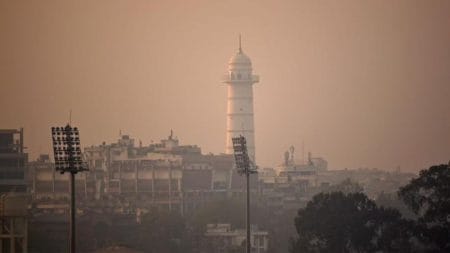
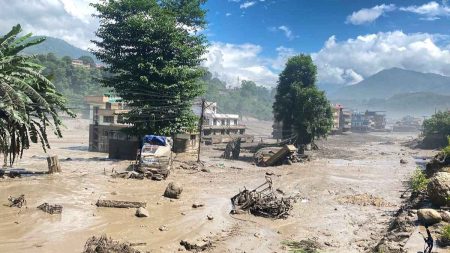
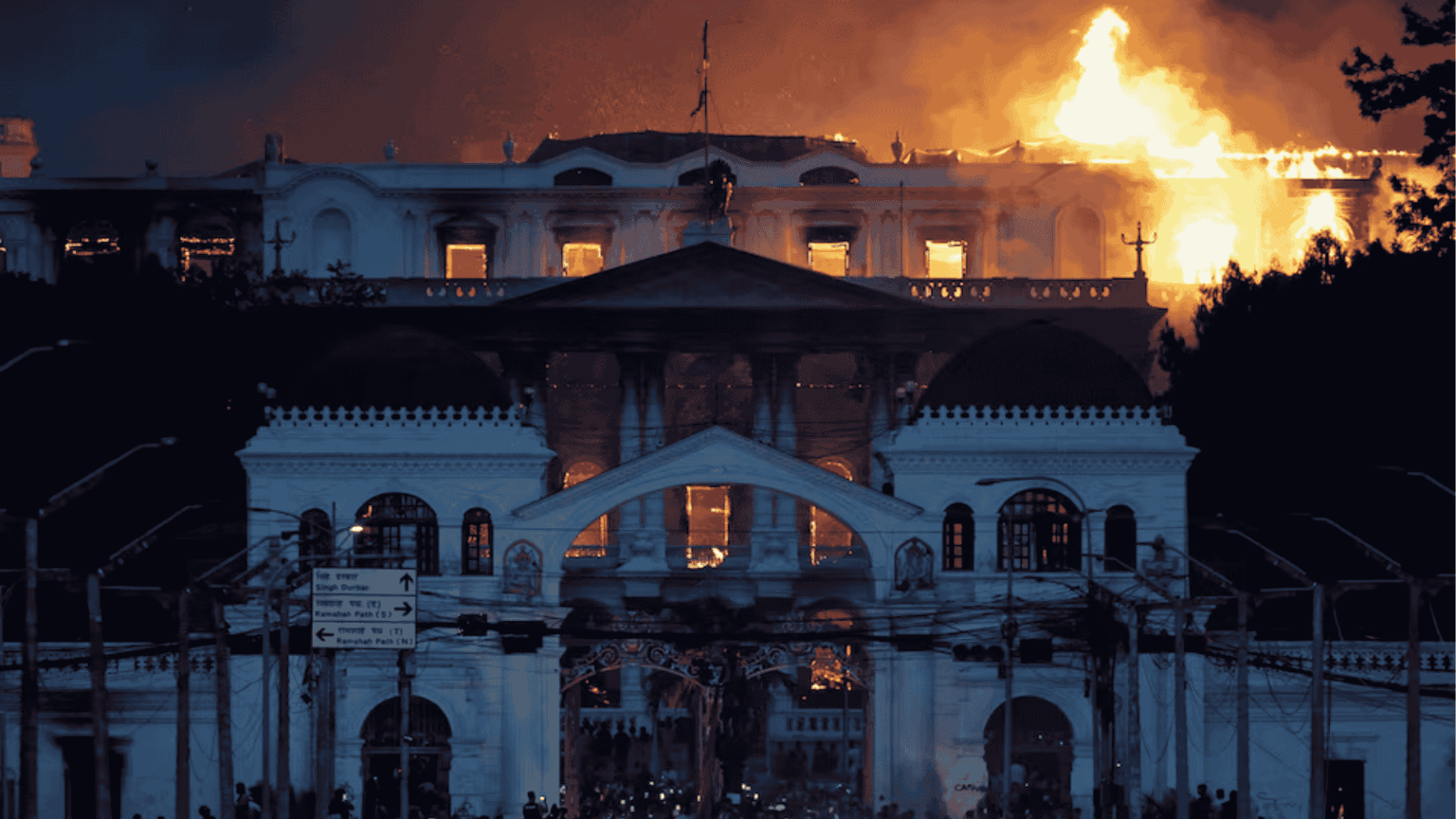
A democracy that cannot defend its capital is not in crisis. It is already past the brink. On September 9th as Singha Durbar—the seat of Nepal’s government—burned and ministers’ homes were torched, Kathmandu ceased to be a city governed by laws. What started as a youth-led protest against corruption and nepotism now looks like an uncontrolled insurrection. The resignation of Prime Minister KP Oli, far from pacifying the demonstrators, has only sharpened their appetite for retribution.
With the police in retreat and the political class either fleeing or cowering, only one institution retains capacity and credibility in the eyes of many: the Nepal Army. Its commanders have so far acted with restraint, issuing sober calls for dialogue. But that forbearance is rapidly becoming a liability. Order is disintegrating (as we explain here). The army must now step into the vacuum, not to rule but to rescue the republic from implosion.
Nepal is no stranger to political convulsions. In 2006 it transitioned, fitfully, from monarchy to a federal democratic republic. Since then it has suffered frequent constitutional crises, coalition collapses and corrupt horse-trading. Yet even at its lowest moments, Kathmandu retained the skeletal frame of a functioning state. This week that scaffolding has come down. Parliament is in ruins. The prime minister has abdicated without a successor. The opposition has fled, in some cases literally. Rabi Lamichhane, a populist leader jailed on embezzlement charges, now walks free, his release secured by a mob that stormed the Nakkhu jail.
What began with idealism has dissolved into opportunism. Monarchists, former Maoists, federal sceptics and unemployed youth have all joined the fray. The only common thread is contempt for the political establishment. That contempt is well-earned: successive governments have looted more than they legislated. But the absence of governance cannot be replaced by anarchy.
Nepal’s international friends, already fatigued by years of incremental dysfunction, will be tempted to look away. They should not. This is not merely a domestic matter. A breakdown of state order in Kathmandu, hemmed in by two watchful giants—India and China—presents a geopolitical risk far beyond its borders. Beijing has invested heavily in infrastructure and influence in Nepal. Delhi sees the country as a strategic buffer. Neither will tolerate protracted disorder. A chaotic Nepal invites foreign meddling, or worse, partition by proxy.
Some argue that Nepal’s young protesters are fighting for systemic change: a presidential system, perhaps the abolition of federalism, even a restoration of the monarchy. The merits of those demands are debatable; the manner in which they are being pursued is not. Reform requires constitutional process. Firebombing Parliament precludes it.
The risk is that Nepal tumbles not toward reform but repression. Should the violence escalate further, the army could suspend the constitution altogether and rule by decree. There is precedent: King Gyanendra’s royal coup in 2005 was justified on the same grounds of chaos and political incompetence. But Nepal is not the monarchy it once was, nor should it become a barracks state. The military’s legitimacy depends, rather than on seizing power, on safeguarding it.
The most plausible path forward is neither revolution nor restoration. It is stabilisation. The army, backed by a presidential invocation of Article 273, should impose a limited state of emergency. It must secure government buildings, disarm violent mobs and protect vital infrastructure. Once minimal order is restored, it should facilitate, not dictate, a transition.
That could mean a technocratic interim government, including non-partisan figures such as Kathmandu’s mayor, Balen Shah, and Gen Z leaders. It may involve concessions to the GenZ movement, including electoral reforms or constitutional amendments. But such concessions must be earned through negotiation rather than extortion by arson.
Nepal has been here before. It has seen kings fall, parties rise and insurgencies rage. But it has never seen its capital succumb so swiftly to mob rule. The army, by stepping in, can prevent the collapse from becoming irreversible. Doing so would not make it a saviour. It would make it, for the moment, essential.
Nepal does not need another ruler. It needs someone to hold the roof up while the house is repaired. ■