illustration: Katmandu Journal
Nepal’s capital market is small but lively. In recent years it has seen bursts of investor enthusiasm and a flood of retail trading. Banks, hydropower firms and insurance companies trade on the Nepal Stock Exchange (Nepse) alongside state-controlled giants. Yet one corporate practice remains conspicuously absent: none of those firms may buy back their own shares. The ban, in place since Nepse’s founding in 1993, is meant to protect “market integrity”. In truth it protects little and prevents much.
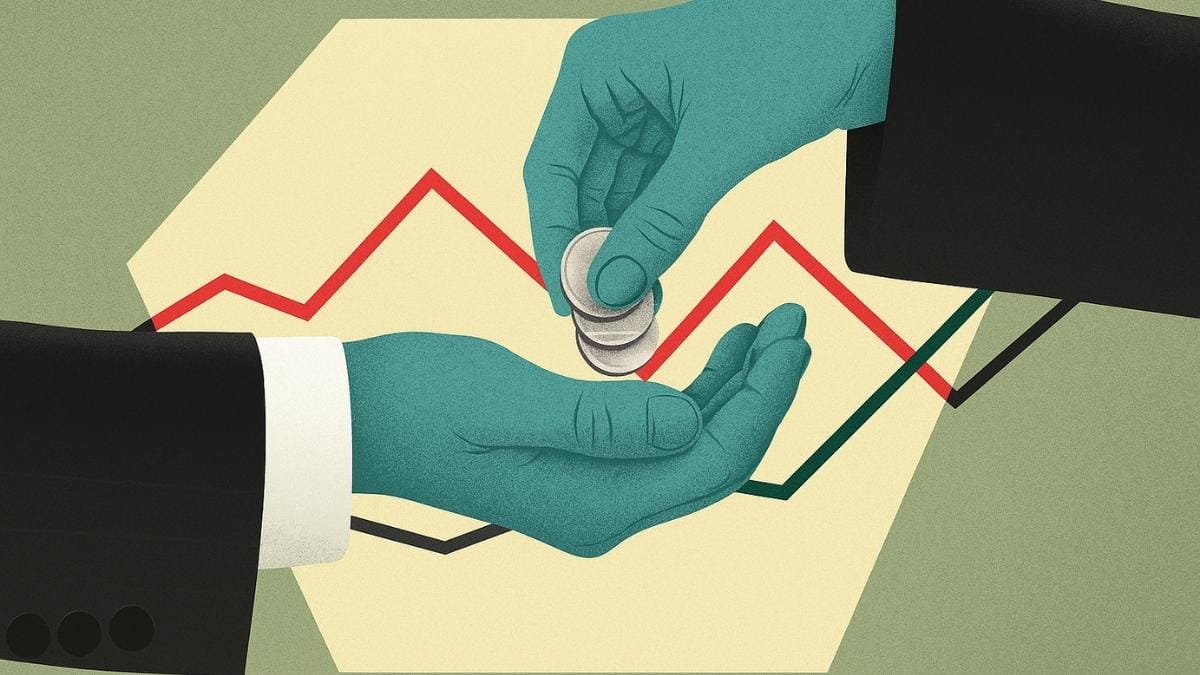
Share buy-backs—when companies repurchase their own stock, reducing the number of shares in circulation—are standard elsewhere. They allow firms to return excess cash to shareholders, signal confidence in future prospects and counteract undervaluation. In 2023 American companies spent $936bn on buy-backs, more than on dividends.
In Nepal they are illegal. The logic is outdated: that firms might use buy-backs to manipulate share prices or favour insiders. Regulators fear abuse in the market. But in trying to guard against malpractice, they have denied firms one of the most effective tools of corporate finance.
The prohibition might be easier to justify if companies were cash-starved. They are not. Many banks, buoyed by rising remittance-driven deposits, are flush with funds. State-linked firms hoard reserves for want of productive investment opportunities. The excess cash sits idle, earning paltry returns. Buy-backs could put that capital to work, reducing bloated balance sheets and raising returns on equity.
Nepali firms also struggle to send credible signals to investors. Disclosure standards are uneven. Corporate governance is patchy. Share prices frequently decouple from fundamentals. When firms believe they are undervalued, they have no legal means to say so—except words. A buy-back would offer a stronger statement. Globally, firms repurchase shares when they judge markets to be underpricing their long-term value.
Evidence suggests that buy-backs are also surprisingly well-timed. A 2022 study by David McLean and colleagues found that, across 38 markets, firms that repurchased shares tended to outperform those that issued new equity. Their timing beat that of banks, hedge funds and mutual funds. The reason is intuitive: insiders tend to know more about future earnings than markets do. When managers buy back shares, they are not only sending a signal but also acting on one.
In Nepal they must simply watch. This has costs. Take commercial banks, which dominate Nepse. When their shares fall below book value—as they did in the past—they cannot buy back stock to support prices. Nor can they optimise capital structure. By law, banks must maintain a minimum paid-up capital of NPR 8bn. But many surpass it, unable to reduce share count even when business conditions would justify it. The outcome is inefficient capital allocation, precisely what financial regulation is meant to prevent.
Buy-backs also offer a counter-cyclical tool. In times of market stress, they can absorb selling pressure. Firms in India, Thailand and Malaysia used them in the aftermath of Covid-19 lockdowns to shore up investor confidence. Even in mature markets, their timing tends to be pro-cyclical—buy-backs rise in bull markets—but well-designed rules can limit this tendency. Nepal could require regulatory approval, set buy-back windows or restrict firms with weak fundamentals from participating. What it should not do is maintain a blanket ban.
The Nepal Rastra Bank, the central bank, argues that buy-backs could be used to distort stock prices or benefit insiders. This is a risk—but one that exists with any corporate action. Big dividends can also be mistimed. New share issuances, common in Nepal, frequently dilute minority shareholders or prop up speculative valuations. Yet these practices are not banned but regulated. A mature regulatory regime should oversee market conduct, instead of forbidding it entirely.
The case for reform is growing. In 2022 the Finance Ministry formed a task force to review capital-market issues, though its remit did not explicitly include the buy-back ban. India legalised repurchases in 1998, and state-run Oil India used one in 2023 as part of a disinvestment drive. Bangladesh still prohibits routine buy-backs, though debate over reform is under way. Sri Lanka has allowed recent repurchases such as by LOLC Finance, though regulation remains patchy.
Opponents warn that Nepal’s market is not ready. But waiting for perfection is self-defeating. Markets deepen not by delay but by iteration—introducing new tools, observing their use and tightening oversight where needed. Buy-backs would not transform Nepse overnight. But they would nudge it closer to being a functional market, where prices convey information and firms allocate capital with autonomy.
The irony is that Nepal has been liberal on capital raising. Rights offerings, bonus share distributions and secondary listings are frequent. But capital return is one half of that equation. Firms that can raise capital should also be able to return it efficiently. Without that balance, markets are incomplete—and so, in the long run, are firms.
Regulators are right to worry about misuse. But the correct response is supervision, instead of prohibition. If firms are trusted to issue shares, pay dividends and borrow from banks, they should be trusted to buy back their own stock, especially when it makes financial sense.
It is not a licence to manipulate markets. It is a step toward making them work. ■