IMAGE: REUTERS
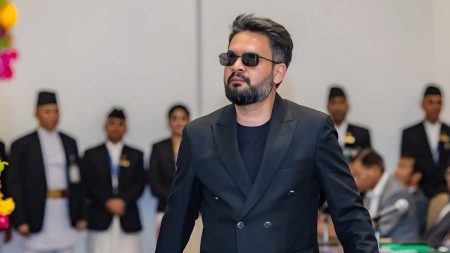
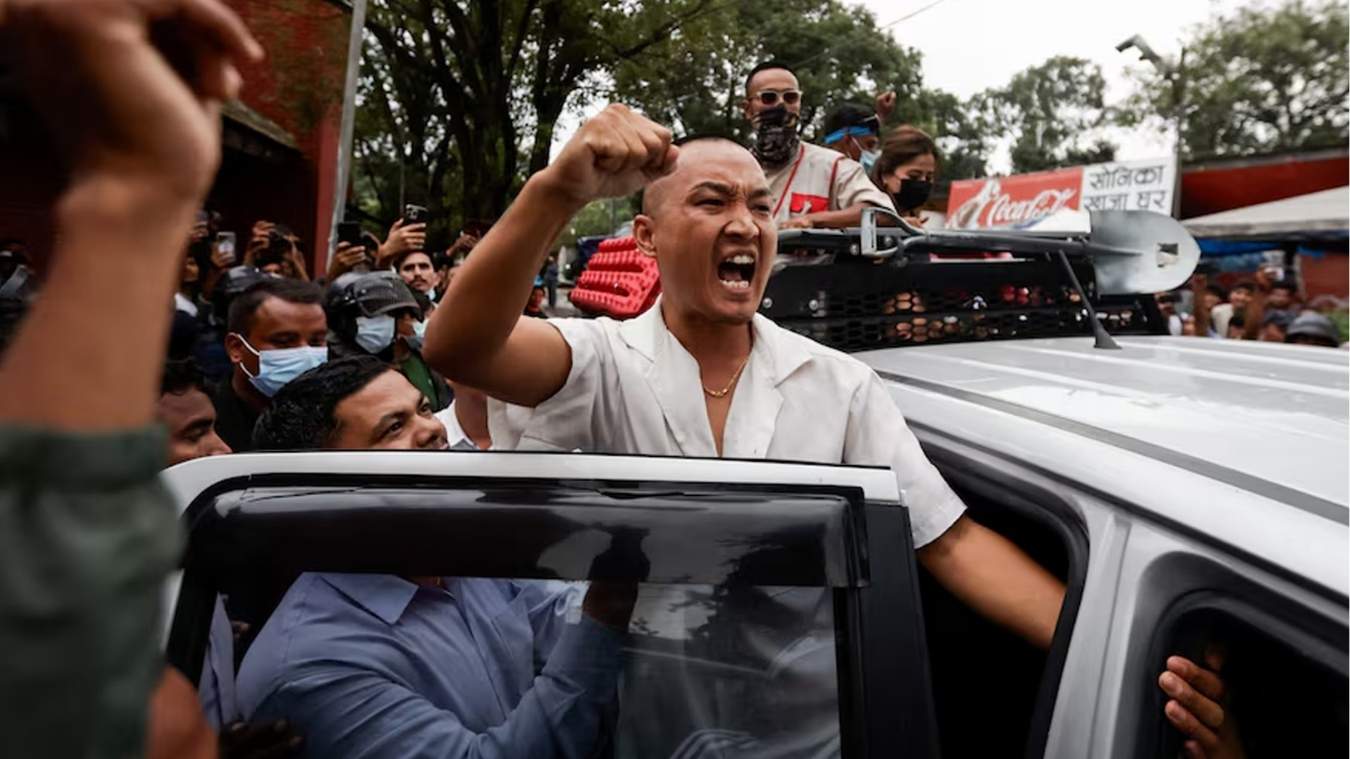
Sudan Gurung never sought power; it has pursued him. A former DJ turned campaigner, he has become the improbable face of Nepal’s most dramatic upheaval in decades. Within 48 hours of mass demonstrations led by his Gen-Z movement, the prime minister resigned. In a country where politics has been synonymous with graft and inertia, the rise of an activist who organises supporters through Discord rather than party committees marks a startling rupture.
His appeal rests on moral clarity. He blames Nepal’s political class for corruption and bloodshed—over 70 protesters died in the recent crackdown—and demands prosecutions. To his followers, he personifies justice denied by a system captured by party barons. His rejection of the established order is absolute: no old party should return to power without root-and-branch reform. That message resonates with young Nepalis who see little future in conventional politics.
The movement’s methods are as radical as its message. It crowdsources policy online and elevates leaders through digital forums. Such practices have mobilised citizens long excluded from power. Yet history suggests their limits. From Cairo to Santiago, protest energy has proved difficult to convert into stable government. The routines of institutions rarely bend to the logic of digital assemblies.
Mr Gurung’s commitment to democracy is conditional. He vows not to recognise an election victory for unreformed elites, however fair the vote may appear. This stance, born of deep mistrust, risks turning electoral democracy into permanent revolt. If legitimacy depends only on outcomes acceptable to the street, the principle of competitive politics itself is imperilled.
His ambitions are nonetheless formidable. He plans to contest the March elections, perhaps as leader of a new party, and hints at institutional overhaul. He speaks of a “New Nepal” built on accountability, inclusiveness and youth leadership. On foreign policy he promises balance between India and China, provided both accept non-interference. Such pragmatism coexists uneasily with his frank admission that he and his allies are “building a country for the first time.”
The trouble for Nepal’s interim rulers is acute. If they resist calls for justice, they risk another eruption; if they pursue prosecutions selectively, they may inflame divisions further. International actors, distracted elsewhere, cannot ignore the stakes: Nepal sits at a strategic hinge between Delhi and Beijing, both alert to instability on their doorstep.
The priority is to entrench rules that outlast personalities. Authorities must prosecute crimes impartially and prepare demonstrably free elections. Mr Gurung, for his part, must convert outrage into institution-building, fashioning a party with policy depth and internal checks rather than a movement propelled by anger alone.
Nepal’s wager is stark. Outrage at corruption can either renew democracy or consume it. Mr Gurung embodies both possibilities. ■