From the window of a government office in Kathmandu, one can see the Himalayas rise north towards Tibet. Beyond those mountains lies China, which has promised to tunnel through them with railways and fibre-optic cables. To the south stretches the open Gangetic plain, gateway to India, through which almost all of Nepal’s oil, food and trade must pass. Across the oceans sits America, offering aid compacts and scholarships. Few countries sit so visibly at the mercy of geography.
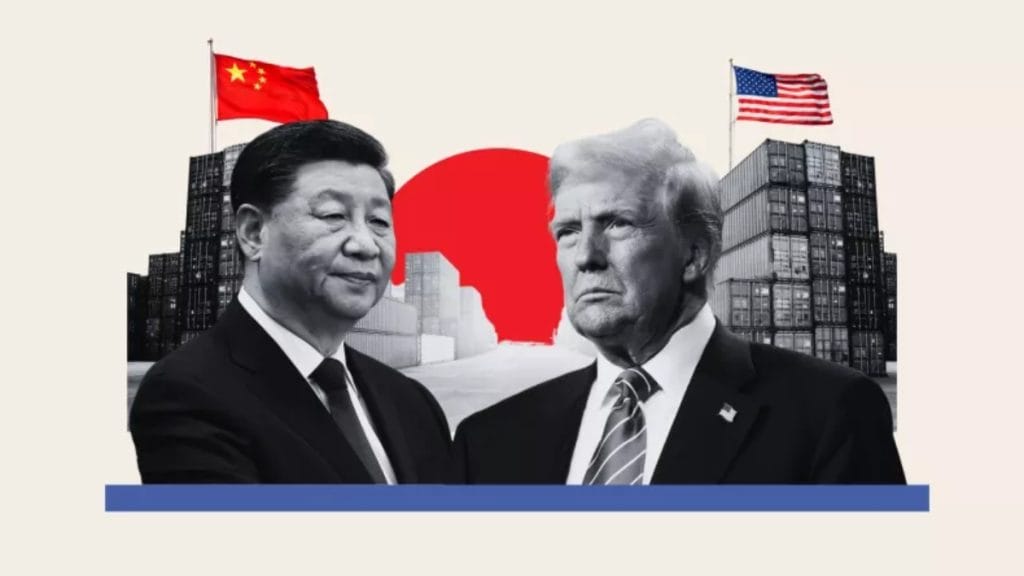
The dilemma is sharpened by a harsher world order. America and China, which together account for about 43% of global output, are no longer simply trading partners but strategic rivals. Each increasingly wields commerce as a weapon, whether through tariffs, sanctions, export controls or subsidies. Smaller states in Asia have adapted by hedging: deepening ties to both powers while avoiding outright alignment with either. Vietnam courts American investment while buying Russian arms. Singapore hosts American warships but trades heavily with China. Nepal, too, has little choice but to balance.
India looms largest. More than two-thirds of Nepal’s trade flows through its southern neighbour. Nepal sources nearly all of its petroleum from India. Remittances from Nepali migrants, many in India, account for more than a fifth of GDP. When New Delhi imposed an informal blockade in 2015 during a row over Nepal’s new constitution, Kathmandu ran out of fuel in days. The country learnt that India’s leverage is existential.
China’s role is more aspirational. Since Nepal signed up to Beijing’s Belt and Road Initiative in 2017, officials have floated schemes for trans-Himalayan railways and hydropower dams. Nepalese exports from carpets to medicinal herbs enjoy preferential tariffs in China. Yet trade is lopsided: imports from China exceed exports by a factor of 43. Physical geography adds to the imbalance: mountain passes are costly to maintain, and landslides or earthquakes can sever supply routes overnight.
America’s economic presence is less visible but real. In 2022 Nepal finally ratified a $500m Millennium Challenge Corporation compact, meant to improve roads and transmission lines. Washington’s aid is in grants rather than loans, making it less likely to trap recipients in debt. Yet American engagement is episodic and fickle. Donald Trump has signalled less interest in alliances and more appetite for transactional bargains.
Some Nepali politicians flirt with a decisive turn to China, not least the country’s left-wing parties. The attractions are obvious: Beijing offers infrastructure cash without the awkward conditionalities of Western donors. But the risks are larger. Chinese loans tend to carry opaque terms; Sri Lanka’s debt distress is a warning. Nepal would also provoke India, whose patience for Chinese encroachment on its northern frontier is limited. Even domestic politics could revolt: Nepali public opinion has bristled when sovereignty seemed compromised, whether by Indian maps or Chinese lobbying against the American compact.
Leaning heavily on America would be no easier. Washington cannot provide Nepal with a substitute for Indian transit routes or Chinese consumer goods. Nor is it inclined to defend Kathmandu’s interests if they clash with bigger American priorities. Small states that tie themselves too closely to Washington can quickly find themselves stranded when administrations change.
For Nepal the only sensible course is active hedging, extracting benefits from all three suitors while preserving autonomy. That requires discipline. Contracts with China must be transparent, independently audited and geared towards grants rather than debt. American projects should be welcomed in energy or technology, but not allowed to draw Nepal into security entanglements. Relations with India must be managed carefully, recognising that geography leaves no alternative.
Diversification is equally important. Japan, South Korea, the EU and Australia are all potential investors in Nepal’s hydropower and tourism sectors. Bangladesh has shown interest in buying Nepali electricity. Closer ties to ASEAN could broaden trade beyond the duopoly of India and China. Building such relationships is less dramatic than signing a Chinese railway deal or an American compact, but more durable.
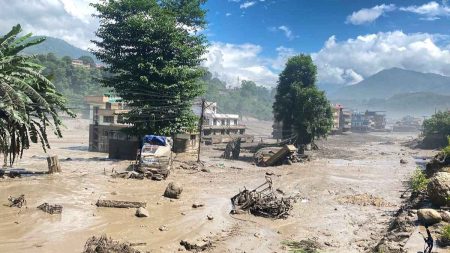
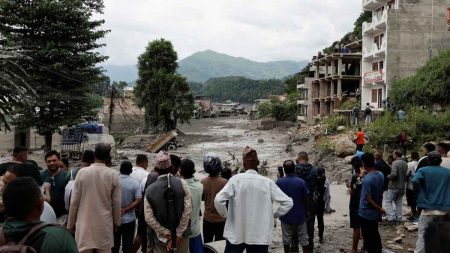
Domestic reforms matter too. Nepal’s bureaucracy has a habit of signing opaque agreements without rigorous scrutiny. Strengthening the diplomatic corps, training negotiators and mandating cost–benefit analysis would lessen the risk of capture by any single patron. Ensuring that infrastructure projects are climate-resilient and maintainable is crucial given that the country is prone to landslides and floods.
Playing for time
Ultimately Nepal’s great asset is time. Unlike Sri Lanka or Pakistan, it has not yet over-borrowed from China. Unlike Taiwan or the Philippines, it is not in the direct line of American–Chinese confrontation. By keeping its options open, it can use rivalry to extract better terms, playing powers against each other. Hedging is not a sign of weakness but a rational strategy for a small state surrounded by giants.
In the Himalayas, altitude may be fixed but alignment need not be. Nepal must learn the oldest mountaineer’s trick: climb light, hold balance and never mistake one rope for a lifeline. ■