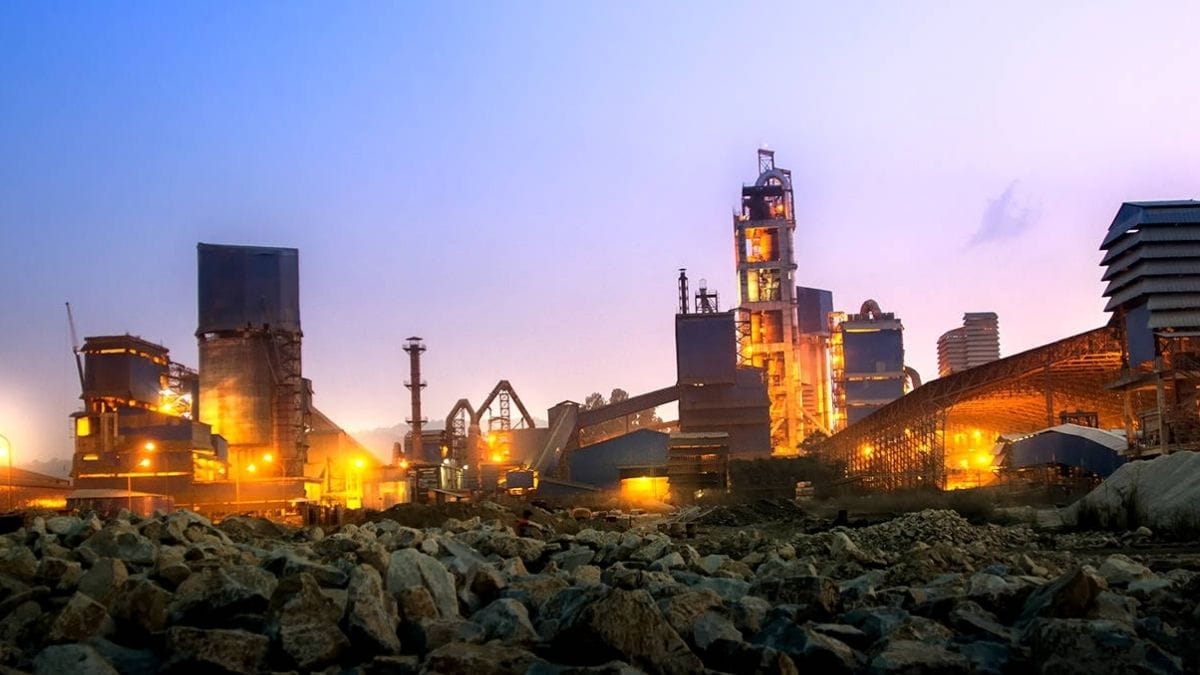
Image: Shivam Cement
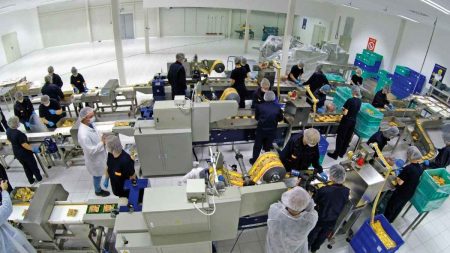
ON OCTOBER 21ST the power was cut to Jagadamba Steel, one of Nepal’s largest industrial players. Within days the lights began going out elsewhere—at Reliance Spinning Mills, at Shivam Cement, at Ghorahi Cement. By October 27th at least 34 major industries had been disconnected from the grid by the Nepal Electricity Authority (NEA), the state-owned power utility.
Production lines for steel, cement, textiles and foodstuffs ground to a halt. The NEA’s message was as abrupt as its action: pay your standing dues, or stay in the dark.
The power cuts are the most dramatic escalation yet in a bitter, years-old dispute over billions of rupees in contested electricity charges. The NEA, under a new, aggressive management installed by Kulman Ghising, the celebrated energy minister, is playing hardball. It claims the targeted firms owe between Rs5.5bn ($41m) and Rs8bn, with some estimates of the total arrears soaring as high as Rs22bn.
The industrialists, for their part, are fighting back in the courts and in the press, arguing that the charges are illegitimate and the NEA’s tactics are opaque and high-handed. At stake is neither just the survival of these companies, nor merely the stability of Nepal’s investment climate and the livelihoods of tens of thousands of workers.
The roots of the crisis sit in Nepal’s dark past. For much of the 2000s and 2010s, the country was plagued by crippling load-shedding, with blackouts lasting up to 18 hours a day. To keep the economy’s engines turning, the NEA gave a select group of major industries premium “dedicated feeder” and “trunk line” connections. These ensured near-uninterrupted power, even during scheduled blackouts, in exchange for a hefty surcharge—up to 65% above the regular tariff.
The problem is that load-shedding was officially ended in May 2018, a feat for which Mr Ghising, then the NEA’s managing director, was hailed as a national hero. The rationale for the premium tariffs evaporated overnight. Yet according to the affected companies and a subsequent government commission, the NEA simply kept on billing.
The charges, they contend, continued for years without proper legal authorisation from the regulator and, crucially, without the NEA consistently using the mandatory Time of Day (TOD) meters to prove it was actually delivering the premium service it was charging for.
The NEA’s sweeping disconnection drive, therefore, is neither merely a bill-collection exercise. It is an attempt to settle a historical account, one mired in legal ambiguity and administrative failure. “The NEA is acting as judge, jury and executioner,” complains one industrialist from the Bhairahawa region, whose factory is among those affected. “They are demanding payment for a service they cannot prove they provided, based on tariffs they cannot prove were legal.”
A judicial panel, known as the Lal Commission, spent months untangling this mess. Its findings, which have become the cornerstone of the industrialists’ defence, were damning for the utility. The commission concluded that most premium tariffs levied after the end of load-shedding in 2018 lacked legal and technical justification. It recommended that charges be strictly reassessed based only on verified TOD meter data from the load-shedding era, and that unjustified charges be withdrawn.
The NEA’s current leadership, however, seems to be operating on a different principle. Under the new managing director appointed by Mr Ghising, the utility has chosen to bypass this nuanced recommendation in favour of a blanket call for payment. This has ignited a legal firestorm.
At least eight companies have so far avoided power cuts by negotiating temporary instalment plans, but many others have secured interim court orders blocking their disconnection, arguing that the NEA must first provide verified meter data and adhere to the Lal Commission’s findings.
The human and economic cost of this confrontation is mounting rapidly. The Butwal–Bhairahawa Industrial Corridor, a hub of manufacturing in Nepal’s Rupandehi District, has been hit hardest. There the silence in sprawling factories is deafening. The region, which employs over 10,000 workers directly in these industries, faces an economic precipice.
The immediate blow to employment is painful. Over 15,000 jobs are under threat from the closures. At Reliance Spinning Mills, which has suspended all operations, nearly 4,000 workers face an uncertain future. The crisis could hardly have come at a worse time. Nepal’s economy was already reeling from political instability and violent protests led by Gen Z activists last month. The World Bank and private-sector federations are forecasting weaker GDP growth and a flight of investment.
The NEA’s aggressive recovery drive, however justified in the utility’s eyes, is seen by many businesses as a reckless shock to a fragile system.
Facing a backlash, the NEA has dangled a compromise: it will allow companies to settle their disputed debts in as many as 60 instalments. This is intended to soften the blow for industrialists who acknowledge the premium dues. Some, eager to restart their machines, have entered into 28- or 36-month payment agreements.
Yet a significant faction stands defiant, refusing to pay a single rupee until the NEA provides verified, audited records from the Time of Day meters. “Why should we pay for darkness?” asks a manager at a major cement plant. “The burden of proof is on them, and they have failed to meet it.”
This call for transparency is supported by the Electricity Regulatory Commission itself. The regulator has stated that premium charges are justified only if load-shedding was ongoing and verified meter records are available—two criteria the NEA struggles consistently to meet.
The utility’s record-keeping during the period in question has been described as “opaque” and “inconsistent” by industry lawyers. In many cases, the required TOD data was never downloaded or preserved, making it impossible to verify actual usage during the load-shedding era. This evidentiary void is the central weakness in the NEA’s claim, and the industrialists are exploiting it fully in the courts.
The government, caught between Nepal’s powerful industrial lobby and its own fiscal needs, is searching for a middle path. The industrialists, organised under various trade bodies, argue that only legally documented, meter-based arrears for the true load-shedding period should be enforced, with outright waivers for charges deemed unjustified by the Lal Commission. They argue that the NEA’s attempt to collect billions without proof amounts to extortion and will permanently scar the investment climate.
On the other side, the NEA and the Energy Ministry, led by Mr Ghising, insist on full or near-full recovery. Their stance is shaped by more than just the utility’s balance sheet. The Gen Z protests exposed public fury over perceived “elite protections” and chronic graft.
Letting large industries off the hook for massive debts would be politically explosive. “There is strong public sentiment that these wealthy businessmen have gotten away with failing to pay their fair share for years,” says a political analyst in Kathmandu. “The government cannot be seen to cave in. It is about fiscal responsibility, but also political survival.”
The keys to the factory
Behind the scenes, legal proceedings and negotiations continue at a frantic pace. As of now no comprehensive settlement has been reached. The risk of a catastrophic breakdown is real. Many business owners, pushed to the brink, are privately contemplating a dramatic form of protest: handing over the “factory keys” to the government.
Such a move—symbolising total surrender and an inability to operate—would be designed to shock the authorities into reconsideration. It would also unleash the very social unrest everyone fears, with mass job losses and further economic paralysis.
The looming stand-off is a stark warning to all sides. For the government, the calculation is fiendishly difficult. A victory over the industrialists could bolster its populist credentials and fill NEA coffers, but only if it avoids triggering an economic collapse that would dwarf any fiscal gain.
For the industrialists, prevailing in court might save them millions, but only if the prolonged battle avoids destroying their businesses and the economy alongside them. “This is neither just a dispute over bills; it is a test of Nepal’s governance,” says a Western diplomat based in Kathmandu. “Can the state enforce its rules fairly and transparently? Can the private sector operate with predictability? The answers will define Nepal’s economic climate for years.”
An extended stalemate seems the most likely outcome, with both sides slowly grinding through the courts and instalment payments providing temporary relief. But the underlying tensions—between proof and payment, between elite capture and public justice—persist unresolved. The lights may flicker back on for some, but the fundamental power struggle continues. ■