IMAGE: REUTERS
LAST MONTH Gauri Kumari Yadav resigned as industry minister, a day after she told a parliamentary committee that all 58 cooking-gas companies should lose their licences because two would be enough. Gas had been scarce for a long time and consumers could not buy it even when they paid. She was the third minister to leave Balendra Shah’s cabinet since he took office on March 27th. The labour minister, Deepak Kumar Shah, was dismissed over nepotism allegations. Sudhan Gurung, the home minister, resigned in April over shares linked to a businessman under investigation for money laundering, and returned to the post in June.
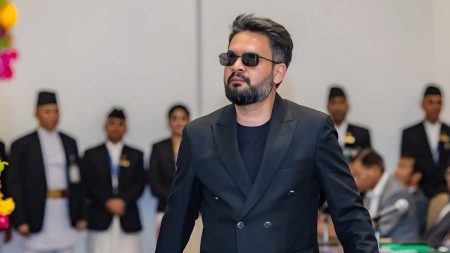
The cabinet is the smallest of Mr Shah’s problems, because the mandate behind it is big. The Rastriya Swatantra Party (RSP) won 182 of the 275 seats in the March 5th election; Nepali Congress won 38, the UML (headed by disgraced K.P. Sharma Oli) 25 and the Maoist Centre 17. Mr Shah, a former rapper and mayor of Kathmandu who joined the RSP only in January, beat the former prime minister, Oli, in his own constituency. Within weeks Mr Gurung had ordered the arrest of Mr Oli and his home minister over the crackdown on last September’s protests. At 100 days the government scored itself 87.2% on its own 100-point reform agenda; independent assessments reported by RatopatiI, a news outlet, put the figure at 20% to 38%.
Voters have been kinder than the assessors. A survey of 658 people in seven provinces, published by Ratopati (the sample was small and its method was not stated), found that 44.2% rated the government’s first five months “very good”, 39.5% average and 16.3% “not good”. Some 57.3% saw no need to look for an alternative prime minister. Mr Shah’s own record as mayor of Kathmandu, where he was criticised for heavy-handed enforcement and for talking to followers online in preference to journalists, did not stop him winning the largest mandate in the country’s recent history.
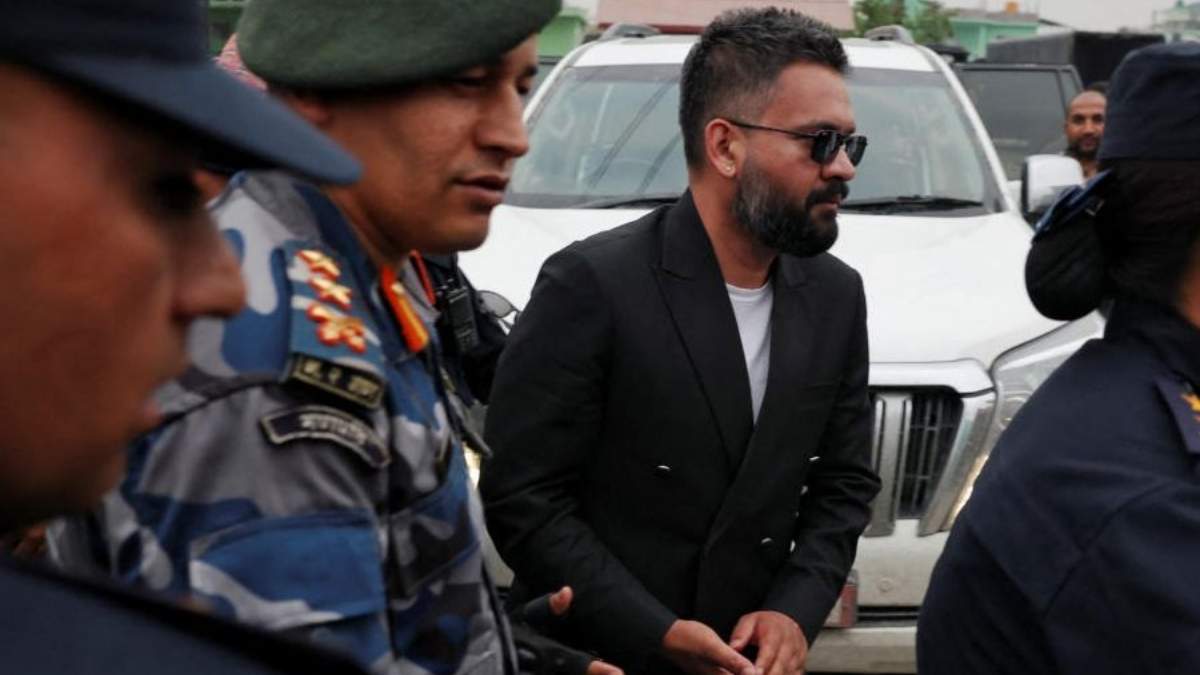
The shine has dulled mostly at home, inside the party. Pavan Raj Pandey, writing in the Kathmandu Post, listed complaints from RSP lawmakers: Mr Shah’s limited presence in parliament, his dark sunglasses, the handling of landless squatters and the late arrival of fertiliser for farmers. The columnist, who is sympathetic to Mr Shah, called some of these criticisms fair and some absurd. Friction with Swarnim Wagle, the finance minister, over budget allocations, allegations of budget tampering and a proposed 3% equity tax on health and private education (later withdrawn) predates them. In early August Mr Shah wrote on Facebook, “Sometimes one has to fight alone.” Rabi Lamichhane, the party’s president, said there was no problem between them.
Outside the party, the picture is similarly divided. Riverside squatter settlements in Kathmandu have been razed, and UN experts urged Nepal to halt mass forced evictions. The Diplomat argued in July that Mr Shah’s image as a change agent was at risk, and Deepak Thapa, writing in the Post, saw populist tendencies resembling Mr Oli’s. A columnist in the Himalayan Times, a retired Indian army officer, wrote that Mr Shah has kept the defence, industry and labour portfolios and that files reach the prime minister’s office without passing through ministries; the column also said relief after the Bhotekoshi flood was uneven in places. At the United Nations General Assembly, though, his speech on climate vulnerability won praise at home.
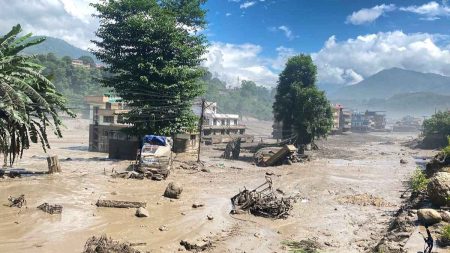
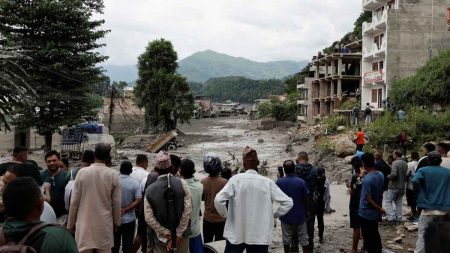
The flood is the hardest test so far. On August 26th it swept through settlements in five districts north of Kathmandu, and a government assessment put rebuilding costs at Rs723bn ($4.7bn), nearly four times the state’s capital spending last year. Reconstruction on that scale requires the ministries, the provinces and the banks to work together, which a prime minister who prefers directives from his own office may find difficult than arresting a former prime minister. The economy grew 3.85% in 2025-26, and the government’s pledge to create jobs has yet to show in the figures.
None of this has produced a rival. The old parties were cut down to size in March, and the opposition’s loudest voice, Harka Sampang of the Shram Sanskriti Party, has six seats. The threat comes from inside the RSP, which Mr Lamichhane agreed to subordinate to Mr Shah for the full term, about four and a half years more. With 182 seats against a bare majority of 138, Mr Shah could lose 44 of his own members and still command the House. The measure of his aura may be how many of them he keeps. ■