Image: The Washington Post
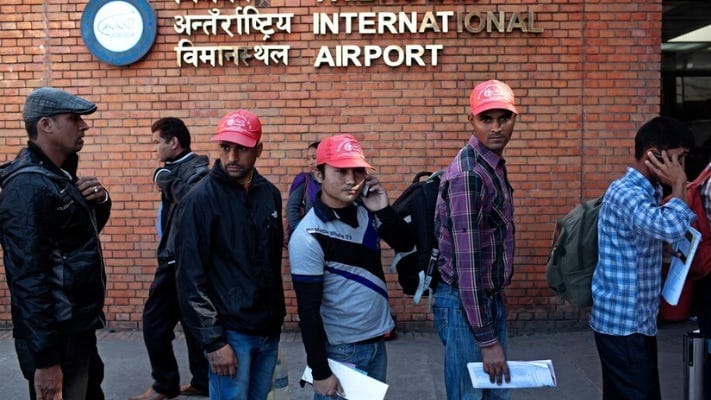
To understand the Nepali economy, one must first understand its most vital export: people. In 2021 about one-quarter of Nepali households had at least one member living abroad, equivalent to 7.5% of the population. The money these workers send home is the country’s economic lifeblood. Remittances were worth more than 25% of GDP in 2023, placing Nepal among the world’s top ten remittance-receiving nations. These flows dwarf foreign direct investment and aid, and provide a steady stream of foreign exchange. For many young Nepalis, seeking work abroad is not merely an option but a default.
This machine for redistributing labour and capital has powered huge gains. Between 2011 and 2023 remittances were directly responsible for over 30% of the reduction in Nepal’s poverty. They have raised household consumption and boosted spending on education and health. Families with members abroad report fewer problems with food insecurity or inadequate living standards. Migration also acts as a pressure valve for the domestic jobs market. In 2021 some 17% of Nepal’s male working-age population was living overseas.
Yet the machine is far from perfectly engineered. Migration is expensive, and many workers take out informal loans at exorbitant rates to fund their journeys. Repaying these debts is the second-most common use of remittances after daily consumption. The social costs are high, too. Families left behind must cope with disruption; women in these households are less likely to seek paid work. Migrants tend to endure harsh conditions, without access to healthcare or social protection. More than 1,000 die a year. Some face exploitation, including employers who confiscate passports. The stress of supporting families from afar takes a further toll on mental and physical health.
Access to migration is also uneven. The choice of destination is largely dictated by a household’s wealth. The poorest tend to go to India, because it is cheap to reach, though earnings there are low. Those with more resources aim for the Gulf Cooperation Council countries or Malaysia, which cost more to reach but offer higher wages. The most lucrative destinations in the West, Asia and the Pacific remain the preserve of the richest, who can afford the steep initial outlay. This stratification has consequences. Migrants from the wealthiest tenth of households send home more than five times as much as those from the poorest tenth.
A further problem awaits those who return. Reintegrating into Nepal’s workforce is difficult. Data from the Nepal Labour Force Survey of 2017-18 show that most returnees were either unemployed or had dropped out of the labour force altogether. Of those who found work, over three-quarters landed in the informal sector. Few secured jobs that used the skills they acquired abroad. Returnees typically earn less than people who never left, at least initially.
A more systematic approach to migration would make the machine run more smoothly. The priority should be to make sure that leaving to work abroad is a safe and viable option for all Nepalis. That means improving migrant preparedness through training, raising awareness of workers’ rights as well as establishing a transparent recruitment process. The government could broker more bilateral labour agreements and ensure they are implemented and updated. The Philippines offers a model of how such a system can function.
Better planning for returnees is just as important. Programmes to retrain them or promote entrepreneurship are currently limited and inaccessible to most. So-called soft skills, such as time management and communication, which are often honed abroad, could be valuable in the growing services sector. But these are frequently overlooked. Helping returning workers to combine such skills with industry-specific knowledge would smooth their transition home. Ultimately, wider reforms to the domestic labour market would improve opportunities not just for returnees but for those who never leave, too.
Nepal’s dependence on migration will not end soon. But with smarter management, the returns on this great export of people—both human and economic—can be greatly enhanced. ■